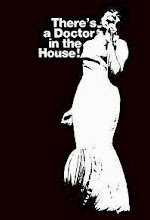
... sounds weird? No, I didn't think it up! Instead, you'll find it on the back cover of Jackie Wilson's Brunswick LP # BL 54110 released in April 1963. This LP was entitled after his recent hit, »Baby Workout« (02/1964). Now let's just for a moment imagine that Jackie Wilson browsed the Billboard issue which was issued exactly t o d a y 5 0 y e a r s a g o . He would have found his latest single »Baby Workout« for the first time entering the pop Hot 100 charts on # 81.
ad in BB March 09, 1963, p. 17
It took another two weeks until »Baby Workout« also entered the R&B singles charts, immediately rocketing to # 14. As you will probably know, »Baby Workout« was to become Jackie's fourth #1 r&b hit, and it eventually made it to #05 pop, becoming one of the biggest successes of his entire career.
In the charts of the time, Jackie's »Baby Workout« competed with »Our Day Will Come« (Ruby & the Romantics), »Puff (The Magic Dragon)« (PP&M) and the Orlons' »South Street«, not to mention the girl groups dominating the upper charts regions, e.g. the Chiffons with »He's So Fine« and the Cookies with »Don't Say Nothing Bad About My Baby«. In April, »On Broadway« (Drifters) and »Surfin' U.S.A.« were coming up strong against Jackie's hit tune.
However, »Baby Workout« was released at a time when Jackie Wilson wasn't passing the best of times. Well, there was still some of the glamorous life left for Jackie, for example at a dinner in honor of the president of Brunswick Records in the New York Key club when he was approached by »cute Playboy Club bunny« Marion Barker for an autograph (from JET, Dec. 20, 1962, p. 33):
But there were problems as well, because a year ago Jackie had been shot in his abdomen by a woman. The bullet had never been removed, but towards the end of 1962 the bullet started to move in his body and Jackie had to cancel several enga- gements. In January 1963, he even entered a hospital in order to prepare for an operation to have the bullet removed. In the end, there was no operation because the bullet's wanderings were judged less dangerous than risking an operation. The medics concluded that Jackie was overworked and a »victim of nervous exhau- stion«, so they sent him home, bullet and all. »Singer Jackie Wilson checks X-ray which indicated that he is not in need of an operation, because of a bullet moving about in his abdomen ...« (from JET, January 24, 1963, p.32):
In January '63, Jackie also escaped a paternity-case warrant by the Detroit police by sending a buddy of his to turn himself in and claiming to be Jackie Wilson while Jackie himself left the town and disappeared (JET Jan. 24, 1963, p. 43). Living on with the bullet (and an open paternity case), Jackie did not heed the medics' advice to relax but rather went back to the stage and in mid-February performed at Pittsburgh's Syria Mosque. In March, he then witnessed the rise of his latest single release »Baby Workout« (the first reports, on March 2, indicated »strong airplay« of his song in the New York area), and later that month he made an appearance on the Ed Sullivan show.
At the beginning of April, Brunswick rushed an album out which was meant (as so often) to cash in on the recent success of »Baby Workout«.
The 12 songs on the LP, including of course »Baby Workout«, are claimed on the back cover to be »patterned after Jackie's smash hit single« in order to »lend further proof that Jackie Wilson is probably the greatest delineator of rhythm singing of his day« (oh, how I love that term!). As a dance compilation, the LP is no bad at all as there are mostly uptempo songs, but we have little overall variety and indeed the album seems very much constructed around Jackie's latest hit. It may be considered a pity, though, that Jackie's artistic talent and magnetic voice was - hmm, let's say: - squandered for rather mainstreamy stomp-your-feet-and-clap-your-hands tunes which recall, in their banality, many of the ditties Elvis was pumping out on his movie soundtracks during the mid-1960s. However, there are no outright turkeys on Jackie's LP, and the instrumentation and the arrangements are way better than what we find, to continue the comparison, on Elvis's movie albums. I for my part espe- cially love »The Kickapoo«, in itself little else but the umpteenth novelty dance tune, for its »overture« that has Jackie's voice shine forth so characteristically. And then there is »Baby Workout« which first charted today 50 years ago.
Jackie Wilson: »Baby Workout« / »The Kickapoo« from the Brunswick LP # 54110 (1963, mono):
Today we're in for a treat, courtesy of the Patterson Singers! They featured on this blog repeatedly, albeit so far only in the guise of their third outfit (with Mildred Lane's lead vocals ... I love her voice so much, check it here!). Back in 1960, when Robert Patterson had formed the second outfit, they first appeared again as the »Patterson Singers of Brooklyn, N.Y.« (they had used this billing as early as 1954) and recorded some sides for King/Federal. In the first week of February 1962, they were signed to Vee-Jay Records; their first Vee-Jay session is recorded as of Feb. 5, '62. During the following three years, they recorded five LPs with Vee-Jay, ending in 1965 when Vee-Jay faltered. The Patterson Singers (feat. Ruth Williams, lead vc?): »Heavenly Father« from the Vee-Jay LP # VJLP 5046 (1963):
* * *
»Heavenly Father« is a most beautiful song and has not escaped the attention of others; it was awarded prominent attention by Bob Marovich on The Black Gospel Blog when he included it in his series »Essential Gospel - Classic Recordings«. It was released on the Patterson Singers's third Vee-Jay LP, Songs of Faith (out in late 1963). I would not stress so much, as Bob does, the indebtedness of the song to the girl group sound of the time (... charming, a cross between the religious gravity of the Caravans and the
watery-eyed innocence of the Chantels (“Maybe”) or the Quintones (“Down
the Aisle of Love”). The recording is clearly influenced by the girl
group sound that by 1963 was emanating from transistor radios ... all across America, he writes). Yet when he goes on to wonder why the song was not chosen for a single release, he brings up various interesting points: Why Vee Jay chose not to release “Heavenly Father” as a single may have
had to do with it not sounding like the kind of gospel music then
dominating the charts or record sales. Or it may have remained an album
selection ... because it wouldn’t have
been featured much, if ever, during the ensemble’s programs, not being
the type of performance that would wreck a church or auditorium. Then
again, perhaps it was, to paraphrase a comment once made by the late,
great Alan Freed, simply too beautiful for radio.
(click to enlarge)
And Bob was right in another thing: the song isn't at all typical for what the Patterson Singers were recording at the time. In fact, their third Vee-Jay LP features 12 songs, 10 of which are uptempo. Side 1 has its fair share of tunes which even at the time were direly conventional (»Down By The River Side«, »When The Saints«, »He's Got The Whole World«) but with broad appeal to the mass public; they are arguably the least remarkable tracks on the entire LP. However, these tunes had proven their commercial value by easily crossing over from the church to secular venues, and that Vee-Jay was following this trend eagerly is shown by the fact that they released »Down By The Riverside« and »When The Saints« as the only single from this LP (Vee-Jay # 929). And it paid off, because Billboard reviewed the record ... under the heading POP Spotlight !! (issue of August 3, 1963, p. 18) Still, even the uptempo songs as performed by the Patterson Singers are often unconventionally arranged and thus stand out from many other recordings of their times. Outstanding in this sense are in particular two songs from their third Vee-Jay LP, viz. »I Am So Glad« and »He's Real«. Especially the percussion in »I Am So Glad« is quite amazing ... listen here:
The Patterson Singers: »I Am So Glad« / »He's Real« from the Vee-Jay LP # VJLP 5046 (1963):
* * *
P.S. I just like to add that the Vee-Jay LP Songs of Faith was, as often with Vee-Jay, poorly produced and obviously rushed out in a hurry. Both back cover and labels show a song list for Side 1 which does not correspond to the sequence of songs on the actual disc. In fact, songs nos. 3-6 as indicated on the label are actually nos. 1-4, and the first two songs come last on the disc. So, »Heavenly Father« is no. 5 if you play the record.
Entry from Billboard, Nov. 02, 1963
(click to enlarge)
... will prove today, if anything, the very versatility of this cherished bloglet of mine (chuckling). Just yesterday I uncrated another 45 which I didn't remember to possess. It turned out to be a hit single released in September '63, by Dale & Grace (Dale Houston & Grace Broussard, both from Louisiana; well, Dale originally hailed from Mississippi). Famously, in an impromptu evening session, Sam Montel of Baton Rouge brought together his up-to- then unsuccessful songwriter Dale Houston with 19-year old Cajun singer Grace Broussard. They rehearsed some songs together until they hit upon »I'm Leaving It Up To You«. Montel was convinced that they had a hit and made them record the song the very next day. He then put it out on the Michelle label (MX-921), named for Montel's daughter (and consistently referred to in Billboard's issues of the period as »Michele«). A Houston radio pushed the song and it got airplay in the south. Eventually, it was re-released on Montel # 921 and was soon known nationally; it became a # 1 hit in late November 1963.
Michelle # 921 and Montel # 921 each featured a different B-side, »Foolin' Around« and »That's What I Like About You« respectively. »Foolin' Around« was first done by Buck Owens and Don Rich before Dale & Grace dealt it with grace. The outcome was a mildly fast version with a heavy Mexican flavor. Dig it here:
Dale & Grace: »Foolin' Around« on Michelle # MX-921 (1963):
Ummh, and yes, this B-side is kind of a rarity because it was neither included on their (first and only) Montel LP (#100: I'm Leaving It Up To You) rushed out in December '63 on the wave of their overnight hit nor was it included in modern CD re-issues of this album.
The standard comment regarding Michelle # 921's A-side is that it reached # 1 on the Hot 100 charts on the very day in November '63 when Kennedy was assassinated (in fact, the Billboard charts were published only the day after, on Nov. 23); it was then ousted by the Beatles. To keep to the spirit of this blog, and to put Dale & Grace's single into perspective, we might remember that the rise of their first Michelle 45 coin- cided first with the Vandellas's »Heat Wave«, Doris Troy's »Just One Look« and Inez Foxx's »Mockingbird«, later with Garnet Mimms's »Cry Baby« and Rufus Thomas's »Walking The Dog« (to name but them). Truly surprising that »I'm Leaving It Up To You« also made it, during the same time, into the Top Ten of the R&B charts.
Give me a list of what's not to be done and I'll start doin' it today ... unfortunately, my list of things to do contained only stuff to be done immediately ... so this blog went into something of an extended spring break which then lasted for about six weeks, much longer than I anticipated. Suffice it to say that, apart from profes- sional activities, I was still busy with moving, painting walls (in an apartment I left towards the end of April), looking for new furniture ... not to speak of my LPs and 45s which, in their boxes, are waiting to find a new home on the wall.
However, things are moving (literally & metaphorically), and somehow today felt right for re-opening this blog. Let's hope I can keep it up ... Shirley Ellis's 1963 B-side »Give Me A List« shall remind me that there'll be days coming less filled with frenzied activity ... and maybe even the day when my list will tell me only what's not to be done! Shirley's song comes together with her chart-breaker, »The Nitty Gritty«, recorded in September '63 and climbing up the charts in early 1964, making it into the Top Ten pop. The 45 was out in late October '63.
From Billboard, Nov. 9, 1963
I still like the B-side of this 45 better than the famous A-side, because the sound quality of Shirley's Nitty Gritty isn't exactly fabu- lous. (If somebody knows whether her version of »Nitty Gritty« is a fake live recording actually produced in the studio, please tell me; I have always suspected that and remember having read so one day, but don't remember where it was). Still, Shirley's second single was her first big success and paved her way for more to come. Enjoy!
Shirley Ellis & the Hutch Davie Orchestra and Chorus:
»Give Me A List« / »The Nitty Gritty« on Congress # CG-202 (1963):
As it is, I still don't know more about the Holmes Sisters than I did when I posted two of their songs in November (look up the post here). So I really can't tell you nothing new about this remarkable duo of singers. What I can confirm, with reasonable cer- tainty, is that one of their 45s, Nashboro # 796 (»By His Word« / »Set Your House In Order«) was released in November 1963 (Billboard lists the previous and following Nashboro releases between Oct. and Dec. '63). And this tells us, with little sagacity needed, that the songs were recorded sometime before, probably in summer '63 (Hayes-Laughton's Gospel Discography tentatively puts forward »c.1964« which is too late). They're just so heartwarming to listen to. Hope you feel the same.
Holmes Sisters: »Set Your House In Order« on Nashboro # 796B (1963):
In December 1963, Chess released the most exciting live recording of the '60s by any female artist. Famously, it was taped on two days in September 1963 in Nashville's New Era Club. And also technically it was way ahead of what other record companies were putting out at that time (listen to Motown's live albums for comparison!). There is not a second on that album that isn't worth hearing. It's a smash from beginning to the end.
Etta James: »Seven Day Fool« / »Baby What You Want Me To Do« from the Argo LP # 4032 (1963):
Note: The b/w photo at the beginning of this post shows Etta James at the River Rock Casino in Richmond, BC, Jan 30, 2009. Agency/photographer: UPI Photo / Heinz Ruckemann. You can access the photo in original size and colour here.
After Lonnie Mack's legendary instrumental »Memphis« skyrocketed the r&b and pop charts in summer 1963, Cincinnati's Fraternity Re- cords put together an album which eventually was released (mono only) in October. This LP (Fraternity # F -1014) features all the better known tunes associated with Mack's influential guitar style (»Memphis«, »Wham!«, »Down In The Dumps«, »Suzie-Q«) and some more songs besides.
Lonnie Mack has the distinction to call a very decent Wikipedia article his own, actually much better, more complete and more meticously documented than most other entries on '60 r&b music; over on WangDangDula you also find an exhaustive discography. On the back cover of his LP, Lonnie is credited, by Cincinnati Post's Dale Stevens, with a »lowdown, dirty and twangy« guitar style. But Stevens also portrays him as a »country boy, and I mean back country«. This image stuck with Mack for a long time, and the Output critic John Morthland wrote in 1984: »It was the era of satin pants and histrionic stage shows, and all the superior chops in the world couldn't hide the fact that chubby, country Mack probably had more in common with Kentucky truck drivers than he did with the new rock audience« (quoted from Wikipedia). If you like to read a more recent assessment of Lonnie's music and career, have a look at Greg Schaber's article »Mule Train«, published in the October 2000 issue of Cincinnati Magazine.
The Charmaines (publicity shot from 1966)
There are two tracks on Lonnie's Fraternity LP which stand somewhat apart from the rest. The first of these is »Baby, What's Wrong«, an uptempo adaption of a Jimmy Reed song. This tune (a dynamic feet mover in and by itself) earned its place on this blog by the simple fact that it features The Charmaines prominently as backing vocal group. The Charmaines from Cincinnati were a female trio of 18 year-olds when they won a local contest in 1960 and then were given a contract by Fraternity. More details on their work with Lonnie Mack you'll find in the liner notes to Ace CD # 1135. However, their appearance in »Baby, What's Wrong« remained uncredited on Lonnie's Fraternity LP. Even when the song was released as a 45 in November '63 (Fraternity # 918, shortly entering the pop charts at # 93) it went into the market as a Lonnie Mack release without any mention whatsoever of The Charmaines. Ah-Oom-Ba!
The second song of a somewhat different flavor on Lonnie's LP is the bluesy instru- mental »Down And Out«. Here we have Lonnie Mack & his band (Marv Lieberman, Ron Grayson, Wayne Bullock, Truman Fields and Irv Russotto) moving a long way from their country roots. And they're really into it:
Lonnie Mack (*feat. The Charmaines): *»Baby, What's Wrong« / »Down And Out«
from the Fraternity LP # F-1014 (The Wham Of That Memphis Man!, 1963)
Tonight, I have a personal confession to make. You know, the very first LP I bought with my own (sort of) money was Boney M's Nightflight to Venus. It was fresh out of the press, I was about ten years old then and I loved it; still do, somehow. Well, the second LP I got was an anthology of Chicago Blues, actually a 2-LP album. And these discs I played until they were positively worn out. One of the songs on this album was Willie Mabon's »I'm The Fixer«. Not really a song for the ears of a 10-year old. But I didn't get the message then anyway and was just carried away by the beat.
The song starts very abruptly with Willie kick- ing it off with »Ba-by! ...«. This had, for me, much the same effect as Tina Turner's outcry at the beginning of »A Fool In Love« had on the soul of Peter Guralnick*, that is, ushering a new sound into my world with a bang.
(*I remember with a degree of certainty it was Peter Guralnick who wrote somewhere about this experience of his ... can't find the passage right now.)
So on my side there is a lot of autobiography in that song. For the record: »I'm The Fixer« was released as B-Side on USA # 741 in late June 1963, and Billboard listed it as a new release in the July 6 issue. A-side is »Too Hot To Handle«. According to the most detailed Willie Mabon discography on the net, »I'm The Fixer« was recorded in Chicago on May 23, 1963, »Too Hot To Handle« on February 7; information about the musicians at the session you'll find on the discography page indicated before. The A-side, Eddie Noack's »Too Hot To Handle«, was originally a pure country bopper and some country flavor still pervades Willie Mabon's version. (By the way, another nice example of how intertwined the realms of Blues, r&b and c&w really were.)
Willie Mabon: »I'm The Fixer« / »Too Hot To Handle« on USA # 741 (1963):
* * *
I almost forgot: In case you're curious where I took the inspiration for the title of today's post, read this passage about the »soul craze« as it appeared in the Dec- ember 1961 issue of Ebony magazine (page 112).
Wow, I was way ahead of this when I was about ten: I knew Willie Mabon but I had never heard of Lasagne or foie gras ... uh, seems it was a sign of things to come ... well, not quite, I came to know (and love) lasagne in the meantime as well.
In 1961, Clara Ward signed a contract to appear regularly at Las Vegas's New Frontier Hotel and in December performed for the first time at New York's Village Vanguard night club. TIME (April 28, 1961) run a story about The Grandison Singers, a female group who had switched from churches to liquor-serving clubs. »Says Mary Grandison: People in the nightclubs accept the music more than people in the churches. It's more quiet here. It's almost reverent«. In 1962, Clara Ward & her Singers started their long-lasting series of engagements at the Golden Horseshoe Saloon in California's Disneyland (see also here). Meanwhile, Della Reese and the Meditation Singers had taken to the stage of Las Vegas's Flamingo Hotel and graced the platform at New York's Copacabana (read more here). Finally, in 1963, excite- ment about »gospel going pop« peaked when New York's first »gospel night club« opened, the Sweet Chariot on Times Square.
Billboard ad, June 1, 1963
In the Sweet Chariot, a white and predominantly upper-class audience came to wag their feet to the »sanctified beat« of black »tambourine pounders« (Ren Grevatt's choice of words). »Angelic bunnies« floated between the tables as waitresses, »wearing shorty gowns with handsome non-flappable wings attached ... pleasingly female though not provocative« (Billboard, May 18, 1963, p. 12). The rest rooms were labeled »Brothers« and »Sisters«. As for the music, »[t]here is a noticeable avoidance of selections with a direct religious reference. The emphasis is strongly on the music and the beat«. A week later, on May 24, TIME followed-up with the article »Gospel Singers: Pop Up, Sweet Chariot«. It greets the »new sound« with limited enthusiasm, though, and the writer is aware of what may happen when »experienced huntsmen« and »desperate hustlers« of the music business are after a »new sound«. (The article is worth reading, and since TIME has recently closed its archive to non-members I reproduced most of the text at the end of this post; see below.)
The opening of the Sweet Chariot ignited new cash fantasies in the minds of many in the music industry ... and also appealed to a number of gospel outfits. The idea that gospel »had finally made it« was quickly transformed into the strangest of business plans, and the headline in the Billboard May 18, 1963 issue, viz. »Can Gospel Replace The Twist?«, tells it all.
BB, July 13, 1963, p. 20
In the June 8, 1963, issue Ren Grevatt (indefatigable in driving home the message of how gospel was about to become pop) authored another article entitled »And Now Gospel's Popping Into Pop Field«. Grevatt again focused on The Sweet Chariot and also mentioned Clara Ward and her success in pop night club circles in this regard. He also quotes some of the leading cash grabbers, Ewart Abner of Vee-Jay and Columbia's Dave Kapralik. The latter, closely involved in the business of The Sweet Chariot, said about the performances, »[i]t won't be the purest kind of gospel«. Which didn't matter much to him because he felt that »the relig- ious aspect of the gospel is not an important aspect. The customers are not going to gospel clubs to get religion or get the message. They just want to hear what I call happy music. They have fun without the message.« In the above-mentioned TIME article, Kapralik is quoted with the words: »It's the greatest new groove since rock 'n' roll. In a month or two, it'll be all over the charts.«
A businessman could well state the bare facts so bluntly. The participants on the other side, viz. the various Gospel outfits, did not dare or think it right putting it this way. Gertrude and Clara Ward (who by 1963 had yielded completely to the lure of secular venues although they never, to my knowledge, appeared at The Sweet Chariot) are often reported with saying that singing spirituals in night clubs »brings the message of the Lord to all«, spreads the Gospel and could be helpful in saving lost souls, thus selling their performances in pretty unholy places as kind of a missionary work. Few did believe them.
JET magazine, August 8, 1963, p. 65
In summer '63, the estab- lished gospel scene, in unison with many church representatives, started to strike back. A clergyman saw in performing gospel music in night clubs a reckless disregard of the genre's inner essence. This essence was, for him, tied to its roots, namely the birth of sacred song in »blood and toil and sweat and tears« and thus not fit to be the stuff of mere amusement. More importantly, Mahalia Jackson had launched a general onslaught on »pop gospel« in June '63, declaring that »Pop gospel has failed because it's not the voice and sentiments of the American people.« The mixture of pop and gospel was, she went on, a contamination of the latter, and »there are some things people are afraid to mess with and pop gospel was one of those things.« In other words: »No man wants to be pulled down, and pop gospel music was like pulling God down.« (All quotes from Billboard, Sept. 28, 1963, p.1.)
On August 31, Billboard declared that »pop gospel as an important trend is dead« (p. 3). Seen in retrospect, the authoritative voice of Mahalia Jackson gave »the Great Pop Gospel Balloon« (Laurraine Goreau), for the next years at least, a mortal blow:
In 1963 when a number of companies tried to develop a pop gospel sound in New York (complete with gospeleers shouting out ditties in nightclubs) the movement failed. Mahalia Jackson had much to do with putting the fear of the Lord into those companies with her strong stand against taking gospel and watering it down. (Eliot Tiegel in Billboard, Nov. 6, 1971, p. RN-40).
* * *
In the midst of all this excitement, Buena Vista (Disney's pop record label established in 1959) released LP # STER-3318: The Famous Ward Gospel Singers Recorded Live at Disneyland. Obviously, this was a by-product (and a prop at the same time) of the Wards' concerts at the Golden Horseshoe. However, neither Clara nor Gertrude Ward went on record here, and the whole live show is performed by The Gertrude Ward Singers. (For the different cover of the French issue see here.)
The members of the group you can hear on that LP were the following: Viola Crowley (sadly, she passed away recently in June 2011), Geraldine Jones, Clara Thomas, Vermettya Royster, Mildred Means and Malvilyn (Simpson) Statham. The singer best-known among r&b aficionados will be Vermettya Royster, a once-time member of the Ikettes and the Raelettes and still active. Most of them had recorded and performed with Clara Ward and/or her mother since 1959, but none before 1958 when the famous '50s outfit of the Ward Singers (feat. Marion Williams and others) broke up. There's only one reasonably good photograph that shows, with the unfor- tunate exception of Clara Thomas, all of the above-mentioned singers; it was re- portedly taken in 1969 (with Clara Ward and Elvis Presley in the center):
The 12 songs on this LP are mainly uptempo, with much tambourine-shakin' goin' on. All singers have leading parts in one song or the other, but most of the tunes are too fast and chorus-oriented to give the leading voice a chance to shine. However, there is Vermettya Royster's intense, 5-minute version of »Never Grow Old«, and there are two tunes showcasing the rough-edged voice of Geraldine Jones, »I'm Getting Nea- rer« and »Something's Got A Hold On Me«. It's those two you can hear below. And notwithstanding the endless discussion about gospel groups performing at secular venues I think these tunes are worth hearing. You can easily pour ridicule over the Ward Singers' engagement in Disneyland, as Anthony Heilbut, for one, has done: »... Disneyland, where the Ward Singers, the cartoons of gospel, joined the wonderful world of Mickey Mouse« (The Gospel Sound, p. 110).
But I don't think things are as easy as that. Bil Carpenter offers a much more ambivalent and balanced perspective on what the Ward Singers achieved: »They were the first to perform in Las Vegas hotels, the first to perform in amu- sement parks such as Disneyland, and they brought a flamboyant elegance to a musical form that was considered an unglamorous vestige of slavery« (Uncloudy Days, p. 429). The major part of the songs on Buena Vista LP 3318 are overtly religious, above all the con- version song »Something's Got A Hold On Me« (and which is, incidentally, closely related to Lula Collins's »What Is This«). And I believe that notwithstanding the context the message is still there and the artists aren't singing simply to amuse the crowd. At least I can't hear that, can you?
The Ward Singers feat. Geraldine Jones: »I'm Getting Nearer« / »Something's Got A Hold On Me« from the Buena Vista LP »Recorded Live At Disneyland« (1963):
* * *
Some additional items regarding the »Disneyland experience« of the Ward Singers:
(1) From The Afro-American, July 17, 1965, page 11:
(2) From Willa Ward-Royster: How I Got Over. Clara Ward and the World-Famous Ward Singers. As told to Toni Rose, Philadelphia 1997, p. 161 f.:
»... one of the press people asked, "What do you have to say when people object to your singing in places like nightclubs and Disneyland?" Mom's [i.e. Gertrude Ward's] change of heart was clear in her answer:
I don't know if they've accepted it by now or not. They thought that when we went out into the clubs, we'd be singing blues or jazz or even rock-and-roll, but we sing the same songs in the clubs that we sing in church. It's wonderful how they accept Gospel singing, sometimes even more than people in the church. (...) I've heard worse in some churches and from the mouths of the "holy" than I've ever heard in any nightclub.«
(3) The Ward Singers were, not the least for their flamboyancy, idols for gays in the black community (and sometimes beyond), somewhat similar to opera divas who are often venerated among gays. Tellingly, there is a chapter on the Ward Singers (this time including Clara) performing at Disneyland in John Edmonds: Called, Justified, Glorified, and Gay. The fictional Memoirs Of Gospel Singer, Josephus Hezekiah Carson, Bloomington 2008, pp. 150-56. The author is overwhelmed by the »five beautifully be-gowned and be-wigged and be-dazzled ladies« that »made their grand entrance« and describes the Clara Ward Sound by the adjectives »shrill, full, force- ful, energetic, harmonious«. Sorry that I can't quote more here. Read it here (not all pages are visible at any one time!) And having done this you might as well look here.
* * *
TIME magazine, Friday May 24, 1963: »Gospel Singers: Pop Up, Sweet Chariot« (Extracts)
Once a year or so, the popular-music business falls into a faint, and the only thing that can bring it around again is a new sound. The new sound quickly becomes every hipster's new groove and everybody imitates it until even little children no longer care to listen. Last year the twist was replaced by the bossa nova, but as things turned out, it was a case of a starving man rescuing one who was merely hungry. Business faded.
For months now (and in the record business, months are decades), despe- rate music hustlers have been searching for the new groove. Experienced huntsmen confined their attention to Negro music, which, with the single exception of country music, has supplied them with every new idea since the blues. Last week, with appropriate fanfare, they proclaimed they had found the sound: pop gospel. Waving contracts and recording tape, Columbia Records moved into a new Manhattan nightclub called the Sweet Chariot and began packaging such devotional songs as He's All Right for the popular market. "It's the greatest new groove since rock 'n' roll," said Columbia Pop A. & R. Director David Kapralik. "In a month or two, it'll be all over the charts."
Yeah! Since gospel music is the root of rhythm-and-blues and "soul jazz," the discovery turned out to be embarrassingly obvious—like eating the hen after stealing all the eggs. (...)
Gospel music may have seemed a surprise a half-block from Broadway, but Pentecostal churchgoers and sinners "out in radioland" have been hearing it for years, sung with devotion by such groups as the Clara Ward Singers, the Stars of Faith and the Mighty Clouds of Joy. Recently, its spirit and style and shouts of "Yeah!" (but rarely the rest of the lyrics) have crept into popular music, but only Mahalia Jackson has been popularly successful with the pure version. A couple of years ago, Brother John Sellers and the Grandison Singers became the first to sing gospel in nightclubs. A thin flock of groups followed, some complaining bitterly that cheating preachers had driven them into it by failing to part with a livable share of the church offering.
Wha? Gospel's move into nightclubs (where Negroes call it "ofay gospel") does not necessarily corrupt either singers or songs. But its adoption by the popular-record industry gives good reason for melancholy. To succeed with the predominantly teen-age audience, it will be hyped up and sanitized to the point of becoming grotesque. (...) Having spent so long on the back streets, gospel singers greet the establishment's new enthusiasm with a doubting, puzzled Wha? (...) But even with all the corporate delight at the new groove's financial prospects, the cheerful, sensate piety of the music had already begun to sound like its own requiem by the end of the first week of official enthusiasm. Gospel music is the last remaining unpackaged expression of Negro culture; now that it is being merchandised, where will the new grooves come from?
After her untimely death in August '84, Esther Phillips was buried in an unmarked pauper's grave in Compton, California. It took a benefit concert in April '85 to procure her mortal remains another resting place that would have, at least, her name on it. Herman Lubinsky of Savoy Records had seen her in 1949 in a L.A. amateur night and signed her right away. Johnny Otis, Greek by race but black of soul, produced her; aged 13, she was billed as »Little Esther«. It then happened that she had a r&b # 01 hit with her single »Double Crossing Blues« in spring 1950. She was the youngest female artist to achieve this, and this record has held ever since.
I am very happy that the name of Esther Phillips finally appears in this blog. Where to start? It took me a long while thinking about how to introduce her to my blog. There's so much to say about her. She was a strong personality, keeping her wits ready and never shy to have her say; she put the fist on the table if need be. But she was weak as well, succumbing again and again to devilish king heroin. The sad truth is that her strength was her weakness, and her weakness kept her strong.
She is the great underrated voice of 20th century music. If you heard her voice once you're not likely to ever forget it. There are obvious parallels in her life and art to Billie Holiday, Dinah Washington and Nina Simone, but Esther Phillips never reached, in the public imagination, their fame. That ain't right.
As I said, I got to make a start somewhere. Her 50s singles, her Lenox smash, her Atlantic sides, her short stint with Roulette, her fantastic and immortal Kudu recordings? Whatever. Let's start today with the last # 01 hit Esther Phillips had in any chart, »Release Me«. Arguably, it's her most famous song until today, although many wouldn't know the singer. It has become one of those »oldies but goodies« which flow from loudspea- kers in elevators and supermarkets (and Atlantic as early as 1967 marketed this song as a »vin- tage classic«, and in Dec. '68 the song appeared on the Original Sound sampler »Oldies But Goodies«). The tune also is more than a little atypical for what Esther would record during most of her career. Yes, her voice is here, in this song, you couldn't confound it. And yes, it's hell of a song. But it's the one song I wouldn't have chosen to build her fame. Alas, it can't be helped: great part of the fame Esther Phillips enjoys today is still bound up with this song.
»Release Me« was, well, released in October 1962 on the Lenox label. Having been a C&W hit for Ray Price in 1954, Esther's version shot up the charts and prompted Billboard to publish her »Artists' Biography« in the November 24, 1962, issue (p. 10). Lenox Records in itself was a curious business, since it had been established, as it were, for Esther Phillips. Behind it were Lelan Rogers and Bob Gans. Both were impressed with the recent successes of Solomon Burke and Ray Charles who took C&W tunes into the r&b field, and with Esther they intended to do the same. And they did.
Recorded in Nashville and backed by the Anita Kerr Singers (they are credited prominently on the back cover of Lenox LP # 227), Esther produced with »Release Me« the most soulful C&W-song ever. But C&W it remains, and it's funny to see in retrospect how a perspicacious Billboard critic arrived at saying that »it's a ballad somewhat in the country vein« (Oct. 13, '62, p. 40). Certainly somewhat! And along with the success of the single release of »Release Me« came the (obvious) idea to put out an album centered around that song. This LP, Lenox # LX 227, was then released in January 1963. On the back cover of the LP is a long excerpt from the November 17, 1962, issue of Music Reporter which provides many details about Esther's Nashville recordings for the LP. You can read it below (scroll down to the end).
Ad from Billboard (January 26, 1963)
First of all, Little Esther had to have another name for she was little no longer. Yet in order not to give up the resonance of »Little Esther« one retained the »Little« but put it into quotation marks. Newly fashioned was, however, the second part of her name: Phillips. As often reported, Esther had taken it from a billboard advertising Phillips 66 gasoline at a gas station in Houston. She had adopted that fake family name (her real one was Jones) already when she was gigging in Houston and thus before being signed by Lenox; but it was on the Lenox sides that »Phillips« for the first time appeared officially.
Aptly, the cover shows the title of Esther's recent hit in big letters and bears below it the subtitle »Reflections of Country and Western Greats«. This was certainly meant to remind the buyer of Ray Charles's LP »Modern Sounds in Country & Western Music«. What, however, the specification »Reflection 1« in the left lower part of the cover was meant to indicate I do not know. Was there to be another LP? Anyhow, there was no follow-up and Lenox, for all the initial success they had had, claimed bankruptcy before 1963 was over. Inevitably, a greater and financially more potent label stepped in at this point and preyed on the carcass of Lenox. Atlantic bought up all the Lenox masters and took over Esther Phillips as well. In February 1964, Esther was signed to Atlantic,with Jerry Wexler and the Ertegun brothers happily smiling for the event (photo from Billboard, February 8, 1964):
Atlantic then tried different things with Esther, seemingly without concept. They pushed her away from C&W-flavored r&b and eventually plunged her into the MOR- pool. They did two LPs with her, producing the weakest sides of Esther Phillips's entire career with Beatles covers and insipid answer songs. But I won't go into Esther's Atlantic period here. What needs to be said, though, is that the Atlantic makers were at their wits' end regarding Esther in 1966. She was obviously unhappy with the stuff she was given to sing, and her performances showed. After she had appeared at the 1966 Newport Jazz Festival in July, this is what a critic had to say:
»Esther Phillips, who can sing such great blues, followed and it was immediately discernible that this was not her night. Not that she didn't sing the blues well (her unnecessary pop tunes suffered from the faulty intonation, however), but she was backed atrociously by a trio that showed an amazing lack of familiarity with the kind of music she has performed so well over the years« (Billboard, July 16, 1966, p. 38).
What is more, she was back on heroin and wouldn't get off it during the following years. Atlantic at this point remembered the Lenox masters and put them out again on an Atlantic LP. This album was entitled The Country Side Of Esther Phillips and actually a re-issue of Lenox LP # 227; only the sequence of songs was changed. It was, for all marketing purposes, sold as a seemingly newly recorded LP and was as such received in much of the contemporary press. Only a little note on the back cover said »The selections contained in this LP were previously issued on the album "Release Me" on Lenox Records.« It was to be Esther Phillips's last Atlantic studio LP (and it wasn't even that!) for many years.
Here is the song. The first version is ripped from the Lenox LP # 227 (mono). The second version is of my own making: I mixed the two mono recordings from Lenox LP # 227 and Atlantic LP # 8130 and produced kind of a fake stereo version. Sounds nice, doesn't it?
Esther Phillips: »Release Me« from the Lenox LP # LX 227 (1963, rec. 1962):
And as one song seems a bit poor for this lengthy post, you can hear »No Headstone On My Grave« in the following. It was penned by Arkansas-born country singer (and Elvis's buddy) Charlie Rich and is about the bluesiest tune to be found on Lenox LP # 227. Thus it was an obvious choice for this blog. But there's more to it: Reportedly, it was this very song which Kenny Rogers (the C&W singer) heard in a Houston club back in 1962, sung by Little Esther. Kenny then told his brother Lelan (also »Leland«) about it. Lelan Edward Rogers then got interested in Esther and eventually set up Lenox Records with Bob Gans. The rest is history. Saddest thing is, however, that this song sounds right only from the lips of Esther Phillips, as she got no headstone at first. Sometimes you just wouldn't like songs to come true.
Esther Phillips: »No Headstone On My Grave« from the Lenox LP »Release Me!« (1963):
* * *
Notes from the back cover of Lenox LP # 227 / Excerpts from the November 17, 1962, issue of Music Reporter. By Nola Jaye:
NASHVILLE.
It was 3 a.m. and as the recording session moved to towards its fourth hour, 23 musicians and singers milled quietly about the microphone and sound-screen jungle. There was no talking (...). There was an atmosphere of reverence and respect seldom seen. The crew listened to the final note of the playback of the song just recorded. Then, everyone applauded.
Everyone but the short, solidly built negro girl in the gray flannel slacks. The applause was for her.
The dramatic reaction was a spontaneous tribute to the 26-year old singer known to the world of show business as 'Little' Esther. She is one of the hottest singing properties in the country and the applause came halfway through a seven hour recording session for her first Lenox Records album.
That session has already carved a niche in Music City as a new born legend. The musicians and the Anita Kerr Singers are still talking about the spunky singer's refusal to take rest periods and how she cut one song after another with almost flawless perfection. There were few retakes as Esther recorded 10 sides [that is, all songs of the LP except »Release Me«].
A songwriter with five BMI awards to his credit called the session 'The most enjoyable night of my life ... I was exhausted when I walked in but she made me forget whether it was day or night.'
A publishing company rep with 20 years in the trade called it, 'The greatest album I have ever heard recorded.'
Bass man Bobby Moore exclaimed, 'Little Esther picks up where others end.'
The whole story of the session is loaded with the kind of dramatics that would make Hollywood script writers flip in wide-screen, technicolor somersaults.
First, the star, 'Little' Esther, walked into the session in the wake of a hit-wave that ended thirteen years without a hit for her. The gifted singer's 'Release Me' in Lenox Records passed the 200,000 sales mark the afternoon of that session. (...)
In real movie style, Esther was belting out blues six nights a week in Texas oil towns for $75 a week. One night, while Bob Gans (...) was in Houston, Lelan Rogers took him to see and hear Esther's performance. Gans was so impressed he signed her on the spot, and within weeks she waxed the old Ray Price C & W spell-binder, 'Release Me.' Tradesmen figure it is possible for this tune, which into the top 40 of the Big 100 in just three weeks, to become the number one record in the nation.
Bob Jennings, of Four Star Sales, says he can't get over the 'Little' Esther LP session. 'Musicians hear so much here,' he explained, 'that nothing moves them. And, some of these people had started working on other sessions at 9 a.m. the day before ... it was 3 a.m. and they laid aside their instruments and applauded.'
Nashville's number one nighttime pop deejay, Audie Ashworth of WKDA, said: 'She worked so steady and sung so hard ... she's got to be a great talent. And those arrangements ... I've never seen or heard anything like it.' (...)
Esther took the praise in stride with a beaming, winning smile. At one point, after finishing an applause winning performance of Hank Williams' C & W evergreen, 'I Can't Help It,' a musician remarked, 'Esther, that was out of this world.'
She shook her head, smiled wistfully and said, 'That Mr. Williams is too tough for little Esther to cut.'
Esther Phillips presents this album to you with all her heart and soul - particularly the latter.
... ehm, well, today with another slummy piece of »did-they-really-print-that?«-Billboard prose. It comes from the issue of April 17, 1961, page 2. Responsible for this »if-it's-not-satire-then-what-is-it?«-gem of musical writing
was columnist and Billboard associate editor Ren Grevatt:
To tell the truth, I have no idea of what he meant. Is there a racist slant in it? ... you couldn't even call it a mere slant if it were true, though. WTF is he trying to say?
Is there some innocouos joke I didn't get? From the rest of his article it becomes clear that he didn't like »chick artists«. (Due to Freudian aberration and assonance
I was about to type »he didn't lick chick artists«, but that might be quite wrong.) There are several »chicks« mentioned by name, so who are the »sickly variety« among them? What a shit!
However, in the continuation of the same article, on page 35, there is another remarkable passage which I'd like to share with you. Grevatt (who seems to have been obsessed with that argument) writes:
For a long time now, many rocking pop discs have been noted for what has been called the "yeah yeah" girl's chorus chant, usually backing up a male vocal. This has also been called the hormonal sound.
Hmm. Hormonal sound. Finely said, I should remember it.
Mary Wells is among those mentioned by our brave »hey-I'm-funny-why's-nobody-laughing?«-Billboard staff writer. Truly funny thing is that hers was a female voice backed up by a male chorus chant. Call that a hormonal sound. And she gives it right back at him:
Mary Wells: »Laughing Boy« from the Motown LP # 611 (Recorded Live On Stage) (1963):
I am interested in the music, not in the relative rarity of discs. I also listen with great pleasure to Aretha Franklin, because she has the voice of the century. Music is no Faith and therefore has no heretics.
* * *
No music downloads on this site. All mp3s (with very few exceptions where noted) are ripped from original vinyl discs. If something on this blog is objectionable to anyone or should, for valid reasons, be re- moved from the net please let me know; it will be removed. And to reiterate: This is a non-profit blog.