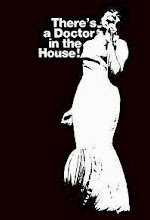
From her first album*, Big Maybelle Sings (Savoy LP 14005, October 1957) until the posthumous The Last Of Big Maybelle (Paramount LP 1011, 1973), Mabel Louise Smith was a steady and beloved presence on the U.S. music scene. Today, she is remembered most for her Okeh Recordings (buy them here) which she did early on in her career (1952-1955). Recently, her name was among the 2011 inductees for the Blues Hall of Fame.
However, throughout her career she never made it into the first line of performers. For one thing, because due to her feisty appearance she was for years the laughing stock of the press. Sadly enough, it's hard to find any news item of the epoch that doesn't refer to her weight:
The laughs that singers Bo Diddley and Big Maybelle Smith are getting in ex-deejay Allan Freed's Apollo Theatre show in Harlem when they finish their duet. Instead of the 150-pound Diddley picking up the 275-pound Big Maybelle in his arms, she carries him off stage on her shoulders, like a sack of pota- toes. (JET magazine, Feb 18, 1960) How the management at Chicago's Regal Theater worried about the beams holding up the stage when 300-pound, hip-shaking Tiny Topsy and the 460-pound blues shouter Big Maybelle appeared on the same bill and joined some 30 other top performers in a rousing grand finale that actually had the big movie house rocking. (JET magazine, Sept 7, 1961)
And I posted another item, likewise from JET, at the end. You can see Big Maybelle stepping in New York, and the photograph is accompanied by a caption that again refers, indirectly but quite clearly, to Big Maybelle's weight: »Doing the Twist to end all Twists.« Musically speaking, Big Maybelle's appearance was matched by appro- priate songs like »Candy« (with such memorable lines as »candy's always handy when I need sympathy«) which was her first recording for Savoy in 1956 (Savoy 1195A) and proved a solid hit.
Billboard ad Nov. 3, 1962
For another thing, after the mid-'50s-craze of classic R&B and blues-belting in the manner of the Big Mamas had faded record companies were increasingly at a loss of how to market a voice and a personality like Big Maybelle's. Things were to get worse when Big Maybelle left Savoy for Brunswick in 1961. The a&r men at Brunswick saw obviously no niche for a raspy-voiced blues shouter and moulded her into a MOR-pop singer, forcing pop-jazz ballads onto her and exposing her to a full orchestra with string section and all. Nonetheless, they sought a tie to Big Maybelle's past and made her re-record her former hit »Candy«. The song was then advertised with the words »Big Maybelle swings sweetly«. You can hear this version below, and mind Big Maybelle shrieking at around 3:30.
Brunswick LP # 754107 (1962)
Brunswick mis-handled Big Maybelle further by putting out an album entitled What More Can A Woman Do? (Brunswick LP # 754107). It con- tains Big Maybelle singing, most often rather awkwardly, songs which did not befit her vocal range or her style. The contrast between her rough belting style and the slickness demanded by most of the songs, between her deep voice and the vocal register of those tunes is painful to hear. At best we might consider it an attempt at cross-breeding contrasting musical styles, but surely this wasn't the idea behind it. So Big Maybelle was forced into a mould that wasn't hers when letting her do what she could best would have been a much better strategy.
There are some rare songs on the Brunswick LP that show that Big Maybelle could still cope with the predicament of not being allowed to be herself. To my taste, the best song on the LP is her version of »How Deep Is The Ocean«. Perhaps it is her deep and desperate-sounding voice that render this tune special, and from the very beginning, with the strings shivering deeply in menac- ing minor, Big Maybelle really gets into it. When her voice soars up you can still hear the belter she actually was but it doesn't sound out of place here.
Big Maybelle: »Candy« / »How Deep Is The Ocean« from the Brunswick LP # 754107 (1962):
* * *
From JET, May 4, 1961, page 37.
*Note: The spurious album Epic »EG 7071« from 1954, widely referred to, did not exist in its time. I never saw a copy of it nor even a photo of the presumed cover.
During the '60s, black gospel was somewhat of an export success story. Several groups toured Europe, and few more so than the Robert Patterson Singers from Brooklyn. Repeatedly they went to the Netherlands, Germany and the UK, and some of their concerts in Europe were recorded.
Saba LP # 15153 back cover
Robert Patterson, pianist and arranger, first recorded with a vocal group in December 1950. They then built a solid recording career, albeit the members of the singing group were chang- ing over the years. Their spiritual way came to an end when they »turned pop« in August '71 and signed a contract with Atlantic; in Feb- ruary '72 their one and only Atlantic album (Atco LP # 380) saw the light of the day. Fittingly, they now didn't play Gospel venues but opened at the Hilton International in Las Vegas on June 26 of the same year, squeezed in between such bored Nevada-veterans the likes of Tom Jones and Elvis.
Back in 1965, they had come to Germany for the first time, appearing at the American Spiritual Festival in Bremen. In November '67, they were back in Europe, first in Amsterdam, then in the town of Villingen in the Black Forest region. Enthustiastically received, they gave a concert in the local SABA auditorium on November 30, 1967. This concert was taped and released in 1968 on a German pressing. Another concert, in Frankfurt, was likewise recorded and released in the U.S. on Minit Gospel # 24021 (as »The Soul of Gospel«). However, being too much in the pop mould for some, too long abroad for others the Patterson Singers elicited more than one biting remark in the contemporary press:
»The singers, resembling the Supremes in appearance and demeanor, went through their set with all the professionalism and showmanship of that soul group. Their voices left nothing to be desired. But something was lost amid all the glitter in their slick interpretation of gospel material. ... The group seems to have carved out a successful niche miles from "down home"« wrote Daniel Goldberg in Billboard (Sept. 6, 1969, page 32).
The vocal group of the Patterson Singers in November 1967 included Elaine Davis (formerly of Inez Andrews's »Andrewettes«), Everlena Miles, Mary Stephens, Irene Leader and Mildred Lane (lead vocals). Mildred was part of the Back Home Choir of the Greater Harvest Baptist Church during the early '60s and then became a member of the Patterson Singers.
Saba LP # 15153 (1968)
The Black Forest concert of the Patterson Singers consists of palatable gospel standards popular in Europe (»He Got The Whole World In His Hands«, »Down By The Riverside«) and some other material besides (»Freedom«). Quite clearly, the latter stuff is the one that is of interest to us and, equally obvious, the highlight of the concert is their 6-minute-plus rendition of »He Won't Fail You« (variously mis-spelled on the German LP sleeve as »We Wan't Fail You« or »We Won't Fall You«, lucky us they didn't concoct variants of the »We Won't Nail You«-sort!!) Sorry, back to serious. The song comes at the middle of the concert (if the sequence of songs on the LP is to be trusted) and makes for a soaring climax. It is basically separated into two parts both showcasing lead singer Mildred Lane.The first, more traditionally-styled part has Mildred shouting along with the group behind her, and it already makes for a nice listening experience, soulful, beat-driven and all. But after some 4 minutes and thundering applause, Mildred kicks it really off with a remarkable and sky-downing solo that'll send the shivers down your spine. Listen to her how she does it and freeze in awe:
The Robert Patterson Singers feat. Mildred Lane:
»He Won't Fail You« from the Saba LP »Gospel Meeting Tonight« (1968):
Today's song needs no introduction. It's one of the very hymns of Soul music and a staple standard of contemporary Soul Revival Shows. But there is more to the song than meets the ear, starting with the fact that most people nowadays won't be able to name the original singer ...
Atco LP # 33-215 (April 1967)
It was Atlanta-born Arthur Conley ... not a household name today except among those who are living in the R&B-universe anyway. His name didn't acquire eternal fame as did his song »Sweet Soul Music«. In January 1967, when the tune was recorded, Arthur had just turned 21. Judging from the pictures of the time he was a pretty guy and certainly nice to look at twice. However, he didn't make it on the cover of his own first LP. Instead, on the cover we see a dark skinned beauty posing on a plushy sofa. We behold her as if looking through a keyhole, a visual effect which was certainly meant to enhance the overall seductive feel. Sex sells. And not only in this case: There are myriads of LPs from the '60s and early '70s, above all in the instrumental and jazz realms, graced with unknown beauties or cuddling couples who had no relation whatsoever to the musicians or the songs. Like to see some examples? Google for the 1963 LP »Got That Feeling« by the Johnny Lytle Trio (Riverside), Dave Pike's 1964 LP »Manhattan Latin« (Decca) or Brother Jack McDuff's 1968 LP »The Natural Thing« (Cadet)!
Arthur Conley
Arthur Conley was made by Otis Redding: Otis discov- ered him 1965 in Baltimore and then took him under his wings. Arthur's first recordings were released in the same year on the Jotis label which was financed and produced by Otis Redding. It is unknown, or often underestimated, of how astute a businessman Otis was. And Arthur was a valuable asset in Otis's business plans because apart from being a singer Otis pleased to see himself as a producer and songwriter. For this he obviously needed a gifted singer who sounded like Big O but wasn't Big O. In fact, Otis discovered, it could be Arthur. In the authoritative words of producer Tom Dowd, therefore, »Arthur Conley was the invention of Otis Redding« (quoted in Peter Guralnick's Sweet Soul Music. Rhythm and Blues and the Southern Dream of Free- dom, New York 1999, page 318).
But clever Otis wasn't satisfied for long with having Arthur on the insignificant Jotis label. Aiming higher, Otis got Arthur onto the Atlantic roster for his first LP, Atco LP 33-215 (»Sweet Soul Music«). This LP not only features five songs by Otis but he also wrote the notes on the back cover and presented himself as »producer« and »A&R man«. And the song »Sweet Soul Music« was penned by Otis as well. Rumor has it that Otis wished to record that song himself, for his house label Stax, but Jim Stewart (of Stax) found the tune not inspiring enough and vetoed to have it recorded. Otis was little amused and gave the song to his protégé Conley.
Indeed, the song is anything but original: Parts of the melody are taken from an obscure Sam Cooke-song, »Yeah Man«, and the intro comes right out of the Marlboro ad song »The Magnificent Seven«. The popular Marlboro tune was composed in 1960 for the known Western of the same title and only from 1963 used to sell cigarettes. It was then used by Otis to sell »Sweet Soul Music«: »He [=Otis Redding] believed in that song and Stax refused to put it out (...). Listen to that song. The introduction and the harmony in the middle come from a classical song. But nobody relates to the fact they heard it every single day on the radio and TV, a thousand times a day. It was the Marlboro theme song.« (Wayne Cochran as quoted in Scott Freeman: Otis! The Otis Redding Story, New York 2001, page 190).
If you listen to the lyrics of »Sweet Soul Music«, which are familiar enough, you will realize that the song puts Otis on a pedestal and makes him into sort of a Soul Monument, accompanied by Lou Rawls, Sam & Dave, Wilson Pickett and James Brown. It's a little embarrassing, really. The unsympathetic interpretation of this fact would be that this did flatter Otis's well-developed self esteem. A kinder legend has it that it was actually Arthur's idea to mention Otis in the song, earning him a co-writer's credit. Whatever. In any case, Arthur honors his mentor again at the end of the song and calls him up with the fading words »Otis Redding got the feelin' ...«
But there is more: By 1967, Otis's relations with Stax had become strained. Although he was contracted to Stax for another three years (having prolonged his contract for another five years in 1965), many suspected that Otis was double-crossing Jim Stewart by putting out feelers to the rival Atlantic Records and their A&R man Jerry Wexler. When Otis brought Arthur Conley to record in Rick Hall's Fame Studios in Muscle Shoals, Alabama, the rumors grew louder: The Fame Studios were in 1967 mainly used by Wexler's Atlantic stars to reproduce the famed »Memphis Sound« of Stax. And it certainly didn't quiet the rumors when Arthur's first LP was then released on a subsidiary of Atlantic, Atco Records ... On the contrary, it put the cherry on the pie for those who thought that Otis was having his cake and ate it, too.
BILLBOARD April 29, 1967
Thus, »Sweet Soul Music« is a song with an interesting story behind it. It was recorded on January 20, 1967, in Muscle Shoals and rushed out in March. It immediately shot up in the charts, reaching # 02 r&b and # 02 pop in spring '67. And it had to compete with Aretha Franklin's »I Never Loved A Man (The Way I Love You)« and »Jimmy Mack« by Martha & The Vandellas, among others! You can listen here to the mono album version:
Arthur Conley: »Sweet Soul Music« from the Atco LP # 33-215 (mono, 1967):
Do you like good music, ha, that sweet soul music
Just long as it's swingin', oh yeah, oh-oh yeah
We are here on the floor y'all, are goin' to a go go
Dancin' with the music, oh yeah, oh yeah
Spotlight on Lou Rawls y'all, ah don't he look tall y'all
Singin' »Love's A Hurtin' Thing« y'all, oh yeah, oh-oh yeah
Spotlight on Sam and Dave y'all, ah don't they look great y'all
Singin' »Hold On I'm Comin'«, oh yeah, oh-oh yeah
Spotlight on Wilson Pickett now, that wicked picket Pickett
Singin' »Mustang Sally«, oh yeah, oh-oh yeah
Spotlight on Otis Redding now, singing »Fa Fa Fa Fa Fa Fa Fa Fa«
Fa fa fa fa fa fa fa fa, oh yeah, oh-oh yeah
Get in on this! (??)
Spotlight on James Brown y'all, he's the king of them all y'all
He's the king of them all y'all, oh yeah, oh-oh yeah
Do you like good music, that sweet soul music
Just 'long with it swingin', oh yeah, oh-oh yeah
I got to get the feelin', I got to get the feelin'
Do you like good music, that sweet soul music
Help me get the feelin', I want to get the feelin'
Otis Redding got the feelin', James Brown, he got the feelin' Oh I love good music ...
In October 1967, Chess / Checker placed an ad in Billboard (Oct. 7, page 37), presenting ten newly released »religious albums« as the »Ten Commandments«. Prominently in this ad features a LP by Stevie Hawkins entitled »Two Wings«:
For the record (excuse the pun), it's Checker LP # 10024. Stevie Hawkins was barely 15 when this album was released and, believe it or not, it was not his first one for the label. His debut record was in the stores two years before in 1965 and recorded when he was just eleven years old.
Being marketed as a child prodigy of gospel, his first LP was fittingly called »The Spiritual Soul of a Child«. The cover of the album (see the ad from Aug. 14, 1965) shows Little Stevie (the Prodigy, not the Wonder) in tender age, and it's the only photo of his which I could find.
I don't know his first LP, don't possess it and never listened to it. However, gracious fate put his second Checker LP in my hands, and that's good enough. Not only for the music, by the way, but also for the information about Stevie we find on the back cover. Thing is, I don't know much about Stevie either. It seems that he recorded the two LPs for Checker but then disappeared from the gospel scene (at least as a recording artist). Literature on Gospel music does not mention him as far as I can see (I might have overlooked something). The net isn't of much help either. He certainly has no connection to the California-based Hawkins family (of »Oh Happy Day«-fame). There are several other U.S. musicians by the name »Stevie Hawkins« around today but they can't possibly be identical with our Stevie. So I am mainly left with what is said about him on the back cover of his LP. Given the scant information in other sources I thought it worthwhile to reproduce here the biographical notes (by Morry Roth) from the back cover:
At fifteen years of age, Stevie Hawkins has been singing before audiences for nine years and has been singing professionally for five years. ... Stevie was born on St. Valentine's Day in 1953, the son and grandson of ministers. His father is the Reverend L.E. Hawkins, pastor of the Church of God in Christ, Cleveland, in which to this day Stevie sings in the Youth Choir. His late grandfather, after whom he was named, was the Reverend R. Robinson of Waco, Texas, where Stevie was born. Trained largely by his mother, Stevie made his professional debut at the famous WHK Auditorium in Cleveland in 1962. Since that time, he has appeared on programs with Mahalia Jackson, Robert Anderson, Raymond Rasberry, Roberta Martin, Dorothy Norwood, Edna Cook, Emilie Braum (note: correct »Braun«), The Davis Sisters, The R.F. Williams Singers and the Blind Boys of Ohio.
That's as far as it goes. If somebody knows more please let me know.
* * *
Let's turn to his LP now. It contains 12 songs, and some two or three of them are pretty much in the R&B-gospel mould. The very first song on the album, »Same Old Bag«, might the best of these as was noted by others as well (see here). Stevie's voice comes across here beautifully and doesn't sound much like that of a 15-year old (although it doesn't sound really mature either):
Stevie Hawkins: »Same Old Bag« from the Checker LP # 10024 (stereo) (1967):
This is a nice one. The problem is that several other songs, actually the major part, of this LP aren't in this style at all. Rather, Stevie performs a number of classical church hymns, with accompanying organ and all. Not that I wouldn't like that, on the contrary. If the singer is up to it, that is. But Stevie, I am sorry to say, isn't quite. The songs are too demanding for his young voice (I wouldn't dare saying for his talent for that I cannot judge) and singing in the upper register doesn't go well with it. He sounds very youthful, even »boyish«, while singing those hymns and this might appeal to some. And you sure hear his commitment, or as the notes on the back cover put it: »He has also added a new maturity in his phrasing and a deeper and more profound understanding and interpretation of the spiritual songs he sings. ... there is about these songs an impressive feeling of command and grown-up insight into the spiritual content of the songs he sings.«
To judge for yourself, you can hear two further songs from Stevie's LP. The first, »Just To Hear Some Sinner Pray«, is another R&B-styled gospel-ditty with Stevie singing again in the lower to middle register. The second song, on the contrary, is one of those hymns I spoke about above. It's entitled »It's In My Heart«, and listening to it after »Just To Hear Some Sinner Pray« will make the contrast all the more obvious. Maybe it's not fair to confront the songs in this manner but that's what the LP does, not I. To my taste, Stevie wasn't yet fully prepared to tackle the tricky artistry of the soaring »It's In My Heart« and hadn't developed the necessary vocal strength. (Imagine the song performed by Della Reese!) But then, Stevie recorded this song in January '66 when he was only 14. Quite an achievement, after all.
Stevie Hawkins: »Just To Hear Some Sinner Pray« / »It's In My Heart« from the Checker LP # 10024 (1967):
Shirley Ellis: »Sugar Let's Shing-a-ling« from the Columbia LP # 2679 (1967):
The song was recorded March 20 / April 10, 1967, in New York. It appeared on Columbia # 44137 and then gave the name to Shirley's first (and last) Columbia LP. Yes, another Columbia effort at breaking into the soul market. Admittedly, in producing Shirley Ellis of »Name Game«-fame Columbia had a more convincing, if also more conventional and commercially oriented soul package than before. They didn't follow it up, after all. A Billboard critic called the song a »blues rocker that could prove a sales smash and a new dance craze« (Billboard May 20, 1967, p. 18). Up to a point, it proved both. However, the »Shingaling« was no Ellis original: since the beginning of '67, Don Covay and others had already been putting out dance tunes of that name.
But what is commercial success? Not really a helpful category. I'd rather think about how to categorize Shirley's softish-smoky, skin-tighteningly salacious voice. Haven't come up with something helpful, either. It hardly needs a category to be carried away by Shirley, though. So let's forget about categories and concentrate on the song. Chances are that you've heard it before; if not, you can do so above. It comes from this LP, in mono:
In case you want to hear more, which I could understand better than anyone, and for good measure as well, here is a second song from this LP. It was written by Shirley Ellis(ton) and bears the simple title »Waitin'«. Soulfully shuttling along, it will not be shortlisted for the most-original-song-of-the-'60s-award but for what it's worth it'll get your feet moving and your hips swinging. And if you listen closely, all you ever need to know about the philosophy of life is built into that song:
Waitin', waitin', waitin' is all I ever do
Waitin', waitin', waitin' I bet you're waitin' too ...
That's how it is, that's how it be: Either I wait for you or you wait for me ...
Well, you don't have to wait any longer, let's listen to Shirley again:
Shirley Ellis: »Waitin'« from the Columbia LP # 2679 (1967, mono):
On the cover of the Gordy LP # 902 we find a huge teddy, rather melancholically looking and couched in blue. It is Martha's teddy. Aptly, he appears on the first LP of Martha (Reeves) & The Vandellas, released in June 1963 and entitled »Come And Get These Memories«.
To present this vocal group from Detroit is unnecessary, you all know them. Those few that don't will have heard their greatest hits: »Heat Wave« (1963), »Dancing In The Street« (1964), »Nowhere To Run« (1965) or »Jimmy Mack« (1967). But in the summer of '63, they were still on their way to fame. And so was Berry Gordy's Motown Empire.
Martha Reeves was working as secretary of Motown's A&R-man William »Mickey« Stevenson since 1961. It then happened, on June 29, 1962 (or, following Martha's Memoirs, only in July), that she was around when Marvin Gaye had gone into the studio to record »Stubborn Kind Of Fellow« (later released as Tamla # 54068). Alas, the female backing group hadn't shown up, and thus Martha called her friends Ros- alind, Annette and Gloria to come over. The female quartet, without name as yet and assembled for the occasion, provided the backing vocals on Marvin's recording. However, for the being that was as far as it got.
Three months later, in September '62, chance again smiled at the Vandellas-To-Be. The session musicians were about to finish the raw track of the tune »I'll Have To Let Him Go«, while everybody waited for the singer to appear. The song had been given to Mary Wells, the most prominent female voice of Motown's at the time, but now there was no trace of her. Illness, she was to say later, prevented her from coming to the studio, yet others maintain that she didn't like the song and therefore didn't materialize for the recording session. Now, here is a tangle: It was prohibited, following a recent agreement with the labor union of studio musicians, to record a vocal tune without any singer being present in the studio. That is, the agreement was violated if the studio musicians laid down parts of a track with the vocal part being added later. This had become more and more common during the last years. As it happened, an inspector of the union inexpectedly showed up in the studio and the Motown bosses were forced to present him with a singer for the session. Martha was sitting upstairs in the office, and when she was called to the studio she jumped at this chance. The song, featuring Martha Reeves, was then recorded only to save the appearance and to satisfy the inspector. Yet when Mickey Stevenson and Berry Gordy Jr. afterwards listened to the tape with Martha's voice on it they were pleasantly surprised and thought about giving Martha a recording contract. Thus the story of Martha & The Vandellas was about to begin.
First publicity shot 1962 (from Reeves's autobiography)
Left to right: M. Reeves, R. Ashford, A. Beard Sterling
... the trio without wigs in an early Afro look!
We'll come to the teddy soon enough, be patient. Before we do, let it be known that Martha Reeves called her friends again, and together they recorded several songs at the Motown studio. Again this was to the satisfaction of Berry Gordy, who was in general hard to please, and he presented the whole group with a recording contract. Gloria Jean Williamson backed off at the last moment when she had to sign the contract, but the others, Martha Reeves, Rosalind Ashford and Annette Beard Sterling, did curl their names on it. And Martha had typewritten the contract herself, being the a&r secretary! Now it had to be settled under which name they were to record. The most famous version of how the name was found, as Martha Reeves told it, has it that the name »Vandellas« was a combination of Della (Reese), the singer Martha venerated, and »Van (Dyke Street)«, a street near which Martha was living. Pretty abstruse, if you think of it, and quite probably true.
The first song of the newly-formed Vandellas, Martha's »I'll Have To Let Him Go« with overdubs added, was released as their first single (Gordy # 7011). It didn't stir any waves, but Motown offered Martha & The Vandellas another chance. And that's how we are approaching the teddy, after all. On January 23, 1963, they recorded another song which was to have considerable success: »Come And Get These Memories« (r&b # 06, pop # 29). The tune was penned by the trio Brian Holland, Lamont Dozier and Edward »Eddie« Holland, then pretty unknown but later coming to fame as Motown's biggest hitmakers. The song was released in February on Gordy # 7014 and laid the foundation for the career of Martha & The Vandellas. Reportedly, Berry Gordy said after having heard the recording for the first time: »That's the sound I've been looking for. That's the Motown Sound!« (quoted in Martha Reeves with Mark Bego: Dancing in the Street. Confessions of a Motown Diva, New York 1994, p. 66). Nelson George wrote about this song:
»There is a joyful buoyancy to the melody and to Reeves' vocal that totally undercuts Eddie's lyric of painful breakup. Annette Sterling's and Rosalind Ashford's backing voices are beautifully arranged, heightening the tune's hummability. It was a decidedly "pop" record, with Reeves' voice mixed way up front and the instruments buried in the mix. It was a catchy record ...«
(N. George: Where Did Our Love Go? The Rise & Fall of the Motown Sound, London 2003, p. 85 f.)
And here is this song, from the same-titled LP:
Martha & The Vandellas: »Come And Get These Memories« from the Gordy LP # 902 (1963):
Motown put a lot behind that song and placed several ads in Billboard, which first were to make it known, then to proclaim its success. But they didn't leave it at that. Rather, they took inspiration from the song lines which run:
Lover, you've gone from me and left behind
So many memories
Here's your old friendship ring, I can't wear it no more
Here's your old love letters, I can't read them any more
Lover, you've gone from me and left behind
So many memories
Here's that old teddy bear (Come and get it)
That you won for me at the state fair
Here's some old valentine cards (Come and get 'em)
Give them to your new sweetheart ...
Thus the dropped lover sits around with an old friend- ship ring, the love letters, an old teddy bear and the Valentine cards, all reminiscent of former happiness and now only a painful memory. But the said objects also make for handy gimmicks, and so we find them not only on the cover of Gordy LP # 902 but also in an ad published in May '63. The teddy proved to be the most exploitable of these objects, and so it became part of the stage show of Martha & The Vandellas. Martha Reeves tells the story in her autobiography:
»The song itself is about a brokenhearted girl giving back to her boyfriend all of the mementos of their love-gone-bad. On stage I would use a large teddy as a prop. I sang a line about giving back the stuffed animal that had been won at the state fair. When I came to that line, someone would have hand me the teddy bear from the wings. Then I would throw it back when I would reach the line telling the boyfriend to come and get it.« (M. Reeves, Dancing in the Street, p. 66)
The ones responsible at Motown, ever shrewd when it came to promoting their acts, immediately recognized the potential of this prop and saw to it that Martha & The Vandellas were to be shown only with a teddy appearing somewhere. And it took more than one teddy to ensure that:
Let me add that apart from the teddy gimmick (which later was used by several other labels, see for example this ad from 1968), Motown had thought of yet another trick of highlighting the charms of the Vandellas. For their stage shows they were given white gloves, and these gloves »... glowed in purple light when we sang 'come on and get it'« (Martha Reeves). Thus the gloves became another recognition sign of the Vandellas and were pictured in a number of Motown ads (click for examples here and here). Without doubt, Motown was already in 1963 at the forefront of what publicity could achieve in the music business and this, nothwithstanding the good sound they were producing, was part of their success. And so it was not Michael Jackson (another Motown disciple) who had invented the »glowing glove«.
* * *
Finally some words about the album »Come And Get These Memories«. Martha Reeves in her Memoirs said the following about this her first LP:
»In the first couple months after Christmas, the Vandellas and I completed work on our debut album ... Our first album reflected the kind of music that was popular during that era. It included our cover versions of a couple of popular hits like Little Anthony & The Imperials' "Tears on My Pillow," Andy Williams's "Can't Get Used to Losing You," and a new version of "There He Is (at My Door)" on which I sang lead. The Come and Get These Memories album was not very successful on the charts when it was released ... Original copies of our Come and Get These Memories LP are now considered collector's items. The last one I saw in a record shop was priced at several hundred dollars« (Reeves, Dancing in the Street, p. 80).
But, as it goes with debut albums, the Vandellas had not yet found their later style and their future »nitty gritty image« which came with »Heat Wave«, »Dancing In The Street« and several other tunes all classics today. Richie Unterberger is therefore right when, in the All Music Guide to Soul, he put the Vandellas' first album in its proper historic perspective (p. 445): »Their debut album finds the Vandellas in a more limelight and pop- oriented style ..., with some girl group and doo-wop roots still in evidence.« And there is no better evidence for the girl group sound we find on this LP than the song »There He Is (At My Door)«. I personally think it is one of the best of the entire album, and it gains further significance for the fact that it belongs to the earliest recordings of Martha & The Vandellas, recorded back in August 1962 and actually still before they were known officially as »Vandellas«:
Martha & The Vandellas: »There He Is (At My Door)« from the Gordy LP # 902 (1963, mono):
I am interested in the music, not in the relative rarity of discs. I also listen with great pleasure to Aretha Franklin, because she has the voice of the century. Music is no Faith and therefore has no heretics.
* * *
No music downloads on this site. All mp3s (with very few exceptions where noted) are ripped from original vinyl discs. If something on this blog is objectionable to anyone or should, for valid reasons, be re- moved from the net please let me know; it will be removed. And to reiterate: This is a non-profit blog.