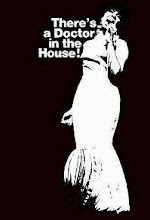
... sounds weird? No, I didn't think it up! Instead, you'll find it on the back cover of Jackie Wilson's Brunswick LP # BL 54110 released in April 1963. This LP was entitled after his recent hit, »Baby Workout« (02/1964). Now let's just for a moment imagine that Jackie Wilson browsed the Billboard issue which was issued exactly t o d a y 5 0 y e a r s a g o . He would have found his latest single »Baby Workout« for the first time entering the pop Hot 100 charts on # 81.
ad in BB March 09, 1963, p. 17
It took another two weeks until »Baby Workout« also entered the R&B singles charts, immediately rocketing to # 14. As you will probably know, »Baby Workout« was to become Jackie's fourth #1 r&b hit, and it eventually made it to #05 pop, becoming one of the biggest successes of his entire career.
In the charts of the time, Jackie's »Baby Workout« competed with »Our Day Will Come« (Ruby & the Romantics), »Puff (The Magic Dragon)« (PP&M) and the Orlons' »South Street«, not to mention the girl groups dominating the upper charts regions, e.g. the Chiffons with »He's So Fine« and the Cookies with »Don't Say Nothing Bad About My Baby«. In April, »On Broadway« (Drifters) and »Surfin' U.S.A.« were coming up strong against Jackie's hit tune.
However, »Baby Workout« was released at a time when Jackie Wilson wasn't passing the best of times. Well, there was still some of the glamorous life left for Jackie, for example at a dinner in honor of the president of Brunswick Records in the New York Key club when he was approached by »cute Playboy Club bunny« Marion Barker for an autograph (from JET, Dec. 20, 1962, p. 33):
But there were problems as well, because a year ago Jackie had been shot in his abdomen by a woman. The bullet had never been removed, but towards the end of 1962 the bullet started to move in his body and Jackie had to cancel several enga- gements. In January 1963, he even entered a hospital in order to prepare for an operation to have the bullet removed. In the end, there was no operation because the bullet's wanderings were judged less dangerous than risking an operation. The medics concluded that Jackie was overworked and a »victim of nervous exhau- stion«, so they sent him home, bullet and all. »Singer Jackie Wilson checks X-ray which indicated that he is not in need of an operation, because of a bullet moving about in his abdomen ...« (from JET, January 24, 1963, p.32):
In January '63, Jackie also escaped a paternity-case warrant by the Detroit police by sending a buddy of his to turn himself in and claiming to be Jackie Wilson while Jackie himself left the town and disappeared (JET Jan. 24, 1963, p. 43). Living on with the bullet (and an open paternity case), Jackie did not heed the medics' advice to relax but rather went back to the stage and in mid-February performed at Pittsburgh's Syria Mosque. In March, he then witnessed the rise of his latest single release »Baby Workout« (the first reports, on March 2, indicated »strong airplay« of his song in the New York area), and later that month he made an appearance on the Ed Sullivan show.
At the beginning of April, Brunswick rushed an album out which was meant (as so often) to cash in on the recent success of »Baby Workout«.
The 12 songs on the LP, including of course »Baby Workout«, are claimed on the back cover to be »patterned after Jackie's smash hit single« in order to »lend further proof that Jackie Wilson is probably the greatest delineator of rhythm singing of his day« (oh, how I love that term!). As a dance compilation, the LP is no bad at all as there are mostly uptempo songs, but we have little overall variety and indeed the album seems very much constructed around Jackie's latest hit. It may be considered a pity, though, that Jackie's artistic talent and magnetic voice was - hmm, let's say: - squandered for rather mainstreamy stomp-your-feet-and-clap-your-hands tunes which recall, in their banality, many of the ditties Elvis was pumping out on his movie soundtracks during the mid-1960s. However, there are no outright turkeys on Jackie's LP, and the instrumentation and the arrangements are way better than what we find, to continue the comparison, on Elvis's movie albums. I for my part espe- cially love »The Kickapoo«, in itself little else but the umpteenth novelty dance tune, for its »overture« that has Jackie's voice shine forth so characteristically. And then there is »Baby Workout« which first charted today 50 years ago.
Jackie Wilson: »Baby Workout« / »The Kickapoo« from the Brunswick LP # 54110 (1963, mono):
From her first album*, Big Maybelle Sings (Savoy LP 14005, October 1957) until the posthumous The Last Of Big Maybelle (Paramount LP 1011, 1973), Mabel Louise Smith was a steady and beloved presence on the U.S. music scene. Today, she is remembered most for her Okeh Recordings (buy them here) which she did early on in her career (1952-1955). Recently, her name was among the 2011 inductees for the Blues Hall of Fame.
However, throughout her career she never made it into the first line of performers. For one thing, because due to her feisty appearance she was for years the laughing stock of the press. Sadly enough, it's hard to find any news item of the epoch that doesn't refer to her weight:
The laughs that singers Bo Diddley and Big Maybelle Smith are getting in ex-deejay Allan Freed's Apollo Theatre show in Harlem when they finish their duet. Instead of the 150-pound Diddley picking up the 275-pound Big Maybelle in his arms, she carries him off stage on her shoulders, like a sack of pota- toes. (JET magazine, Feb 18, 1960) How the management at Chicago's Regal Theater worried about the beams holding up the stage when 300-pound, hip-shaking Tiny Topsy and the 460-pound blues shouter Big Maybelle appeared on the same bill and joined some 30 other top performers in a rousing grand finale that actually had the big movie house rocking. (JET magazine, Sept 7, 1961)
And I posted another item, likewise from JET, at the end. You can see Big Maybelle stepping in New York, and the photograph is accompanied by a caption that again refers, indirectly but quite clearly, to Big Maybelle's weight: »Doing the Twist to end all Twists.« Musically speaking, Big Maybelle's appearance was matched by appro- priate songs like »Candy« (with such memorable lines as »candy's always handy when I need sympathy«) which was her first recording for Savoy in 1956 (Savoy 1195A) and proved a solid hit.
Billboard ad Nov. 3, 1962
For another thing, after the mid-'50s-craze of classic R&B and blues-belting in the manner of the Big Mamas had faded record companies were increasingly at a loss of how to market a voice and a personality like Big Maybelle's. Things were to get worse when Big Maybelle left Savoy for Brunswick in 1961. The a&r men at Brunswick saw obviously no niche for a raspy-voiced blues shouter and moulded her into a MOR-pop singer, forcing pop-jazz ballads onto her and exposing her to a full orchestra with string section and all. Nonetheless, they sought a tie to Big Maybelle's past and made her re-record her former hit »Candy«. The song was then advertised with the words »Big Maybelle swings sweetly«. You can hear this version below, and mind Big Maybelle shrieking at around 3:30.
Brunswick LP # 754107 (1962)
Brunswick mis-handled Big Maybelle further by putting out an album entitled What More Can A Woman Do? (Brunswick LP # 754107). It con- tains Big Maybelle singing, most often rather awkwardly, songs which did not befit her vocal range or her style. The contrast between her rough belting style and the slickness demanded by most of the songs, between her deep voice and the vocal register of those tunes is painful to hear. At best we might consider it an attempt at cross-breeding contrasting musical styles, but surely this wasn't the idea behind it. So Big Maybelle was forced into a mould that wasn't hers when letting her do what she could best would have been a much better strategy.
There are some rare songs on the Brunswick LP that show that Big Maybelle could still cope with the predicament of not being allowed to be herself. To my taste, the best song on the LP is her version of »How Deep Is The Ocean«. Perhaps it is her deep and desperate-sounding voice that render this tune special, and from the very beginning, with the strings shivering deeply in menac- ing minor, Big Maybelle really gets into it. When her voice soars up you can still hear the belter she actually was but it doesn't sound out of place here.
Big Maybelle: »Candy« / »How Deep Is The Ocean« from the Brunswick LP # 754107 (1962):
* * *
From JET, May 4, 1961, page 37.
*Note: The spurious album Epic »EG 7071« from 1954, widely referred to, did not exist in its time. I never saw a copy of it nor even a photo of the presumed cover.
I am interested in the music, not in the relative rarity of discs. I also listen with great pleasure to Aretha Franklin, because she has the voice of the century. Music is no Faith and therefore has no heretics.
* * *
No music downloads on this site. All mp3s (with very few exceptions where noted) are ripped from original vinyl discs. If something on this blog is objectionable to anyone or should, for valid reasons, be re- moved from the net please let me know; it will be removed. And to reiterate: This is a non-profit blog.