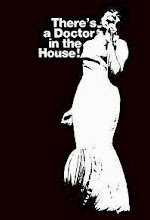
You thought you know all versions of this song? You reckoned there is no artist on earth who could perform this tune as if you had never heard it before? Listen to this fabulous version by Gladys McFadden and the Loving Sisters, from 1969 ...
Be prepared, folks, tonight the bells strike up a merry peal! I, once again, return to one of the LPs of the fabulous Loving Sisters of Little Rock.
You can hear on this blog a number of songs from their 1970's LPs, so tonight we'll go back further in time, and actually as much you can when following up the Loving Sisters' career, all the way back to their first Peacock LP, Trying Time (PLP # 125), released in May 1965. As their later allbums, this LP offers consistently outstanding material and, a fact especially noteworthy, this material is mainly self-penned (penned by the group's leader Gladys Williams-Givens-McFadden, that is). It is not much of the standard studio LP, that is, all the songs being recorded for the occasion. Rather, the tunes featured were recorded between 1962 and 1965, and some were previously released on 45s, viz. Peacock # 3011 (1962) and # 3027 (1964); a third 45, Peacock # 3060, seems to have been released more or less at the same time as the LP, in 1965. They all were recorded, over the years mentioned, in Houston's Gold Star Studios (see Andy Bradley / Roger Wood: House of Hits. The Story of Houston's Gold Star Recording Studios, Austin 2010, p. 109 for details). So this LP is kind of a summary of the Loving Sisters' early work for Peacock; it also contains one song with the Sisters' father, Reverend Williams, singing the lead vocals.
Because there is not much known about the Loving Sisters, I hope it might be interesting to some of you to read the liner notes from the back cover of their 1965 Peacock LP; the relevant parts - leaving out all generic panegyrics praising the group's excellence, which I take for granted - are the following:
Their singing career started when they were very young. The girls, Leona, Lorraine, Josephine, Anner (!) and Gladys, the original members. The daughters of Reverend and Mrs. Aaron Williams. Reverend Williams pastored a small church and Mrs. Williams served as Choir Directress. During those years the girls participated in the church singing activities along with their two brothers Archie and Luther. When Gladys (the baby girl) reached the age of nine she organized the girls group and they performed at the church and along with the school glee clubs ... At twelve years she began to compose her own compositions. When these songs were performed by the girls, the audiences were amazed at the fact that young children could display the words of God so emphatically ... In 1951, the girls faced a sudden shock at the death of Leona, the oldest sister. It was some time before they recovered from the loss and attempted to continue their career. They accepted a new member Bobbie Lewis, to fill the vocal vacancy and since then have accepted her as though she were a sister of their family. Fortunately in 1962, they were heard by the Pilgrim Jubilee Singers, a professional singing group. They recommended the girls contact Peacock Records Inc., in regards to becoming members of the Peacock Spiritual Family. The group auditioned and was accepted for recording. At the first session their favorite selection (and what they felt most appropriate) »Who Can Ask For More,« was recorded and and later released as their initial Peacock effort. The record sold very well and The Loving Sisters joined with Reverend C.L. Franklin for their first personal appearance tour. The tour proved successful and offered quite an experience for the girls. Since then they have toured the United States many times and many recordings have been recorded and sold. Including such favorites as »Don't Let My Running Be In Vain,« »Sing Your Troubles Away,« »Fix Me« and the ever popular »Trying Time,« which was written by Gladys in a small Mississippi town, during the time the Sisters were participating in a freedom march ... The Loving Sisters recently added another member Mary Moore, who serves when needed as vocalist and also designs costumes for the group.
As for the names mentioned in the first paragraph, »Anner« should of course be »Anna« (or »Ann«), and the spelling of the names in general deviates in more than one case from the names as we find them on their 1970's LP (check them here). But it matters not.
The song »Don't Let My Running Be In Vain«, mentioned in the notes on the back cover, was copyrighted by Gladys Givens in Dec. 1962, presumably recorded around that time and subsequently released on Peacock # 3011 (B-side). You can hear it below. It's a beautiful example of a song that comes in two parts, the first almost lyrical, featuring a vocal solo and preparing, with much melodic suspense, for the second part, the second having the background vocals joining in fully. And it comes together with another song from their LP, »Lord Deliver Me«, again penned by Gladys, and only released on this album; it was probably recorded at a later date, possibly in 1965. After an ear-catching piano cascade that opens the song, Glayds powerful voice sets in and, as the song goes on, she cries her soul out. Let not anybody tell me that the Loving Sisters, and their lead singer in particular, have not been underrated in the history of black gospel music!
The Loving Sisters: »Don't Let My Running Be In Vain« / »Deliver Me Lord« from the Peacock LP # 125 (1965):
Once again are the Loving Sisters and their vocal marvel, Gladys Givens McFadden, back on this blog ... and it was about time! The ob- vious occasion for today's post is their 1969 (?) album Peacock LP # PLP 162 A Tribute to Dr. Martin Luther King. As always with the Loving Sisters (and you can read about several of their '70s albums in earlier posts), this LP contains mainly material written by Gladys McFadden and, in some cases, her son Leonard Givens. Leonard is also supposed to play piano and organ on these recordings (though this remained uncredited), in one song, »What My God Can Do«, you also can hear him singing.
This LP offers material so varied that I'd like to play it from beginning to the end. Alas, this isn't possible. There are some deeply-felt hymns showing Gladys McFadden at her very best (»Trials Of Job«, »Go Down Moses«) and, of course, one song dedi- cated especially to MLK, »Tribute To Martin Luther King«. However, the last-men- tioned tune focuses on the assassination of MLK and thus might not be fitting when celebrating his birthday. So I chose two »freedom« songs from this LP for today's (actually tomorrow's) occasion: »Time Is Winding Up« and »Freedom Isn't Free«.
»Time Is Winding Up« is an uptempo sing-and-shout tune; it culminates in the message we gotta have freedom! It is correctly listed on the back cover but appears as »Time Is Almost Up« on the label. »Freedom Isn't Free« is completely different: laid back, with the voices of the entire group much in evidence. There is even a second (soprano) lead voice apart from Gladys's, but I don't know to whom of the Sisters it belongs.
In memory of Martin Luther King.
The Loving Sisters: »Time Is Winding Up« / »Freedom Isn't Free« from the Peacock LP # 162 (1969):
Let's just pick up last Sunday's thread with the Mighty Clouds Of Joy. The follow-up album to their Live At The Music Hall LP was Peacock LP # PLP-151 (if we disregard their Best Of album, Peacock # 136, which came in between). There's some confusion about when this LP (that is, Presenting: The Untouchables) was released, and dates from the mid-'60s to 1973 have been proposed. However, 1968 seems to be the most probable date; Hayes/Laughton's Gospel Discography corroborates this.
Peacock LP # 151 back cover
This album is flawlessly produced and the tunes are much varied in style. Maybe it does lack a standout tune. If I had to chose one it would be the hymn »I'll Trust In God« (aka »My Heavenly Father Watches Over Me«), a beautiful solo performance by Ermant Franklin, but it's too much of a funeral song and I can't bear hearing it today. But Ermant Franklin it is, so we go with his »Call Him Up« and »He's Real To Me«. (E. Franklin sings lead on most songs, leaving only »Pray For Me« and »How Far Have I Stray- ed« to W. Joe Ligon).
»Call Him Up« (»... I got a telephone in my bosom, I can call him up on my own ...«) is known under many titles: »Jesus On The Mainline« or »Go Tell Him What You Want«; The Caravans (feat. Albertina Walker) recorded this song as »Tell Him What You Want« (States # 154). Parts of the lyrics also crop up in Richie Valens's Woodstock performance of »Free- dom«, since he had sung gospel back in the '50s in Brooklyn (read more about it here: Denise Sullivan: Keep On Pushing. Black Power Music from Blues to Hip-Hop, Chicago 2011, p. 101 ff.). On the Peacock LP, the song is credited to »E. Franklin« (i.e. Er- mant Franklin, I presume) what is weakly justified by the fact that the song as performed by the Clouds is not exactly identical to any other version I know of (there are myriads, though). The song was for the first time recorded in the late '30s, but the peculiar charm of the lyrics hasn't worn off. - Read also the postscript.
»He's Real To Me« is likewise a standard tune and usually credited as traditional. It's one of the songs on this LPs where you can hear the Clouds backing the lead singer (or actually the lead sermonizer) with falsetto voices. Best I leave you now to the songs with the nice headline you find on many a Peacock LP above the song list: Your Program For This Performance! And here it is. Happy Sunday all!
Mighty Clouds Of Joy: »Call Him Up« / »He's Real To Me« from the Peacock LP # 151 (1968?):
POSTSCRIPT Oct 29, 2011
On the Melting Pot blog, you'll find a thoughtful review of the 3-CD set Fire in My Bones: Raw + Rare + Otherworldly African-American Gospel (1944-2007) released in Oct. 2009 (get info here). This review (read it here) is pertinent to topics often raised in this blog of mine, viz. the question concerning the relation between pop (secular) music and gospel and, a closely related point, how (and whether) to appre- ciate gospel music with or without regard to its sacred character. In addition, there are interesting remarks about the song »Call Him Up« aka »Telephone In My Bo- som«. I would like to quote here some passages from this review:
It’s the sacred character I’d argue that sets many of these performances above the standard fare produced in similar times. There’s a feeling in these performances that is shared in other sacred musics, but not as readily found in more secular, popular sounds (except not surprisingly when artists come from the Church, i.e. Aretha Franklin, Sam Cooke, Donny Hathaway, etc, etc, etc.). However you want to appreciate this music, what’s most important is that you DO experience it. Regardless of your own religious belief or feeling, this music is deserving of your attention and your ears will be richly rewarded once you delve into this fine set.
For those of you into Gospel Funk, there are plenty of choices here too. Lula Collins’ “Help Me” from 1973, is a track that could have just as easily ended up on obscure Tennesee funk comp. by itself. Aside from some relatively minimal religious references, it is easy to take this song on very secular terms. That’s a more difficult task with a song like “Telephone In My Bosom,” from the Amazing Farmer Singers of Chicago. While the sound has a bit of Sly & Funkadelic, the lyrics keep you focused on the sacred, which is, after all, the true point of this music. You can appreciate it simply on its sonic merits, because it’s very funky, it rocks, it swings, is deeply soulful or just has a certain sound. But it’s very important to understand the context this music was recorded and to remember that even at its most rockin’ it remains sacred music.
Sometime in late 1966, the Mighty Clouds Of Joy played the Music Hall in Houston. The concert was taped and released on Peacock LP # PLP-134 in February or early March 1967.
By many seen as the most successful gospel quartet in history, the Mighty Clouds were riding high in the mid- to late 60s (and beyond that as well). They had their stage suits made by the same tailor who made clothes for The Temptations; from early on, they had adopted electric guitars and developed an elaborate stage choreography. Horace Boyer called their distinctive style »hard gospel«, i.e. »singing loudly and rhythmically at the extremes of their vocal range« (The Golden Age of Gospel p. 239). Or in other words: »The Clouds reached the top by being the hardest-driving, best-dressed, house-wrecking- est group in the business« (Alan Young: Woke Me Up This Morning, Jackson 1997, p. 60).
None better testimony for their »hard gospel« than their live album of 1967. It's a real house-wrecker indeed! A Billboard critic said in the March 11, 1967, issue that it was a »rousing album that will bring sales in r&b markets«. Yet it isn't in any way close to r&b, except in instrumentation. The performance of the Clouds is much too intense for that, as you can hear below. It is 100% spiritual, if that includes songs like »I'm Glad About It« (aka »It's Another Day's Journey«) which are really about everyday life: if you got money to give it to a pauper eating out of a trash can, be glad about it; if you got eyes to lead the blind, be glad about it and thank the Lord for your eyesight. The lead voice in the live version is that of Willie Joe Ligon, founding member of the Clouds. The song is kind of a sermonette, often employed by Ligon, somewhere between singing and preaching. Or, in the useful definition put forward by Alan Young, »a morality tale, usually told by the lead singer while the rest of the singers hum or sing softly in the background« (Woke Me Up This Morning, p. 63). In 1966, this tune was also released on Peacock single # 3099.
Peacock LP # PLP-134, back cover
However, before that we'll have another tune from that live album, »Stand By Me«. Last Sunday I posted Mavis Staples's version of that song which she recorded back in 1961. The live version of the Clouds (lead vocals Ermant Franklin, another founding member) is in as good as every respect the very opposite of Mavis's interpretation: while hers is calmly intense, soulful almost, deep like her spine-shivering contralto, Ermant's version is rough, desperate almost, out-crying and ... well, house wrecking in the best sense. Take a seat. If I had a little more time ... happy Sunday all!
Mighty Clouds Of Joy: »Stand By Me« / »I'm Glad About It« from the Peacock LP # 134 (1967):
Further reading about the Mighty Clouds Of Joy:
Robert Darden: People Get Ready! A New History of Black Gospel Music, New York 2004, pp. 283-87.
Alan Young: Woke Me Up This Morning. Black Singers and the Gospel Life, Jackson 1997, pp. 60-64.
This blog is goin' into summer break. But I will cheer you off with another gospel delight. It comes, once again, from the Loving Sisters. I already told you something about this family-gospel-outfit from Arkansas; you may read it here. And apart from presenting their 1974 album »The Loving Sisters and Their Sons«, I also made you familiar, if was needed, with their preceding LP from 1973, entitled »A New Dimen- sion«. Check it out here.
ABC Peacock LP # PL-59220 (1975) »A New Day«
For today, we move on to 1975 and to another fine album by the Loving Sis- ters. It is aptly called »A New Day«, after »The Sounds Of A New Era« (1973) and »A New Dimen- sion« (1973). I attribute it to Gladys McFadden, driving force behind the Loving Sisters, that the LPs of this group were so heavily charged with novelty terms, new eras, new dimensions, and new days. Does this express the pride of McFadden and her sisters that they were able, for a number of years, to pour out albums of the highest quality? And add to this the remarkable fact that most of the songs they recorded were not cover versions, but original songs penned by Gladys McFadden herself, with occasional contributions by other members of the group.
Ah well, Bil Carpenter surely has a point when, in his entry on the Loving Sisters, he finds much to praise their art: »... they recorded gospel music that was ahead of its time. ... The half dozen or so albums they recorded during the period (i.e. in the '70s) are some of the best, virtually forgotten, examples of contemporary gospel music.« (Uncloudy Days, page 258). I heartily agree. And what is more, Carpenter singled out the LP »A New Day« as the one recommended recording of the Loving Sisters, and let me quote in full what he has to say about it:
»It's long out of print, but A New Day (ABC-Peacock Records, 1975) is as fine an example of '70s contemporary gospel as one will find. From the biting funk and social commentary of "People Getting Married" to the country church steel guitar of "Old Home Town" to the laid-back, intoxicating horn lines of the ballad "We Are One," it is a warm, enjoyable listening experience.« (Uncloudy Days, p. 258).
But, I'd like to add, the entire album makes for an enjoyable listening experience, and though it happens only rarely that a LP comes without filler or less accomplished tracks, it surely is the case here. Apart from the tunes mentioned by Carpenter - and he missed to say that "Old Home Town" is not only a very countryish song but autobiographical -, we have on this LP »He'll Answer Prayer« (a frenzied, fast-paced gospel boogie) and several others, ranging from ballad (»Find My Dream«) to soul gospel (»I Believe«, »I Have Found The Way«). However, the two songs I want to offer unto your graciously inclined ears are the first tracks of the album: »A New Day« and »Slowly But Surely«. They were both composed by Gladys McFadden, the first up- tempo, the second midtempo and, interestingly enough, again with a strong auto- biographical undercurrent. Before you listen to these beautiful tunes let me conclude by saying that »Love Act«, officially billed on the LP, was the instrumental group composed by the sons of the Loving Sisters, including McFadden's son Leonard Givens. And now we clear the stage for Gladys's potent contralto voice, the vocals of her sisters and the driving sounds of their sons' instrumental backing:
Loving Sisters And Love Act: »A New Day« / »Slowly But Surely« from the ABC-Peacock LP # PL-59220 (1975):
Here we go again ... back to The Loving Sisters from Arkansas. Last time, on Easter Sunday, I presented the group for the first time and you could listen to two songs from their 1974 LP »The Sisters And Their Sons«. Today, I would like to introduce one of their albums released in 1973 on Peacock / ABC Dunhill.
Peacock LP # PLP-187
The album is called »A New Dimension« and as was usual with the group, all songs were composed and arranged by lead singer (and driving force behind the Loving Sisters) Gladys Givens McFadden. Once more we have here a wonderful album, with ten songs of different moods, styles and flavours. The LP was released, for all I know, in September 1973 and shortly (though with almost lavishing praise) reviewed in the September 22, 1973, issue of BILLBOARD (see below). In particular, the reviewer stresses the gospel-soul crossover appeal of this album: »... one of those rare sets that manages to capture a true gospel flavour while also incorporating strong traces of soul which can move the LP into other areas besides the somewhat limited gospel field. ... This set ... could easily provide one of the few gospel-soul crossover sets.«
This is true, and in some ways it isn't. It all depends on how you define »soul«. My guess is that the reviewer took »soul« here to mean »secular black music« in general, because half of the songs on the album are not in the Soul-mould at all. I'd rather stress the variety of musical styles on this LP: The first song, »It's Jesus, Y'All«, is »cold funk«, a mid-tempo funky piece of however detached vocals (mixed into the background with a noticeable, »distancing« hall effect). Then, there are some downright blues-gospel songs, two of which you can hear below. There is one shout-song at a frenzied speed, aptly entitled »Cry Loud«, with much light-speed tambourine-shaking and manic hand-clapping, just the type of song which, unfortunately, came to dominate a large part of contemporary gospel music (today rendered the more a nuisance by being performed by giant choirs which leave you with a »wall-of-sound« experience of undistinguished vocal chaos - well, it's a matter of personal taste ...). Finally, there are several soul-gospel ballads with a more or less funky undercurrent, one of these with the voice of Gladys's son Leonard Givens.
On the whole, this album is remarkable for its variety. There may not be a single song that stands out but the complete package is quite an achievement. It didn't go anywhere near commercial success, to my knowledge. What is more, the Loving Sisters went about very programmatically in creating different shades of »the right sound of today«, as the sleeve notes proudly proclaim, and that explains the equally proud title of the LP: »A New Dimension«. Well, it was right that but people wouldn't notice much at the time. Maybe this was due to the fact that Aretha Franklin in 1972 had given gospel a great push by returning to religious tunes in her widely acclaimed »Amazing Grace« album. For one thing, this may have overshadowed other gospel recordings issued at the time. For another thing, Aretha stuck to a very »classical« mode of gospel: the old songs, the old ways of performing them. She did it very well all right but she didn't dare attacking convention. Actually she avoided to make gospel sound like soul or r&b-tunes and rather tried to keep her distance from the secular field. This is, of course, easily explained by her previous »secular« career, and the many who criticized her for returning to gospel at all could only be pacified by offering them the conventional package. Not so the Loving Sisters.
One word about the album as such: It was released on the Peacock label (# 187). Peacock since May '73 belonged to ABC-Dunhill. Then, in late 1978, ABC was sold to MCA. The entry on Peacock/ABC on www. discogs.com gives some further details about what happened then: »MCA reissued 100-plus Peacock and Songbird gospel LPs in the early Eighties on with references to Peacock and Songbird eliminated from the covers and new MCA catalog numbers stamped in gold.« In fact, the LP I possess has that golden MCA-stamp on the front cover, but the Peacock and/or ABC references are not in any way removed. So I guess all the remaining original releases were »re-branded« as well, not only the re-issues. I don't even know whether this LP of the Loving Sisters was ever re-issued.
The two songs I would like to present here are the two »bluesy« songs of the album. The first, »Why«, is as good an example of blues-gospel as you are ever likely to hear. And the song is not a religious song in the proper sense but laments the selfishness of people: »So many nights, I was all alone. I didn't have no one to call my own. I even tried to call a friend of mine. I just couldn't reach them on the line ... I wanna know why do I understand everybody and no one understand me now ...« She listens to others' problems, but nobody would listen to her when she's in trouble ... »people nowadays seem so selfish you can't find a friend«. The song is beautifully performed, with a very touching message. The lead voice and the backing vocals are mixed separately to the right and left channel, respectively, something which I until now can't make my mind up whether this was a happy idea or not. Judge for yourself! The second song, »I Owe It All To The Lord«, is rather similar, in its »bluesy« mood and overall harmonies, to the first song. It is introduced with a pretty »Hawaiian« sounding steel guitar which continues to crop up throughout the song, giving it a slightly exotic flavour. And the song is more overtly religious: »Of all the good things that I have I like to say: I owe it to the Lord ...«
The Loving Sisters (feat. Gladys McFadden):
»Why« / »I Owe It All To The Lord« from the Peacock LP 187 (1973):
Today with a superb, rare album from summer 1974 ... The Sisters And Their Sons ... that is, The Loving Sisters from Arkansas together with their offspring:
ABC-Dunhill / Peacock LP # PLP-59204 (1974)
The Loving Sisters are Gladys McFadden, Loraine (sic) Leeks, Josephine Dumas and Ann James (all called »Williams« originally), accompanied on this LP by their respective sons George Williams, Larry James and Leonard Givens (the spelling of the names according to the back cover; there are different spellings around in other sources!). Gladys McFadden was the driving power behind the Loving Sisters: She not only produced this album, but also sings lead and wrote all the songs. You can find her on Facebook.
**Update May 2012:Read more about the members, the family and the early history of the Loving Sisters here. **
The first song which you can hear in the following is inspired by Psalm 34:4 (»I sought the LORD, and He heard me, and delivered me from all my fears«). It is a very beautiful tune, and the lead-voice of Gladys McFadden blends nicely with the accompa- nying voices. This does create a certain call-and-response-effect, even though the song is no call-and-response-song in the proper sense ...: »I Sought The Lord«. This song was in its time also released as single (ABC-Peacock # 20005):
The Loving Sisters (feat. Gladys McFadden): »I Sought The Lord« from the ABC-Peacock LP 59204 (1974):
Who knows the Loving Sisters, nowadays? Yet they already had a long history, back in 1974: Founded in the 1950s by Gladys Givens McFadden, the group first played locally in Arkansas. In 1962 they were given a recording contract by Dan Robey, president of Peacock. During the Civil-Rights-struggle the Loving Sisters were active in and around Little Rock, stood on stage together with Martin Luther King Jr. and toured with C.L. Franklin (Aretha's father). There is a (unfortunately rather low-quality) video of one of their shows on Youtube.
In the 1970s, the Loving Sisters became known for their »soul-gospel«, the like of which you can hear on this album. Gladys McFadden said:
»I wrote almost everything that we ever sang ... A lot of what I wrote would fit into today's music. It had a rock flavour, but the words were gospel. We wrote according to our environment, but ABC didn't really know what to do with a gospel artist. ... People are still trying to find our music. (quoted in Bil Carpenter, Uncloudy Days, p. 258)«
Without doubt their 1974 album is as good as anything that was released in the fields of gospel and soul during the 1970s! And this brings us to the highlight of the LP: »I Can't Feel At Home« - funky, soulful, bluesy ...! In contrast to the song you could hear before Gladys McFadden is in this tune accompanied only by male voices. But this was just the right decision for this truly hypnotic groove song:
Gladys McFadden & The Loving Sisters's Sons: »I Can't Feel At Home« from the ABC-Peacock LP 59204:
* * *
BILLBOARD, July 6, 1974, p. 49
* * *
Late-night Postscript: Arkansasonline published on May 13, 2010, a long and detailed article about the Loving Sisters and the achievement of Gladys McFadden. For our purposes, the following passages are relevant:
Signed by Peacock Records in the early 1960s, the women recorded 10 albums and garnered a Grammy nomination over the years. They performed across the nation. They marched with Martin Luther King Jr. “We would always sing. We would march on the front lines,” McFadden recalls. “We were young and courageous, fearless and all those things.” The Loving Sisters sizzled on stage, singing about the Lord like sanctified Supremes. “I think to my taste, the Loving Sisters were the last great group of the golden age” of gospel music, says Anthony Heilbut, author of The Gospel Sound.
McFadden wrote much of their music and took charge during concerts. “She was so scrappy. Such a nice little fighter on the floor,” Heilbut recalls. “She would sing, she would preach, she would croon. She’d go up and down the aisles. She’s very graceful.” The records are hard to come by these days, although copies pop up on eBay from time to time. McFadden says she’s lost all but one of her 10 albums; a friend borrowed the LPs and then lost them, she explained.
Carpenter says McFadden and the Loving Sisters are some of the pioneers of gospel music who deserve to be remembered and honored. “They’ve gone through a whole lot in their career but haven’t received the recognition they deserved,” he said. “They laid the foundation for today’s gospel stars.”
I am interested in the music, not in the relative rarity of discs. I also listen with great pleasure to Aretha Franklin, because she has the voice of the century. Music is no Faith and therefore has no heretics.
* * *
No music downloads on this site. All mp3s (with very few exceptions where noted) are ripped from original vinyl discs. If something on this blog is objectionable to anyone or should, for valid reasons, be re- moved from the net please let me know; it will be removed. And to reiterate: This is a non-profit blog.