... right on this blog, this is the idea. Lately I couldn't keep it up as I would have liked because I was much active over on the pages of the 45cat and then I had to somehow flesh out my Youtube channel. However, there is always time for a nice Friday night song or two.
For reasons that take too long to explain I wanted to play a New York record tonight. (I hope you made it to the opera in time!). Tough choice, so I looked into my Calla crate and first thing I fished out was a Jean Wells record (well, this wasn't much of a surprise!). And better still, it was her first record for Calla and her first (moderate) chart hit, »After Loving You b/w Putting The Best On The Outside« released in March 1967. Florida-born Jean Wells had a string of hits on Calla, and her first 45 A side entered the charts in May and eventually peaked at #31 r&b.
Since the flip side will make your rusty bones rattle more than the A side (and may also be less known) it does provide just the perfect Friday night track. »After Loving You« (which is a haunting song the more often you listen to it) is more of a Saturday morning song ... but this might be just as fine! Have a good time y'all!
Jean Wells: »Putting The Best On The Outside« / »After Loving You« on Calla # 128 (1967):
... sounds weird? No, I didn't think it up! Instead, you'll find it on the back cover of Jackie Wilson's Brunswick LP # BL 54110 released in April 1963. This LP was entitled after his recent hit, »Baby Workout« (02/1964). Now let's just for a moment imagine that Jackie Wilson browsed the Billboard issue which was issued exactly t o d a y 5 0 y e a r s a g o . He would have found his latest single »Baby Workout« for the first time entering the pop Hot 100 charts on # 81.
ad in BB March 09, 1963, p. 17
It took another two weeks until »Baby Workout« also entered the R&B singles charts, immediately rocketing to # 14. As you will probably know, »Baby Workout« was to become Jackie's fourth #1 r&b hit, and it eventually made it to #05 pop, becoming one of the biggest successes of his entire career.
In the charts of the time, Jackie's »Baby Workout« competed with »Our Day Will Come« (Ruby & the Romantics), »Puff (The Magic Dragon)« (PP&M) and the Orlons' »South Street«, not to mention the girl groups dominating the upper charts regions, e.g. the Chiffons with »He's So Fine« and the Cookies with »Don't Say Nothing Bad About My Baby«. In April, »On Broadway« (Drifters) and »Surfin' U.S.A.« were coming up strong against Jackie's hit tune.
However, »Baby Workout« was released at a time when Jackie Wilson wasn't passing the best of times. Well, there was still some of the glamorous life left for Jackie, for example at a dinner in honor of the president of Brunswick Records in the New York Key club when he was approached by »cute Playboy Club bunny« Marion Barker for an autograph (from JET, Dec. 20, 1962, p. 33):
But there were problems as well, because a year ago Jackie had been shot in his abdomen by a woman. The bullet had never been removed, but towards the end of 1962 the bullet started to move in his body and Jackie had to cancel several enga- gements. In January 1963, he even entered a hospital in order to prepare for an operation to have the bullet removed. In the end, there was no operation because the bullet's wanderings were judged less dangerous than risking an operation. The medics concluded that Jackie was overworked and a »victim of nervous exhau- stion«, so they sent him home, bullet and all. »Singer Jackie Wilson checks X-ray which indicated that he is not in need of an operation, because of a bullet moving about in his abdomen ...« (from JET, January 24, 1963, p.32):
In January '63, Jackie also escaped a paternity-case warrant by the Detroit police by sending a buddy of his to turn himself in and claiming to be Jackie Wilson while Jackie himself left the town and disappeared (JET Jan. 24, 1963, p. 43). Living on with the bullet (and an open paternity case), Jackie did not heed the medics' advice to relax but rather went back to the stage and in mid-February performed at Pittsburgh's Syria Mosque. In March, he then witnessed the rise of his latest single release »Baby Workout« (the first reports, on March 2, indicated »strong airplay« of his song in the New York area), and later that month he made an appearance on the Ed Sullivan show.
At the beginning of April, Brunswick rushed an album out which was meant (as so often) to cash in on the recent success of »Baby Workout«.
The 12 songs on the LP, including of course »Baby Workout«, are claimed on the back cover to be »patterned after Jackie's smash hit single« in order to »lend further proof that Jackie Wilson is probably the greatest delineator of rhythm singing of his day« (oh, how I love that term!). As a dance compilation, the LP is no bad at all as there are mostly uptempo songs, but we have little overall variety and indeed the album seems very much constructed around Jackie's latest hit. It may be considered a pity, though, that Jackie's artistic talent and magnetic voice was - hmm, let's say: - squandered for rather mainstreamy stomp-your-feet-and-clap-your-hands tunes which recall, in their banality, many of the ditties Elvis was pumping out on his movie soundtracks during the mid-1960s. However, there are no outright turkeys on Jackie's LP, and the instrumentation and the arrangements are way better than what we find, to continue the comparison, on Elvis's movie albums. I for my part espe- cially love »The Kickapoo«, in itself little else but the umpteenth novelty dance tune, for its »overture« that has Jackie's voice shine forth so characteristically. And then there is »Baby Workout« which first charted today 50 years ago.
Jackie Wilson: »Baby Workout« / »The Kickapoo« from the Brunswick LP # 54110 (1963, mono):
I know that the guy is Billy Miller (which is not more than a name to me, however), but I don't know who the gal is. Their single was released, as far as we know, in 1968, on Sag Port # 100/101. That's about all I know; maybe there is somebody out there who can tell us more.
And yes, I did another thing which, I am sure, some of you will find heretical: I produced a stereo edit of the groovy songs (the originals on my copy are mono). I just felt that these tunes gain much by it. I am not a mono aficionado, at least not one of the dogmatic kind, and I basically think that, if done properly, stereo is superior to mono, even if produced artificially from a mono recording. I will not argue on that point! You just like the idea or you don't. Said this ... here are two great dance groovers:
Billy & Betty: »I Need Some Kind Of Something« / »Talking Bout You Baby« on Sag Port # 100/101 (1968) (STEREO EDIT):
* * *
Dear M., I am glad to oblige! Here are the original mono versions:
... tonight with Margie Evans and Delmar Evans (I put the second name twice because they're not related, really, except musicallywise).
They were simply billed as »Delmar and Margie« on Johnny Otis's 1970 Epic LP Cuttin' Up and they feature on Side 2 with two remarkable duets, one funky and close to the pulse of the beginning '70s, the other a remake of a tune from 1950. And guess what? They outdid themselves with the one and the other. Maybe this was the secret of Johnny Otis, arguably the most important single r&b producer and impresario of all times, that he was able to reassemble his »Johnny Otis Show« in the late '60s (with new personnel) and still hit the nerve of the time after he had been around on the r&b scene since the mid-'40s. No little achievement, indeed.
The first important result of his new Show was the Epic LP which came out in August 1970, just after the Johnny Otis Show had played the Monterey Jazz Festival. Delmar Evans and Margie Evans had been picked up by Otis to be part of his ensemble two years before, and while both can be heard as solo vocalists on various recordings (for Delmar, see also here), the Cuttin' Up LP has the two also duetting. Just some word on Margie Evans: She was born Marjorie Ann Johnson in 1940 and was basically discovered by Otis, as it were. She started singing backing vocals in the late '50s, but was then brought out as a solo voice by Otis; she then recorded from the 1970s through the 1990s and became mainly known among blues aficionados.
The two duets by Margie and Delmar are killer tunes. As said before, one is on the funky side, the other (»Double Crossing Blues«) classic r&b in a modern (and highly satisfying) garb. But both are equally compelling. Let's get to it!
Delmar and Margie: »Don't Stretch This Good Thing Too Far« /»Double Crossing Blues« from the Epic LP # 26524 (1970):
* * *
You may also listen to the original version of »Double Crossing Blues«, first released in 1950 (feat. the Johnny Otis Quintette with The Robins and Little Esther [Phillips] on Savoy # 731):
Give me a list of what's not to be done and I'll start doin' it today ... unfortunately, my list of things to do contained only stuff to be done immediately ... so this blog went into something of an extended spring break which then lasted for about six weeks, much longer than I anticipated. Suffice it to say that, apart from profes- sional activities, I was still busy with moving, painting walls (in an apartment I left towards the end of April), looking for new furniture ... not to speak of my LPs and 45s which, in their boxes, are waiting to find a new home on the wall.
However, things are moving (literally & metaphorically), and somehow today felt right for re-opening this blog. Let's hope I can keep it up ... Shirley Ellis's 1963 B-side »Give Me A List« shall remind me that there'll be days coming less filled with frenzied activity ... and maybe even the day when my list will tell me only what's not to be done! Shirley's song comes together with her chart-breaker, »The Nitty Gritty«, recorded in September '63 and climbing up the charts in early 1964, making it into the Top Ten pop. The 45 was out in late October '63.
From Billboard, Nov. 9, 1963
I still like the B-side of this 45 better than the famous A-side, because the sound quality of Shirley's Nitty Gritty isn't exactly fabu- lous. (If somebody knows whether her version of »Nitty Gritty« is a fake live recording actually produced in the studio, please tell me; I have always suspected that and remember having read so one day, but don't remember where it was). Still, Shirley's second single was her first big success and paved her way for more to come. Enjoy!
Shirley Ellis & the Hutch Davie Orchestra and Chorus:
»Give Me A List« / »The Nitty Gritty« on Congress # CG-202 (1963):
In December 1963, Chess released the most exciting live recording of the '60s by any female artist. Famously, it was taped on two days in September 1963 in Nashville's New Era Club. And also technically it was way ahead of what other record companies were putting out at that time (listen to Motown's live albums for comparison!). There is not a second on that album that isn't worth hearing. It's a smash from beginning to the end.
Etta James: »Seven Day Fool« / »Baby What You Want Me To Do« from the Argo LP # 4032 (1963):
Note: The b/w photo at the beginning of this post shows Etta James at the River Rock Casino in Richmond, BC, Jan 30, 2009. Agency/photographer: UPI Photo / Heinz Ruckemann. You can access the photo in original size and colour here.
In mid-March 1962, Gene Chandler's »Duke Of Earl« topped the r&b charts and Etta James's »Something's Got A Hold On Me« was climbing upwards; »I Know« by Barbara George and »Letter Full Of Tears« by Gladys Knight & The Pips had just left the r&b Top Ten. In the midst of all this, Tarheel Slim and Little Ann had one of their last Fire 45s out. Fire/Fury hyped their single as »breaking and selling nationally« but they even mis-printed the number and anyhow the record didn't chart in the end.
Tarheel Slim (legally Alden »Allen« Bunn) and his wife Anna Lee Sanford (sometimes spelled, mistakenly, Sandford) performed (and recor- ded) together since 1957. In 1959, they inaugu- rated the Fire label with their second most successful release, »It's Too Late« w/ »Don't Ever Leave Me«. They stayed with Fire until 1962 and kept recording as a husband-and-wife duo until 1965. You can hear most of their '50 and early '60s recordings on the Collectables CD The Red Robin & Fire Years (Coll # 5159). You'll find a lot about their recording career on TheHoundBlog, including a nice photograph; you might also look over at The Devil's Music blogspot where you can listen to one of their Fire 45s (# 1009).
Allen Bunn changed his name to »Tarheel Slim« after he and Ann quit calling themselves »The Lovers«. Famously, »tarheel« is the nickname applied to the inhabitants of North Carolina (and that's where Bunn hailed from). I had no idea, however, what the term means and then discovered that nobody really knows. Wikipedia states that the »exact etymology of the nick- name is unknown, but most experts believe its roots come from the fact that tar, pitch and turpentine created from the vast pine forests were one of North Carolina's most important exports early in the state's history«. (Check out the Wiki article, it's very detailed and worthwhile to read!)
As for many discographies and the 45 itself, »Forever I'll Be Yours« is considered the A-side of Fire # 506. Billboard (see the March 10, 1962, issue, p. 32) and the Fire promo ads of the epoch seem to consider »Can't Stay Away From You« as the A-side (or at least as the potentially charting side), and that's what I'll do. »Can't Stay Away From You« is an infectious dance tune in which Little Ann appears not as a duet partner but only as chorus voice - and there seem to be other backing voices in there as well. »Forever I'll Be Yours« is a slow blues waltz ... and a real duet. I love these tunes! Be warned, though, my copy of Fire # 506 isn't completely mint, and there is even a noticeable needle jump in »Forever I'll Be Yours«(at around 00:45) which I wasn't able to remove or cover up; have to get me another copy some day. For now, I have to go with what I got:
Tarheel Slim & Little Ann: »Can't Stay Away From You« / »Forever I'll Be Yours« on Fire # 506 (1962):
In these days my main worry is to somehow make it through the pre-X-mas schedule of year's end dinners and the like. In times like these I tend to resort to some much- cherished classics, and today's classic comes from Fontella Bass (once again on this blog) and Bobby McClure.
Their first Checker 45, out in January 1965, was »Don't Mess Up A Good Thing« / »Baby What You Want Me To Do«. Now, this is a single I'd never hesitate to put in the famous »What-would-you-pick-for-a-lonely-island«-chest. This 45 was issued with two different B-sides, viz. the song you can listen to below and »Jerk Loose« by Oliver Sain (see the picture sleeve here). For all I know the original B-side seems to have been »Baby What You Want Me To Do« (a cover of Jimmy Reed's 1959 hit), and it is explicitly mentioned as flip in the Billboard issue of January 23, '65. Today, copies with »Jerk Loose« tend to be more commonly around, however.
»Baby What You Want Me To Do« is one of the primordial r&b duets from the '60s. Being released in the middle of the Beatles-mania (and contemporary with, for example, Elvis's pitiful »Do The Clam« or the Supremes' »Stop In The Name Of Love«) this record was the ultimate reminder of what r&b was all about when a record company did not look desperately for pop appeal but cut their artists lose on some earthy stuff. It's just such a pity that Fontella & Bobby didn't record more than just their few Chess/Checker sides.
For the record: Checker # 1097 was released towards the end of '64 or in early Jan. '65. The A-side made it to r&b #5 (BB) at the beginning of March and hit #29 on the Cashbox Top 100 in early April.
Fontella Bass & Bobby McClure: »Baby What You Want Me To Do« on Checker # 1097 (1965):
Postscript July 7th 2012: Read more about Fontella Bass here.
After Lonnie Mack's legendary instrumental »Memphis« skyrocketed the r&b and pop charts in summer 1963, Cincinnati's Fraternity Re- cords put together an album which eventually was released (mono only) in October. This LP (Fraternity # F -1014) features all the better known tunes associated with Mack's influential guitar style (»Memphis«, »Wham!«, »Down In The Dumps«, »Suzie-Q«) and some more songs besides.
Lonnie Mack has the distinction to call a very decent Wikipedia article his own, actually much better, more complete and more meticously documented than most other entries on '60 r&b music; over on WangDangDula you also find an exhaustive discography. On the back cover of his LP, Lonnie is credited, by Cincinnati Post's Dale Stevens, with a »lowdown, dirty and twangy« guitar style. But Stevens also portrays him as a »country boy, and I mean back country«. This image stuck with Mack for a long time, and the Output critic John Morthland wrote in 1984: »It was the era of satin pants and histrionic stage shows, and all the superior chops in the world couldn't hide the fact that chubby, country Mack probably had more in common with Kentucky truck drivers than he did with the new rock audience« (quoted from Wikipedia). If you like to read a more recent assessment of Lonnie's music and career, have a look at Greg Schaber's article »Mule Train«, published in the October 2000 issue of Cincinnati Magazine.
The Charmaines (publicity shot from 1966)
There are two tracks on Lonnie's Fraternity LP which stand somewhat apart from the rest. The first of these is »Baby, What's Wrong«, an uptempo adaption of a Jimmy Reed song. This tune (a dynamic feet mover in and by itself) earned its place on this blog by the simple fact that it features The Charmaines prominently as backing vocal group. The Charmaines from Cincinnati were a female trio of 18 year-olds when they won a local contest in 1960 and then were given a contract by Fraternity. More details on their work with Lonnie Mack you'll find in the liner notes to Ace CD # 1135. However, their appearance in »Baby, What's Wrong« remained uncredited on Lonnie's Fraternity LP. Even when the song was released as a 45 in November '63 (Fraternity # 918, shortly entering the pop charts at # 93) it went into the market as a Lonnie Mack release without any mention whatsoever of The Charmaines. Ah-Oom-Ba!
The second song of a somewhat different flavor on Lonnie's LP is the bluesy instru- mental »Down And Out«. Here we have Lonnie Mack & his band (Marv Lieberman, Ron Grayson, Wayne Bullock, Truman Fields and Irv Russotto) moving a long way from their country roots. And they're really into it:
Lonnie Mack (*feat. The Charmaines): *»Baby, What's Wrong« / »Down And Out«
from the Fraternity LP # F-1014 (The Wham Of That Memphis Man!, 1963)
For the first time in months I'd like to play a song which I actually haven't got on vinyl myself (and that's a pity!) The song has been around in the net for a while (also on Youtube, see here) and was released on CD. I'm speaking of Little GiGi's »Take The Bitter With The Sweet« on Select # 731B from 1964. (The single is known with a yellow or with a blue/silver label; for a 45 rpm discography of Select, a New York label, click here and here).
Billboard, May 9, 1964
The Billboard critic (who considered »Take The Bitter With The Sweet« the A-side) was right when he attributed an »Etta James sound« to Little Gigi's voice. Who Little Gigi (or rather »GiGi«) was remained a mystery until some months ago. Then substantial information appeared over on Derek's Daily 45s blogspot saying (in the comment section and actually featuring a comment by the singer herself!) that she was managed at the time by Jean Grace and that her real name is Gloria Glenn. As of January 2011 she was fine and, it appears, still active. So, this mystery has been solved.
Another mystery remains: Who was the drummer playing on »Take The Bitter With The Sweet«? Now, folks, listen to the song below, listen to it several times if needs be, and then tell me: Do you know any r&b recording of the classic '60s that features a better, more solid, more diversified drum part? I don't know any and am open for suggestions. I've listened to that song countless times and still discover some new subtleties on the drummer's part. Listen closely, you'll find them as well, they get more obvious the more the song goes on. And taken together with Little GiGi's powerful vocal performance this tune is a song for the ages. It's perfect:
Little GiGi (feat. an unknown but brillant drummer): »Take The Bitter With The Sweet« (1964):
P.S. In case you'd like to hear how this song can be played »regularly«, that is without either a world-class drummer or a first-class powerhouse voice, listen to a recent version of it done by a Spanish r&b outfit called »The Excitements«. Click here (and, in case, buy it here). No, not bad at all! But does it bear comparison with Little GiGi and her fantastic drummer?
I was almost blind and deaf for a few days. Thanks God not literally, but near so. Thing is, my computer had been bucking since Sunday, then spasmodic- ally refused normal service during the following days and finally was down on Thursday. It was a shocking exper- ience. Not much damage was done, because I was prepared and had all the important stuff secured on other devices and HDs. But shocking was the experience of being cut off from the world - and not only from the world, but from most of your music, your photos and what not. It's like somebody robbed your home. However, I got back to normal now and a known Japanese company pocketed some of my hard-earned money.
* * *
Actually, this blog calls for a little celebration today, this being the 100th post. I won't celebrate much, though, just a little. (I'm still recovering, after all.) So there are two v e r y s e n s u a l songs for a Saturday night ... for one, Mary Love's hot close-mover from 1966 (released in May or early June). »Move A Little Closer«, in fact only the B-side of Modern # 1020, took her to #48 r&b in August '66 and since then many (predominantly male?) listeners to rapture. Mary Love Comer has for- saken the secular music business in 1986 and became an evangelist (see her webpage here). For all I know she's not happy with some songs she recorded back in the '60s, particularly this one. (That's what I heard, anyway.) On the other hand, it was included on a number of more or less recent samplers and, more importantly,
on Mary Love's authorized »anthology«, the Kent CD Now And Then from 1994.
The second song is Etta James's version of Randy Newman's 1969 tune »Let's Burn Down The Cornfield«, taken from her wonderful 1974 Chess LP (fittingly entitled Come A Little Closer ... a nice coincidence!). Nobody has ever figured out what the song's really about, but physical contact between lovers does play an important part. And Etta James's »sultry« version (Billboard's words, not mine, but I agree) doesn't leave any doubt as to that.
Mary Love: »Move A Little Closer« on Modern # 1020 (1966) /
Etta James: »Let's Burn Down The Cornfield« from the Chess LP # CH 60029 (1974):
C.C.Rider. Everyone from Leadbelly to the Grateful Dead has performed "C.C. Rider," but the question remains: Who was C.C. Rider?
The song is listed as "traditional," meaning no one knows who wrote it. During the Civil War, C.C. stood for Cavalry Corporal. Riding is probably the most common metaphor for sexual intercourse in the blues. The rider is a sexual partner, a steady lover. Was a woman singing to her soldier lover in "C.C. Rider"?
On the other hand, both male and female blues singers have sung "C.C. Rider." This makes sense, given that in African American usage, "rider" may be used to mean a lover of either sex - and it makes the soldier theory rather interesting.
(Debra DeSalvo: The Language of the Blues from Alcorub to Zuzu, New York 2006, p. 34 f.)
C.C. Rider broke a pattern for Chuck. Until that time he had only recorded songs of his own. C.C. Rider is a traditional folk song whose authorship is obscure. It has been a favorite of many great blues singers, including Ma Rainey, Lil Green and Bea Booze, all of whom recorded it. Chuck's adaptation is his own and is striking in the originality of its styling.
(From the notes on the back cover of Atlantic LP 8018 by Guy Remark)
"C.C. Rider" became a triumph of production technique for Jerry Wexler. ... This was one of the best records of its time, not really rock 'n' roll or rhythm and blues but an inspired mood that drew from both styles and also from conventional popular music.
(Charlie Gillett: The Sound of the City. The Rise of Rock and Roll, new ed. New York 1996, p. 71)
Baker reached way back to the repertoire of the "Mother of the Blues," Ma Rainey, for the classic "See See Rider." Many young listeners must have as- sumed - as I did at the time - that it was a new song.
(Chip Deffaa: Blue Rhythms. Six Lives in Rhythm And Blues, New York 2000, p. 193)
For the record:
Chuck Willis: »C.C. Rider«. Recorded Jan. 31, 1957, in New York. First rel. on Atlantic # 1130 in March '57, the tune first charted in April, eventually reaching #1 r&b (BB) and #12 pop. Released on Atlantic LP # 8018 (Chuck Willis: King Of The Stroll) in late March 1958. Personnel included Gene Barge (tenorsax), Phil Kraus (marimbas) and Jesse Stone (arr/cond). In July, the album had passed the half- million sales mark; Chuck Willis died only two weeks after its release. BB Review Spotlight: Watch this one. Willis exhibits his usual sock show- manship and drive on "C.C. Rider," a great old blues with a haunting arrangement.
Atlantic LP # 8071 (cover)
LaVern Baker: »See See Rider«. Recorded Sept. 26, 1962, in New York. First rel. on Atlantic # 2167 in Nov. 1962, the tune charted first in Dec., eventually reaching #9 r&b and #34 pop. It was to be the last of LaVern Baker's songs in the r&b Top Ten ever. Released on Atlantic LP # 8071 (See See Rider) in late Dec. '62 or early '63 (copyright on the back cover says 1962). BB 4-star-review: The old blues-standard is handed a wild, swinging, middle tempo rea- ding. The tune is handled in a modern groove with smart backing ...
*** BONUS SONG added March 31, 2012 ***
A smooth, jazzy-mellow reading of »C.C. Rider« from King Curtis' Atco LP King Size Soul (1967), recorded in Memphis, July 4, 1967 (yeah, they were working that day...). I don't know whether this album version is the same as the one released on Atco # 6711 in 1969.
King Curtis & The Kingpins: »C.C. Rider« from the Atco LP # SD 33-231 (1967):
That's what I'm telling myself, once in a while. So what I was doing since last week- end was going through the older posts of this blog, revising here and there and adding several postscripts. After all, this blog is work in progress and I often come across some new or updated information, especially as information about many artists or songs featured here isn't easily to come by or, worse still, isn't as reliable as one would like. It also happens that I forget to browse my CD collection for re- issues or re-masterings of LP. I should always remember doing so because in many cases the CDs come with substantial and well-researched liner notes which provide information (not seldom in collaboration with the original artists) not found any- where else. And of course, there are the usual mistakes or errors you only detect when not looking for them. You know how it go.
In order not to tell you this without a rhythmic delight coming along with it I made today another Fontella-day! Her first release on Checker (and actually her first 45 after Vesuvius # 1002) had been »Don't Mess Up A Good Thing«, a duet with Bobby McClure arranged by Oliver Sain. The follow-up to this 45, in spring '65, was »You'll Miss Me (When I'm Gone)« / »Don't Jump«. The song on the A-side fared well enough, reaching #27 r&b and even denting the pop charts (# 91). A Billboard critic pronounced »You'll Miss Me« a »stronger entry« than the 45 that went before and prophesied that it had »hit written all over it« (see below). I'm not convinced. But still, these are nice songs and Fontella Bass does, as she always did with whatever material, make them worth listening to. And not to forget that the duets with Bobby McClure (with whom Fontella was also touring in '65) are the great fanfare announcing her soon-to-follow breakout with »Rescue Me«, released on Checker later in '65. My copy of Checker # 1111 has the burgundy red label with Checker in silver letters to the left, while there are other copies around showing the red-and-black »checkered« label on light blue ground. For all we know, the burgundy label was in use before Chess / Checker switched (for a short time really) to the »checkered« label.
Fontella Bass & Bobby McClure: »You'll Miss Me« / »Don't Jump« on Checker # 1111 (1965):
In the wake of her smash single »Trapped By A Thing Called Love« (released in July 1971 on West- bound # 182, eventually to reach # 1 r&b and # 13 pop), Denise LaSalle had her first Westbound album out by January 1972. (Westbound was a Detroit- based label distributed by Janus.) »Trapped By A Thing Called Love« was not her first single: There was »A Love Reputation« (released on Tarpon # 6603 and Chess # 2005 in 1967, see here and here), then her first Westbound 45, »Hung Up, Strung Out« (Westbound # 162, rel. in May 1970).
Her first Westbound LP (WB 2012) set the tone for most of LaSalle's later career. Recorded in Memphis (see photo below) and arranged by Willie Mitchell and Gene Bo-Legs Miller (yes, it is actually written »Bo-Legs« in the sleeve notes), the album embodies the post-Stax »new« Memphis Soul of the early '70s which is bound up with the names of Ann Peebles, Al Green and many others. Production credits are to Crajon Enterprises, the company LaSalle was running with her husband Bill Jones. What is noteworthy above everything else, however, is that LaSalle wrote most of her material, thus being one of the few female singer-songwriters around in soul music.
But »soul music«, especially as that term was used in the early '70s, her music was not. So what was it, then? Denise LaSalle spoke at length about that in an interview with David Freeland. This is what she had to say:
[W]hen you go to the Grammys, who they put in a blues category is going to be KoKo Taylor, Etta James, and people I ain't never heard of before. People that never seen a record on a major radio station in their life. And they're in the Grammys. And then they'll put a white girl up that ain't nobody ever heard of but white folk. And KoKo Taylor performs mainly to white audiences. They'll pull these people and put them together and they'll ignore me over here.
Then they go to the soul music; I'm ignored there. Then we'll go to the pop music; I'm ignored there. You go to R&B, I'm ignored there.
So what am I? I'm nowhere. So I say, "Well, okay, so I'm not a blues singer, y'all say." But the R&B people say, "You're a blues singer." And then the blues singers say, "You're not a blues singer, you're R&B." So I'm here in this middle of nowhere. And I say, "OK. I'm a soul-blues singer." I'm a soul-blues singer. Why can't I get someone to see that? And every time I'm interviewed I say, "I am a soul-blues singer." I cannot get people to recognize that terminology. Give me a category. I deserve it.
(Quoted from D. Freeland: Ladies of Soul, Jackson 2001, p. 35 f.)
And that's not all. Talking to Freeland, LaSalle emphasized that country music is what really influenced her, and country has always remained her favorite music. She said as much in a number of other interviews. Lately she put it a bit differently, yet she wouldn't diminish the role of country music: The Blues and Gospel is what really got me. I should say it is my favorite. But to be honest with you, when I write and listen for my own writing mood, it is Country music. I'm sorry. I disappoint a lot of people. Country music has been with me since the beginning of my life. I would lean in that direction (see Monica L. Yasher: »Sitting Down with Denise Lasalle & a Cup Of Coffee«, May 16, 2011).
On her first Westbound album much of that is not yet completely evident. »Trapped By A Thing Called Love«, »Heartbrea- ker Of The Year« and »Catch Me If You Can« are on the pop-side of soul. But there are some tracks which, in hindsight, clearly show the direction LaSalle would be moving towards in the following years: soul-blues, as she wanted to have it. »Good Goody Getter« and »Do Me Right« would qualify, and so do »Now Run And Tell That« and »Keep It Coming«. »Now Run And Tell That« was released in January '72 on Westbound # 201, and »Keep it Coming« had been the B-side of Westbound #182:
Denise LaSalle: »Now Run And Tell That« / »Keep It Coming« from the Westbound LP # WB 2012 (1972):
Hi there! Today is another »Fontella day« ... don't know why, but it feels like it to me. First of all, I wanted to share a wonderful rare picture with you. I took it from the St. Louis Blues Society's »Bluesletter« (autumn 2004, vol. 14, no. 46). It shows a very young Fontella Bass with the Oliver Sain Revue, probably in late 1961 or early 1962 (Oliver Sain is 3rd from left). This was right at the onset of her career when she performed mainly in the St. Louis area. Oliver Sain was then for many years the main responsible for Fontella's career, and in 1963 he teamed her up, for some few recordings, with Ike & Tina Turner (read more here).
In June 1964, Sain had Fontella audition at Chess Records, and this eventually resulted in a contract. As is known, the first Chess (actually Checker) recordings issued in late '64 and spring '65 were two singles by Fontella Bass together with Bobby McClure. The first single (A-side »Don't Mess Up A Good Thing«) was an unexpected success and reached #5 r&b; Oliver Sain and his Orchestra was still involved at this point.
However, Fontella hit it big with her first solo effort: »Soul Of The Man« / »Rescue Me« (Checker # 1120), released in September 1965. Today, »Rescue Me« ranks as one of the most popular r&b classics of the '60s. At the time, however, »Rescue Me« was at first not per- ceived as the charting song of that single. Billboard in the Sept. 4, 1965, issue listed »Rescue Me« as the flipside and only reviewed »Soul Of The Man«. Now, this song was penned by noone else but Oliver Sain; you can hear it below in the album version.
The extraordinary success of »Rescue Me« (r&b #1, pop #4), making it one of the most popular tunes of winter '65, prompted Chess to rush an album out, looking for the quick buck in the wake of Fontella's stellar rise in the charts. Now, this album was recorded in Chicago's Ter Mar Studios in November 1965 and released some three months later in Feb. 1966. I'm speaking of Checker LP # 2997 The 'New' Look, of which I'm lucky enough to possess the original mono pressing, with the rare red and black »checkered« label (this label was used for only about five Checker LPs).
If ever there was an album built around one hit then this is it. Without any pretence at putting it somewhat diplomatically, the notes on the back cover of the LP (written by Marshall Paul of Chess) state this fact quite clearly:
One Saturday, in August, 1965, Fontella Bass was sitting in the Chess rehear- sal studio along with two of Chess's top writer-producers, Carl Smith and Reynard Miner. They were 'fooling around' with some new material when Phil Wright, one of the Chess arrangers, happened to drop in, and the result of this four-way jam session was the birth and finalization of Fontella's top hit, "Rescue Me".
When an artist has a hit single record, it is common practice in the record business to rush an album containing the hit tune into production. After the great success of "Rescue Me", it was decided that Fontella Bass should record an album. We took some of the great songs of the last few years and added Fontella's fantastic style along with the Chess Sound.
What is the Chess Sound? The Chess Sound is - Reynard Miner and Leonard Casten on piano, Maurice White on drums, Louis Satterfield on bass, Pete Cosey and Bryce Roberson on guitar, Sonny Thompson on organ, and Gene Barge as leader of the horn section, along with the production of Carl Smith and Reynard Miner under the supervision of A&R Director, Billy Davis, and Phil Wright's arrangements.
We knew that the combination of Fontella's great voice and soulful style with the fantastic Chess Sound that the above musicians, producers and arrangers make possible would jell into an 'out of sight' album.
[Note: Names as spelled on the original back cover]
If you wanted to have an album out fast, this was the obvious thing to do. Just look for proven standards that are easy to come by, put up some new arrangements and on you go. In Fontella's case, her first album thus contained the two songs of her most successful single (»Rescue Me« and »Soul Of The Man«) plus ten bonus songs, as it were. Among these, we have Maxine Brown's »Oh No Not My Baby«, Martha & The Vandellas' »Come And Get These Memories«, Ruby & The Romantics' »Our Day Will Come«, Carla Thomas's »Gee Whiz« and Barbara George's »I Know (You Don't Love Me No More)«. All of them nice songs, certainly, and rigorously on the pop-side of r&b. Fontella performs these tunes nicely, and they've been nicely arranged as well, even though I wouldn't say that Fontella's cover versions justify the album's title A New Look because, after all, the tunes sound in all cases very similar to the origi- nal versions. Fontella's voice does make a difference but the instrumental arrange- ments are conventional throughout and the arrangers didn't dare to really come up with truly novelty versions. However, the LP proved a success, reaching #6 of the top selling r&b albums charts in April 1966. In the US, the LP was sold with a whip- slinging Fontella on the cover (I don't know what the significance behind this is), while the UK issue actually shows a very beautiful, close-up portrait shot. Would that I had the UK issue as well!
Checker LP # 2997 (1966, mono)
Among all the poppish tunes on the album there are two songs that come closer to the earlier Chess recordings by Fontella because they are on the bluesy side. They highlight the fact that this was the kind of music Fontella's style was best-suited for. Chess didn't care about that much, as this LP amply demonstra- tes, and I think it has done Fontella's career no good in the long run. Only when she returned to gospel in the '70s she finally came back to what she should have continued back in the mid-'60s: putting her formidable vocal artistry to work in slower, soulful, bluesy tunes. And I am not alone in thinking this, because several others have singled out »Soul Of The Man« and »I'm A Woman« (along with »Rescue Me«) as the outstanding tracks on Fontella's Checker LP. I won't disagree.
As said above, »Soul Of The Man« is an Oliver Sain-composition, so it's one of two »Fontella originals« on this album; »I'm A Woman« was penned by Leiber & Stoller and merely covered by Fontella. Yet both admirably performed ... listen:
Fontella Bass: »Soul Of The Man« / »I'm A Woman« from the Checker LP # 2997 (1966, mono):
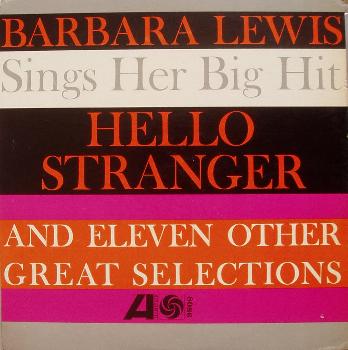
Ren Grevatt was ranting, in April '61, about the girl singers who so much as dared to put their names on the Hot 100 list while even enjoying, »interestingly enough«, their first hits (see previous post). He singled out some of those phenomena and mentioned Carla Thomas and Mary Wells, among others. Now, he couldn't have in- cluded Barbara Lewis in his list, because her first-hit chart entry was still two years away (famously enough, it was »Hello Stranger« in spring 1963).
And Barbara Lewis certainly was a phenomenon! Her hobbies were drawing, painting, writing and singing folk songs (!), according to Billboard's »Artists' Biographies« (May 18, 1963, page 12), and she composed numerous songs and played several instru- ments, guitar and piano among them. (Billboard got that much right but gave a wrong birth date, the correct one being Feb. 9, 1943 ...). However, in her versatility and in being an instrumentalist and composer besides being a singer Barbara Lewis reminds me much of another »chick artist« who made herself a name at around the same time: Barbara Lynn. (Ask the higher powers whether the similarities of their respective names are pure coincidence!). Although Lynn, Texas-born, was the grittier singer, both her and Lewis started their promising careers on one huge hit and were never again able to repeat that initial success. And Lewis was taken over by Atlantic from a local Detroit label right at the beginning, while the New York label invested in Lynn only from 1967 onwards. However, similarities aplenty!
Lynn first climbed the charts in June '62 with her classic »You'll Lose A Good Thing« shortly after Lewis had her first single out on Atlantic (# 2141: »My Heart Went Do Dat Da« / »The Longest Night Of The Year«); Atlantic had bought the master from Karen (owned by Lewis's manager Ollie McLaughlin) when the original 45rpm (Karen # 313) sold strongly in Detroit. In July '62, Barbara Lewis recorded another single in Chicago, »Gonna Love You Till The End Of Time« w/ »My Mamma Told Me« (Atlantic # 2159). Her second single didn't chart either, but the next one would: »Hello Stranger«, Lewis's signature tune and arguably one of the best-known songs of the '60s. The exceptional success of this song (r&b # 1, pop # 3) then prompted Atlantic to release Lewis's first album in July '63. It was the classic trick of putting an album out in the wake of one big hit, and the cover does advertise this fact in desirable clarity.
Yet this LP is not the typical »first album« and it does not offer one hit plus eleven fillers. For once, all twelve songs on the album are self-penned (»This album could easily be called Barbara Lewis sings Barbara Lewis, but we are calling it Hello Stranger since this was the smash hit which so recently made the name of Barbara Lewis known from coast to coast« wrote Ollie McLaughlin on the back cover. And, he goes on to say, »All of the songs in this album were written by Barbara Lewis, which is unusual for someone at the age of nineteen ... Barbara was inspired at a very early age and began writing songs at the age of nine. She now has more than thirty to her credit«). Moreover, the LP does include her former singles released in '62.
Side 1 contains, therefore, her second Atlantic single, »Gonna Love You Till The End Of Time« w/ »My Mamma Told Me«. When it was first released, Billboard (Sept. 8, '62) awarded it only a 3-star review and saw but »moderate sales potential« in these tunes. When the LP was out, however, »My Mama (!) Told Me« was listed among the »top tracks«. »The album is filled with much ... soft, lyric quality with a dash of beat here and there as well« (Billboard, Aug. 3, '63).
Well, there is more than just a »dash of beat« in »Gonna Love You Till The End Of Time« and »My Mamma Told Me«. They are no great songs, admittedly, but they are not near as »poppy« as many others of Barbara's tunes; Atlantic would soon push her towards pop-soul but it's not yet evident in these songs. Instead, they sound conspic- ously like several other dance tunes of the epoch. Little Eva's »Loco-motion«, Dee Dee Sharp's »Mashed Potato Time« (and follow-up songs like »Gravy (For My Mashed Potatoes)« or the Marvelettes' »Too Strong To Be Strung« and »I'm Hooked« come to mind, all from 1962. »The Loco-motion« and »Mashed Potato Time« were big hits in early summer '62, and Lewis's own songs were recorded in July '62 in Chicago ... But I don't want to insinuate plagiarism here, far from it. It was this music that was in the air. And that's exactly what I like so much about Barbara's songs: if ever you were looking for signature tunes for the summer months of '62 you can't go wrong with these two:
Barbara Lewis: »My Mamma Told Me« / »Gonna Love You Till The End Of Time« from the Atlantic LP # 8086
I am interested in the music, not in the relative rarity of discs. I also listen with great pleasure to Aretha Franklin, because she has the voice of the century. Music is no Faith and therefore has no heretics.
* * *
No music downloads on this site. All mp3s (with very few exceptions where noted) are ripped from original vinyl discs. If something on this blog is objectionable to anyone or should, for valid reasons, be re- moved from the net please let me know; it will be removed. And to reiterate: This is a non-profit blog.