Oh well, read the postscript before going any further ...
My car stereo has a curious feature: if a song starts playing (CD or mp3), you can push the main button during the first 20 secs or so. What then happens is that the song will stop and the previous tune (not the tune just started) gets repeated. You may ask what's it good for? Listen to the song below. It's this song that keeps me pushing this button on my car stereo for days now. I am actually waiting for the moment I get annoyed. It hasn't happened so far. BTW, it's Esther Phillips with Eddie Floyd's song »Til My Back Ain't Got No Bone« (first done by William Bell in 1971, I think) - from her first Kudu LP:
POSTSCRIPT, the day after: I wondered whether I had a scotch or two when I wrote the above lines yesterday! Well, I hadn't ... but you wouldn't guess it from my meandering mumblings. I think I just wanted to say that I love that song !!!
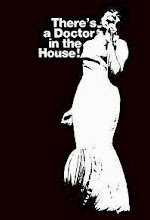
Esther Phillips lets her hair down once more on this blog! And she did it back in January 1970 when she recorded her live album Burnin' Live at Freddie Jett's Pied Piper, L.A. (Atlantic LP # SD 1565). The album was released in August '70 after some overdubs (flute, trumpet and tenor sax) had been added in New York. The album was both listed on the Best Selling Jazz and Soul LPs charts; it stayed for some 6 months on the Soul LPs charts (beginning Nov. 14, 1970) and peaked at # 07 in January 1971.
From Billboard, Sept. 5, 1970, p. 72
The LP suscitated many reviews and comments in the contemporary press, and her frequent live performances in late 1969 and early 1970 were covered regularly in the California newspapers. (The back cover of the Burnin' album shows facsimiles of three such reviews plus short liner notes by singer Carmen McRae.) Even Ebony Magazine (in the December '70 issue, p. 28) run a review.
Ad from Ebony, Dec. 1970 issue
Interestingly, the variety of songs on the album made the critics differ as to which songs they preferred ... the Billboard writer singled out »Cry Me A River Blues«, while Carmen McRae in her liner notes chose to mention as favorites »Don't Let Me Lose This Dream« and »Please Send Me Someone To Love«. Nice thing is that you can hear the latter song (a Percy Mayfield composition) over on BB's Magic Jukebox blogspot. The Ebony writer preferred to call attention to Esther's version of »I'm Gettin' 'Long Alright«, and this is just fine with me. So get ready for a 6-minute version of that tune! Actually, the song starts only at about 02:10 into the recording, after Esther has done some introductory talking ... I do most of my blues songs for the ladies because we always have the blues, you see ...
Esther Phillips: »I'm Gettin' 'Long Alright« from the Atlantic LP # SD 1565 (1970):
AND ... I couldn't resist the temptation to post another recording of this song along with Esther's live version of it. It's a raw-cut, almost archaic version recorded by the Raelettes (with Ray Charles on the piano) which has never stopped haunting me. Compared to Esther's rather jazzy version (which is marvelous in its own right) you get here the modern version of somewhat like a hollering worksong of old, stripped bare to the basic harmonies and the insisting rhythm. Man, it tears me apart every time I hear it!
The Raelettes (feat. Ray Charles): »I Get Along All Right« from the Tangerine LP # TRCS 1511:
Note: On Tangerine LP # 1511 (Souled Out) the song title is given as »I Get Along All Right«. On the single release (TRC # 984, April 1968) of the same recording the title runs »I'm Gett'n Long Alright«.
Together with Nina Simone's Colpix, Phillips and RCA LPs Esther Phillips's series of Kudu LPs is without doubt one of the highlights of 20th cen- tury female jazz & r&b vocals. Formed in summer 1971, the Kudu label was launched by Creed Taylor (of CTI Records); in July, the first LP was releas- ed. Kudu was to be a vehicle for »soul jazz« and Taylor described it as »a black awareness label, more commercial oriented than CTI and indi- genous to the black popular music of the United States.« The name of the label, referring to the African Kudu (tragelaphus strepsiceros), was meant to convey Afro-American consciousness, and so did the colors used for the logo (red, black, green) and the bee-striped (actually kudu-striped!) sleeve. Vic Chirumbolo, sales manager for CTI, said that »[t]he jazz on the Kudu label will capture r&b jazz as well as blues-oriented jazz as opposed to CTI, which features more experimental and universal jazz artists« (Billboard, July 31, 1971, p. 13). In January '72, Esther Phillips's first album was out, From A Whisper To A Scream (Kudu LP # KU-05).
In a June 1972 interview originally published in Living Blues # 17 (1974) and re-issued in The Voice of the Blues (eds. Jim O'Neal & Amy Van Singel, London-New York 2002, pp. 375-87), Esther had the following to say about how she came to Kudu:
I felt I had to get with a smaller company where they had time to concentrate on me. Fortunately, this is what's happening with CTI. So this company that I record for now, which is Creed Taylor, Incorporated, CTI Records, Kudu, they have a jazz label with Stanley Turrentine, Freddie Hubbard - so they were looking for me out in California and, at this time, I was without a record company again. And we got together, they wanted one album, so I recorded From A Whisper To A Scream and it worked out very well. ... So far, other than Atlantic, who did promotion, this com- pany really gives you a lot of promotion, which I can really appreciate. They're doing a fantastic job. I'm very pleased with them at this point. (p. 382 f.)
In the September 1972 issue of Ebony magazine, her first Kudu LP got an enthusiastic review. After mentioning Esther's heroin addiction (»everything but heaven itself had conspired to do her in«), the critic praises her power of will and sees her as »the logical successor to the great Dinah Washington.« (Others, however, have stressed Esther's closeness in art & life to Billie Holiday which, to my mind, is a more fitting comparison.) He then goes on to review some of the main tracks of the LP (several of which were released on Kudu 45's and reached the Top 40 of the r&b charts in '72). The album's closing track, the 6½-minute monster blues »Scarred Knees«, is described as an »improvisatory "Umph-umph-umph" thing« ... well, if this was to mean that Esther hhmmms, squeaks and even hiccups (listen at 01:33!!) herself through part of the song, he's right. This is the song, the bluesiest tune on the album (never released as a 45) and the one which has Esther experimenting most with her voice; she really draws you in:
Esther Phillips: »Scarrred Knees« from the Kudu LP # KU-05 (1972):
* * *
P.S. Did I mention that Esther Phillip's string of Kudu records started at the same time (in January 1972) as the Westbound / ABC record series of Denise LaSalle?
After her untimely death in August '84, Esther Phillips was buried in an unmarked pauper's grave in Compton, California. It took a benefit concert in April '85 to procure her mortal remains another resting place that would have, at least, her name on it. Herman Lubinsky of Savoy Records had seen her in 1949 in a L.A. amateur night and signed her right away. Johnny Otis, Greek by race but black of soul, produced her; aged 13, she was billed as »Little Esther«. It then happened that she had a r&b # 01 hit with her single »Double Crossing Blues« in spring 1950. She was the youngest female artist to achieve this, and this record has held ever since.
I am very happy that the name of Esther Phillips finally appears in this blog. Where to start? It took me a long while thinking about how to introduce her to my blog. There's so much to say about her. She was a strong personality, keeping her wits ready and never shy to have her say; she put the fist on the table if need be. But she was weak as well, succumbing again and again to devilish king heroin. The sad truth is that her strength was her weakness, and her weakness kept her strong.
She is the great underrated voice of 20th century music. If you heard her voice once you're not likely to ever forget it. There are obvious parallels in her life and art to Billie Holiday, Dinah Washington and Nina Simone, but Esther Phillips never reached, in the public imagination, their fame. That ain't right.
As I said, I got to make a start somewhere. Her 50s singles, her Lenox smash, her Atlantic sides, her short stint with Roulette, her fantastic and immortal Kudu recordings? Whatever. Let's start today with the last # 01 hit Esther Phillips had in any chart, »Release Me«. Arguably, it's her most famous song until today, although many wouldn't know the singer. It has become one of those »oldies but goodies« which flow from loudspea- kers in elevators and supermarkets (and Atlantic as early as 1967 marketed this song as a »vin- tage classic«, and in Dec. '68 the song appeared on the Original Sound sampler »Oldies But Goodies«). The tune also is more than a little atypical for what Esther would record during most of her career. Yes, her voice is here, in this song, you couldn't confound it. And yes, it's hell of a song. But it's the one song I wouldn't have chosen to build her fame. Alas, it can't be helped: great part of the fame Esther Phillips enjoys today is still bound up with this song.
»Release Me« was, well, released in October 1962 on the Lenox label. Having been a C&W hit for Ray Price in 1954, Esther's version shot up the charts and prompted Billboard to publish her »Artists' Biography« in the November 24, 1962, issue (p. 10). Lenox Records in itself was a curious business, since it had been established, as it were, for Esther Phillips. Behind it were Lelan Rogers and Bob Gans. Both were impressed with the recent successes of Solomon Burke and Ray Charles who took C&W tunes into the r&b field, and with Esther they intended to do the same. And they did.
Recorded in Nashville and backed by the Anita Kerr Singers (they are credited prominently on the back cover of Lenox LP # 227), Esther produced with »Release Me« the most soulful C&W-song ever. But C&W it remains, and it's funny to see in retrospect how a perspicacious Billboard critic arrived at saying that »it's a ballad somewhat in the country vein« (Oct. 13, '62, p. 40). Certainly somewhat! And along with the success of the single release of »Release Me« came the (obvious) idea to put out an album centered around that song. This LP, Lenox # LX 227, was then released in January 1963. On the back cover of the LP is a long excerpt from the November 17, 1962, issue of Music Reporter which provides many details about Esther's Nashville recordings for the LP. You can read it below (scroll down to the end).
Ad from Billboard (January 26, 1963)
First of all, Little Esther had to have another name for she was little no longer. Yet in order not to give up the resonance of »Little Esther« one retained the »Little« but put it into quotation marks. Newly fashioned was, however, the second part of her name: Phillips. As often reported, Esther had taken it from a billboard advertising Phillips 66 gasoline at a gas station in Houston. She had adopted that fake family name (her real one was Jones) already when she was gigging in Houston and thus before being signed by Lenox; but it was on the Lenox sides that »Phillips« for the first time appeared officially.
Aptly, the cover shows the title of Esther's recent hit in big letters and bears below it the subtitle »Reflections of Country and Western Greats«. This was certainly meant to remind the buyer of Ray Charles's LP »Modern Sounds in Country & Western Music«. What, however, the specification »Reflection 1« in the left lower part of the cover was meant to indicate I do not know. Was there to be another LP? Anyhow, there was no follow-up and Lenox, for all the initial success they had had, claimed bankruptcy before 1963 was over. Inevitably, a greater and financially more potent label stepped in at this point and preyed on the carcass of Lenox. Atlantic bought up all the Lenox masters and took over Esther Phillips as well. In February 1964, Esther was signed to Atlantic,with Jerry Wexler and the Ertegun brothers happily smiling for the event (photo from Billboard, February 8, 1964):
Atlantic then tried different things with Esther, seemingly without concept. They pushed her away from C&W-flavored r&b and eventually plunged her into the MOR- pool. They did two LPs with her, producing the weakest sides of Esther Phillips's entire career with Beatles covers and insipid answer songs. But I won't go into Esther's Atlantic period here. What needs to be said, though, is that the Atlantic makers were at their wits' end regarding Esther in 1966. She was obviously unhappy with the stuff she was given to sing, and her performances showed. After she had appeared at the 1966 Newport Jazz Festival in July, this is what a critic had to say:
»Esther Phillips, who can sing such great blues, followed and it was immediately discernible that this was not her night. Not that she didn't sing the blues well (her unnecessary pop tunes suffered from the faulty intonation, however), but she was backed atrociously by a trio that showed an amazing lack of familiarity with the kind of music she has performed so well over the years« (Billboard, July 16, 1966, p. 38).
What is more, she was back on heroin and wouldn't get off it during the following years. Atlantic at this point remembered the Lenox masters and put them out again on an Atlantic LP. This album was entitled The Country Side Of Esther Phillips and actually a re-issue of Lenox LP # 227; only the sequence of songs was changed. It was, for all marketing purposes, sold as a seemingly newly recorded LP and was as such received in much of the contemporary press. Only a little note on the back cover said »The selections contained in this LP were previously issued on the album "Release Me" on Lenox Records.« It was to be Esther Phillips's last Atlantic studio LP (and it wasn't even that!) for many years.
Here is the song. The first version is ripped from the Lenox LP # 227 (mono). The second version is of my own making: I mixed the two mono recordings from Lenox LP # 227 and Atlantic LP # 8130 and produced kind of a fake stereo version. Sounds nice, doesn't it?
Esther Phillips: »Release Me« from the Lenox LP # LX 227 (1963, rec. 1962):
And as one song seems a bit poor for this lengthy post, you can hear »No Headstone On My Grave« in the following. It was penned by Arkansas-born country singer (and Elvis's buddy) Charlie Rich and is about the bluesiest tune to be found on Lenox LP # 227. Thus it was an obvious choice for this blog. But there's more to it: Reportedly, it was this very song which Kenny Rogers (the C&W singer) heard in a Houston club back in 1962, sung by Little Esther. Kenny then told his brother Lelan (also »Leland«) about it. Lelan Edward Rogers then got interested in Esther and eventually set up Lenox Records with Bob Gans. The rest is history. Saddest thing is, however, that this song sounds right only from the lips of Esther Phillips, as she got no headstone at first. Sometimes you just wouldn't like songs to come true.
Esther Phillips: »No Headstone On My Grave« from the Lenox LP »Release Me!« (1963):
* * *
Notes from the back cover of Lenox LP # 227 / Excerpts from the November 17, 1962, issue of Music Reporter. By Nola Jaye:
NASHVILLE.
It was 3 a.m. and as the recording session moved to towards its fourth hour, 23 musicians and singers milled quietly about the microphone and sound-screen jungle. There was no talking (...). There was an atmosphere of reverence and respect seldom seen. The crew listened to the final note of the playback of the song just recorded. Then, everyone applauded.
Everyone but the short, solidly built negro girl in the gray flannel slacks. The applause was for her.
The dramatic reaction was a spontaneous tribute to the 26-year old singer known to the world of show business as 'Little' Esther. She is one of the hottest singing properties in the country and the applause came halfway through a seven hour recording session for her first Lenox Records album.
That session has already carved a niche in Music City as a new born legend. The musicians and the Anita Kerr Singers are still talking about the spunky singer's refusal to take rest periods and how she cut one song after another with almost flawless perfection. There were few retakes as Esther recorded 10 sides [that is, all songs of the LP except »Release Me«].
A songwriter with five BMI awards to his credit called the session 'The most enjoyable night of my life ... I was exhausted when I walked in but she made me forget whether it was day or night.'
A publishing company rep with 20 years in the trade called it, 'The greatest album I have ever heard recorded.'
Bass man Bobby Moore exclaimed, 'Little Esther picks up where others end.'
The whole story of the session is loaded with the kind of dramatics that would make Hollywood script writers flip in wide-screen, technicolor somersaults.
First, the star, 'Little' Esther, walked into the session in the wake of a hit-wave that ended thirteen years without a hit for her. The gifted singer's 'Release Me' in Lenox Records passed the 200,000 sales mark the afternoon of that session. (...)
In real movie style, Esther was belting out blues six nights a week in Texas oil towns for $75 a week. One night, while Bob Gans (...) was in Houston, Lelan Rogers took him to see and hear Esther's performance. Gans was so impressed he signed her on the spot, and within weeks she waxed the old Ray Price C & W spell-binder, 'Release Me.' Tradesmen figure it is possible for this tune, which into the top 40 of the Big 100 in just three weeks, to become the number one record in the nation.
Bob Jennings, of Four Star Sales, says he can't get over the 'Little' Esther LP session. 'Musicians hear so much here,' he explained, 'that nothing moves them. And, some of these people had started working on other sessions at 9 a.m. the day before ... it was 3 a.m. and they laid aside their instruments and applauded.'
Nashville's number one nighttime pop deejay, Audie Ashworth of WKDA, said: 'She worked so steady and sung so hard ... she's got to be a great talent. And those arrangements ... I've never seen or heard anything like it.' (...)
Esther took the praise in stride with a beaming, winning smile. At one point, after finishing an applause winning performance of Hank Williams' C & W evergreen, 'I Can't Help It,' a musician remarked, 'Esther, that was out of this world.'
She shook her head, smiled wistfully and said, 'That Mr. Williams is too tough for little Esther to cut.'
Esther Phillips presents this album to you with all her heart and soul - particularly the latter.
I am interested in the music, not in the relative rarity of discs. I also listen with great pleasure to Aretha Franklin, because she has the voice of the century. Music is no Faith and therefore has no heretics.
* * *
No music downloads on this site. All mp3s (with very few exceptions where noted) are ripped from original vinyl discs. If something on this blog is objectionable to anyone or should, for valid reasons, be re- moved from the net please let me know; it will be removed. And to reiterate: This is a non-profit blog.