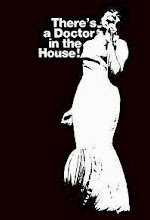
45 years ago, Aretha Franklin was at the height of her success that had begun with her first Atlantic releases in 1967. And she wasn't alone in this because her sisters also shared the public attention.
From Billboard, August 10, 1968, p. 45
The August 8th, 1968, issue of DownBeat featured a lengthy piece on Lady Soul as well as an interview which to this day have remained two of the more interesting media items of the epoch regarding the career of Aretha Franklin. You can download the scan below.
I know that the guy is Billy Miller (which is not more than a name to me, however), but I don't know who the gal is. Their single was released, as far as we know, in 1968, on Sag Port # 100/101. That's about all I know; maybe there is somebody out there who can tell us more.
And yes, I did another thing which, I am sure, some of you will find heretical: I produced a stereo edit of the groovy songs (the originals on my copy are mono). I just felt that these tunes gain much by it. I am not a mono aficionado, at least not one of the dogmatic kind, and I basically think that, if done properly, stereo is superior to mono, even if produced artificially from a mono recording. I will not argue on that point! You just like the idea or you don't. Said this ... here are two great dance groovers:
Billy & Betty: »I Need Some Kind Of Something« / »Talking Bout You Baby« on Sag Port # 100/101 (1968) (STEREO EDIT):
* * *
Dear M., I am glad to oblige! Here are the original mono versions:
On the day 45 years ago, The Supremes Live at the Talk of the Town was aired tonight on British TV. The post-Flo Supremes had opened in London's Talk of the Town on January 22, 1968. It was part of a tour through Europe (not their first) which took them to Cannes, Paris, Milan, Hamburg, Amster- dam, Stockholm and, well, London. After their 22 January concert, Diana Ross, Mary Wilson and Cindy Birdsong (not in the photo) were immortalized by a press photographer when Paul McCartney showed up and said hi (... and fittingly the #1 pop song in January 1968 was the Beatles's »Hello Goodbye«!); you can find a larger version of this pic in the February 10 issue of Billboard.
Now, let's pause for a moment and think what was going on in the heads of the persons on the photo. The Supremes had, just before they departed for Europe, stayed in sunny Mexico to deliver their pathetic contribution to an episode of Ron Ely's Tarzan. The episode in question was called The Convert and was aired in the US on January 12, 1968; you can watch it on YouTube. In that episode, the Supremes appear as three nuns and merrily chant a few churchy tunes, e.g. »Michael Row The Boat Ashore«; their boat capsizes because their singing irritates a touchy hippo (can't blame it) and all three are getting a jungle bath before being valiantly rescued by Tarzan. They then act their lordly way through the dire episode to conclude it with shouts of Hallelujah and a lot of hand-clapping.
Motown's admittedly clever publicity idea to insert the Supremes, whose record sales were slacking in late 1967, in a noted TV series was deemed interesting enough to warrant a fully-fledged coverage of their »Swinging Dramatic TV Acting Debut« in JET (issue of January 18, 1968, p. 60 ff.). The JET piece came with a centerfold pic of the Supremes »cooling off ... after a hot day's work in the jungle« (see it here), and there were also a number of pics showing the nuns from Detroit at work ...
(From JET, January 18, 1968, issue, p. 60)
The unlikely nuns then exchanged their modest attire for sequined dresses, flashy elbow gloves and tippy heels, boarded a plane and eventually run into Paul McCartney, or vice versa. What mood was he in? Well, right on 22 January, the new Apple office had opened in London, ushering in the last phase of the Beatles epic. Spiritually, he may have been preparing for his imminent trip to India where he was to study Transcendental Meditation (from mid-February onwards); eventually, he became bored and returned home, although he later claimed that TM »has helped him personally« (see quote here). Before he boarded his plane, he had taken part in shooting a small part for the Yellow Submarine movie and also recorded »Lady Madonna«.
Motown LP # MS 676 (08/1968)
The Supremes meeting Paul McCartney were thus a truly bizarre match. Let's hope that Paul, who reportedly attended the Talk of the Town concert of the Supremes before meeting them afterwards, was too distracted by the Apple launch and the India follies of his buddies to listen closely to what the Detroit ladies were offering on stage. However, Berry Gordy saw to it that the public was, in August 1968, endowed with a live LP which brought the musical enrichment of the British Isles as enacted by the Supremes into the home of unfortunate record buyers. In any case, the LP is one of the best live recordings to come out of Motown, although the measuring standards are poor. Diana and the Supremes did what they could best: trying to make forget the public by their lively appearance that vocal art was an alien concept to their lead singer. Unfortunately this strategy doesn't work on vinyl.
But London survived the Supremes, I guess. And there is still much talk of the town going on there, after all. The Supremes, first medley from the Motown LP # MS 676 (1968):
... ah well, I am still thinking, with no little nostalgia, about my late summer trip to Greece ... while around here the golden leaves are falling on the ever colder ground and the sun, when she does appear through the misty haze of the autumn sky, struggles more and more every day to reach her meridian over the horizon. At night, the moon is often obscured by batches of dark clouds as if his silver disk is waylaid by a swarm of hungry bats. So best I can come up with today are two songs which dispel my gloomy autumn mood and bring back the memories of sunnier days ... and of places like this, on a lonely beach in southern Crete called Sweetwater:
(Click to enlarge)
When I looked through some of my records, summer songs proved less easy to find than I thought! At the end, I ended up with a version of Gershwin's classic »Summer- time«, by Brenda & The Tabulations (recorded in Philadelphia and released on their one-and-only Dionn LP # 2000 Dry Your Tears in May 1967). Following up their hit »Dry Your Tears«, Brenda & The Tabulations rushed out, as was common, an accompanying album which, for all the speed with which it was produced, contained many covers and known standards, among which the said song. A Billboard critic of the epoch (June 3, 1967 issue, p. 86) nevertheless stated that Brenda's mono version of »Summertime« gives an »excellent treatment« to the tune, so it did no go unnoticed. There will be some out there who have never heard Brenda's version before, and although I do not think that hers is the definitive version of that tune it strikes me as a particularly melancholic version, and the song in itself is essentially melancholic! (Thus it well fits my actual mood ...) Brenda's high-pitched voice, somewhat echoing and distant in the recording, confers an almost mystic atmo- sphere. And mind that at around 02:18 into the song, before the organ sets in, there is a noticeable break which must be due to bad cutting, I guess. In any case, it does not seem caused by the LP nor by the pressing.
As for the second tune, I took it from an album you all know, yet it arguably is - given that almost all songs from this album have become landmark recordings - the least remembered of them all: Aretha Franklin's »Hello Sunshine« from her 1968 Atlantic LP Now. The song was penned, in or little before '68, by King Curtis and Ron(ald/nie) Miller. As you know, Curtis was present in person at the December, 19, 1967 session which produced the track, and the backing vocals are due to none less than The Sweet Inspirations ... Like »Summertime«, »Hello Sunshine« is again a melancholic song, even if Aretha's room-filling powerhouse voice wasn't fitted to produce a version you could call »mystical«. As only she could (and, well, can), she effortlessly blasts the tune away into the blissful heaven of immortal recordings!
Brenda & The Tabulations: »Summertime« from the Dionn LP # 2000 (1967, mono) / Aretha Franklin (feat. The Sweet Inspirations): »Hello Sunshine« from the Atlantic LP # 8186 (1968):
Over the summer of '68, the Staple Singers left Epic and went to Stax. Quite an epic change, as all of you sure know; Mavis was soon to become independent on the Memphis roster. And nei- ther the Staples nor the people at Stax lost any time to produce new stuff ... and what stuff it was! Perfect almost every note they recorded, the choice of songs very fortunate, many of them with indirect or, more often, explicit political and/or social messages.
Their first Stax LP (STS-2004) was already out in December 1968, produced and engineered by Steve Cropper. It certainly is one of their most memorable Stax albums. Eleven songs, no filler, and much variety, ranging from Otis's »Sittin' On The Dock Of The Bay« to »Long Walk To D.C.«.
Stax LP # STS-2004 (1968)
As beautiful as this LP is as strange it is that none of the no less than three 45s (Stax # 007, 019 and 031) which were based on this album (only the B-side of # 007 is not taken from it) did not make any noise chartwise. Hard to understand in retrospect, especially as the LP is basically a showcase for Mavis Staples, her vocal steam engine dominating each and every tune. Were many of its songs too overtly poli- tical? One wouldn't think so, given that the Staples regularly did message songs and had had considerable success with them before ... and the winter of 1968/69 was a troubled time, so political activism in the black music arena should not have deterred potential buyers? I guess the Staples appeared too streamlined or were perceived merely as idealistic soft-core message belters (as indeed many of their songs would suggest to those ill-willing). Trouble times favored radicalism in word and action, not benevolent and potentially quietist optimism, and even though the Staples saw themselves as Soul Folk in Action there might have been too little action, or incitement towards such, in their songs ... half a year after the assassination of Martin Luther King ...
Be that as it may, below you can listen to the one political song of this LP, entitled »I See It«, that did not go down favourably with many Americans. It is telling that this tune was released by Stax in the UK (Stax UK # 118), but not in the U.S. Although the song is, much in the Staples tradition, rather optimistic in outlook, there is a dis- turbing coda which re-creates, even today, the entire tension of the period by its rendering of the Star Spangled Banner. Best I quote here from the Stepfather of Soul page: »I See It finds Mavis and the group imagining a United States free from dis- cord and racism but full of brotherhood and national pride ... as the group goes to the fade the listener is jarred back into "reality" by a very discordant string version of The Star Spangled Banner, under which another violin plays Yankee Doodle. A very odd way to end such a positive tune, to be sure, but it very effectively underscores the problems that lurked underneath the surface in 1968 and still lurk today.« But it's not only about racism and social unrest. Think of the current case of the health care reform which is about to founder. If it does the poor will pay for it ... albeit only metaphorically, because the problem is exactly that they cannot pay ... ah well, no further, it makes me mad.
For good measure, there is a second song as well, Bonnie L. Bramlett's & Carl D. Radle's »We've Got To Get Ourselves Together«, again admirably done by Mavis Staples (did she ever do anything less than admirably?). Would that things work out as imagined by the Staples in 1968 ... usually they haven't, but there's always hope.
The Staple Singers: »I See It« / »We've Got To Get Ourselves Together« from the Stax LP # STS-2004 (1968):
The Staple Singers, from the back cover of Stax # 2004.
I somehow had the feeling that some unpolished r&b, possibly in the southern vein, best graces today's post. So I went with the LP of a (relative) newcomer of '68 ... Betty Wright.
Born in December (or according to some in September) 1953 in Miami, Betty (legally Bessie Regina Norris) was only 14 when she recorded several sides for the newly-founded Alston label in spring 1968. But it was not her first record stint, because her first 45s were out in 1967, viz. Solid Soul # 3030 and Deep City # 2378 (for a copy see here). Both labels were Miami-based and produced by Willie Clarke and, eventually, Clarence Reid. (You will remember that the Criteria Studios in Miami were essentially Deep City's studio ... Aretha Franklin, James Brown and others recorded here.) Now, both Willie Clarke and Clarence Reid not only produced Betty Wright's first two 45s, they also had discovered her. As the legend goes, sometime in 1965 or 1966 Reid & Clarke overheard her in a Miami record store and first let her sing background on their Deep City productions. She also had won a local singing contest on a radio show (with a version of »What Becomes Of The Broken Hearted«). In Betty's own words (from a 1972 interview):
I had won a singing competition on the local radio station and the prize was a record. Well, I went down to the record store to select it and whilst I was in there, I was just singing along with the record that was playing — not loud, you know, but just to myself really. Anyway, this guy came up behind me and touched me on the shoulder — actually, he frightened me at the time because I didn't expect it. So he said to me that I had a good voice and that I should do something about it. ... Anyway, the next record that was played in the store was Billy Stewart's Summertime and Willie's friend — who is Clarence Reid — said he'd bet I couldn't sing along with that one. Well, I did! So, we went into a local studio and I put my voice down on a few numbers and Willie got excited about it and went round to see my mother, to ask if he could record me. My mother quite naturally didn't want her 13-year-old daughter involved in it all and she refused at first. After a while, though, she changed her mind and she signed over her agreement and I made my first recordings.
Altough still of tender age, Betty was already a pro singer if it is true (which I guess it is) that she started singing at age 2 ... being the youngest of seven children of gospel singer Rosa Akins Braddy-Wright, Betty was, together with her siblings, taught close harmony singing by her mother (who also played guitar on occasion). So, in 1956 prodigy Betty's voice appeared on an album by The Echoes of Joy, their siblings' gospel group (I have never heard this LP nor have seen a trace of it, unfortunately, but for more details see here and here). She then performed as member of this group until the mid-60s, reportedly also appearing together with the Staple Singers. In the Sept. 07, 1959, issue of Billboard there is a short review of Avant # 075 by the »Echoes of Joy« (Didn't It Rain w/ Way Back To God). Betty was later to say, »we used to sing in local churches and halls... and we used to make demo discs of some of the religious songs and we'd sell them when ever we appeared at a local hall. I was actually only three when my mother first got me to sing a little and I stayed within the Echoes until I was about ten, I guess. Then, the group started to split up as people made their own way in life« (from an 1972 interview, read it here). However, the history of the Echoes of Joy is far from clear or well- documented; the group broke up in 1965.
Be it as it may, Betty Wright's early career, from family gospel group to casually-discovered soul singer (preluded by a successful radio singing contest) is very much the epitome, perhaps the truly classical way of how careers got started in the inde- pendent music business during the '60s. If anything, Betty was considerably younger (actually not yet a high school student!) than many of her singing peers who made a similar career. And she was one of the few who succeeded in prolonging their career into our own days ...
Further reading on Betty's early career (up to 1968):
In August 1968, Betty's first Alston 45 (#4569 »Girls Can't Do What The Guys Do« w/ »Sweet Lovin' Daddy«) charted for the first time; the single eventually went to #15 r&b (and #33 pop). Both songs are, of course, included on Betty's first album, Atco LP # SD 33-260 (My First Time Around) (September 1968). The entire LP was an Alston production manufact- ured and distributed by Atlantic-Atco (that is why it says »Alston Records Series« in the upper left corner of the cover). This album also contains the tunes released on subsequent Alston 45s, viz. # 4571 (»He's Bad, Bad, Bad« / »Watch Out Love«) and 4573 (»The Best Girls Don't Always Win« / »Circle of Heartbreak«), out in 1968 and 1969, respectively. These 45s didn't make it, saleswise.
Label of my copy
It is noteworthy that all the songs on Betty's Alston 45s are originals written by Clarence Reid and/or Willie Clarke, with »Circle Of Heartbreak« credited to Betty herself. But if you listen to the Alston-Atco album as a whole you'll realize that the songs released as singles are the ones more in the pop or pop-soul mould. The remaining six songs on the LP are mostly covers of older or more recent material, mainly ballads (»Just You«, »I'm Thankful«, »I Can't Stop My Heart«), and two of them are fast-paced r&b tunes much reminiscent of what Memphis and Muscle Shoals was putting out at the time and prefigure the later successes of Betty Wright ... you can listen to them below (Clarence Reid's »Funny How Love Grows Old«, first released by The Box Tops in '68, and Penn-Oldham's »Cry Like A Baby«). In any case, this LP is really a »soul gem« (quoted from here) and you may read another very good review of the album by Sam Sweet here.
Finally, some curiosities: Clarence Reid himself is playing piano on the album, albeit not in all songs; Steve Alaimo and Brad Shapiro (both closely connected to Henry Stone, the boss of Alston) arranged the songs. Truly bizarre is this notice on the back cover: »All checks signed by: Henry Stone«. This is good to know ...! Slightly disturbing, if not out of place, also parts of the liner notes, written by Miami DJ Milton Smith (aka Butterball) of WAME radio: »Aside from being a devoted singer, songwriter and musician, Betty is tops in school at Notre Dame Academy for girls. She maintains an A average with an I.Q. of 167, and she loves math« (emphasis mine)! (I invite the readers to tell me of another LP back cover that mentions the IQ of the artist!!) But let's conclude here with Butterball's praise of Betty which seems more to the point: »Some well-known disc jockeys refer to her as "Little Miss Super Soul" and the greatest female vocalist since Aretha Franklin.« Well, so be it!
Betty Wright: »Funny How Love Grows Old« / »Cry Like A Baby« from the Atco LP # 33-260 (1968):
Born today in Chicago, Ill., 67 years ago ... No need to present her, I guess!
Gospel singer with the Meditation Singers, then under contract at Chess, she first charted with »Dirty Man« in 1967. Her biggest success came while recording for Hot Wax in 1971-72.
By 1972, she had two albums out for Hot Wax, including Women's Love Rights. In the autumn of '72, Chess sensed that it would be a good idea to cash in on Laura's ever-growing popularity. So they released the Love More Than Pride LP (Chess LP # 50031) in October, which actually contains songs recorded back in 1968. Some few songs on this album were produced and arranged by Gene Barge (from the Chess staff) and recorded in Chicago. Most were produced by Rick Hall and recorded at the Fame Studios, Muscle Shoals, including the two tracks you can hear below. On the back cover of Chess LP # 50031, however, only the Ter Mar Studios of Chicago are explicitly credited.
Thanks so much for all the great songs, Laura! Here are two of my favorites (out of many) ... funky tunes and a Southern groove for a Friday night ... from the Chess LP # 50031 ...
Laura Lee: »It Ain't What You Do« / »It's How You Make It Good« (LP rel. 1972, rec. in 1968):
* * *
P.S. Listen here to Laura Lee talking about her career.
It's almost eight months ago that you could hear the powerhouse voice of Mildred Lane on this blog ... and I thought it is about time to have her on again. Tonight, two songs from the 1968 album Give Him A Chance by the Robert Patterson Singers (Veep Gospel LP # VP-13532, mono), released sometime in or before December '68.
This LP was recorded at the A&R Studios in Los Angeles, on 22 & 29 June 1968. Apart from Mildred Lane (lead vcl) and Robert Patterson (piano, organ), the rest of the group reportedly consisted of Mary Stephens, Barbara White and Barbara Appling. Now I'm not about to ascertain this; it is presumably correct anyway. The history of the Patterson group is fraught with difficulties because there were a lot of changes over the years and the group had a long history, going back into the early '50s. As far as I can see nobody ever tried to sort out this mess. What we know is that the Patterson Singers were over in Germany in autumn 1967 and back there again a year later. In 1967, when in Germany, the group consisted of Mildred Lane, Elaine Davis, Everlena Miles, Mary Stephens and Irene Leader; same more or less for the 1968 outfit (there is some confusion about one person being replaced, though; can't go into the details here). In 1970, once again in Germany, we know the group consisted of the same personnel as we have it for the '68 Veep Gospel LP. So a good guess is that in 1968 there was a »U.S.«-group and a »tour«-group, both featuring Miss Lane, and later, around 1970, the U.S.-group took over.
The 1968 Veep LP features eleven songs, and not too much diversity. A number of songs were written by Robert Patterson and they tend to sound, I am sorry to say, much alike. However, there still are several good songs here, and most (not all, because there is at least one song with another female lead singer) are dominated by Mildred Lane's forceful lead vocals. More precisely, they are two songs which bear out Mildred's voice even stronger than the others, and it is these two you can hear in the following. The first tune has a stunning finale; the second tune has her singing in a lower register and, wow!, she's killing me. Happy Sunday all!
The Robert Patterson Singers (feat. Mildred Lane):
»Trouble Don't Last Always« / »I've Been Born Again« from the Veep Gospel LP # 13532 (1968):
This post was written with Mitt »We-Don't-Need-Europe« Romney's
recent babblings in mind ...
Today's featured album: Curtis Jones, Now Resident in Europe(Blue Horizon # 7703).
Curtis Jones (piano): »I Want To Be Your Slave« from the Blue Horizon LP # 7703 (1968):
The album was recorded at Tony Pike Studios, London, July 2, 1968.
Curtis Jones, from Naples, Tx, died 1971 in Munich, Germany. He had been living since 1962 in Europe and also spent a couple of years in Morocco.
His most famous song is »Lonesome Bedroom Blues« (1937) which is accessible on CD (see here).
His grandparents were slaves. There is a piece on the Blue Horizon album that has Curtis Jones speaking about his life, followed by the song »Soul Brother Blues«:
Curtis Jones talks about himself and plays guitar (1968):
Some weeks ago, in November, I played two songs from Stax's double album Boy Meets Girl, this final LP experience of soul duets. However, among the plethora of duets which Stax was experimenting with in 1968 and 1969 one singing pair is, conspicuously, missing from the said LP set, viz. the pairing up of Judy Clay and William Bell. And yet this duo proved to be most successful Stax came up with during the late '60s.
Judy Clay we met on this blog as part of the Drinkard Singers, way back in the '50s. She then stayed with several labels until 1967 when she recorded her first 45 for Stax. Roughly at the same time, she teamed up with Billy Vera (on Atlantic). And finally, in spring '68, she recorded her first two songs with William Bell which were released as Stax # 0005 in July, »Private number« with flip »Love-Eye-Tis«. The A-side of this single proved to be the biggest hit of her entire career.
Rob Bowman in his Soulville U.S.A. has told the story of »Private Number« in detail (see pp. 152 f.). Like »Love-Eye-Tis«, the song was written by William Bell (based on a personal experience) and then worked out, musicallywise, with Booker T Jones. Both planned that Otis & Carla should record the song but the untimely death of Otis put an end to that. According to Bell, quoted by Bowman, it was then by chance that Clay and Bell recorded this song, mainly because both happened to be in the studio at the same time: »She completed the session early and she needed something to record. So we said, 'Give us an hour.' We sat there and completed 'Private Number' in the studio.« Anyhow, Bell was still thinking at that point to give the song to Judy, but then someone suggested that Bell's vocals should be added to Judy's demo. »Neither one of us had any idea that it was gonna be a duet« said Bell later.
Supposed that this story is true, there would've been thus no »grand« strategy at Stax, at least not yet at this point, to find a post-Otis/Carla duet. Rather it all happened by accident. But, if »Private Number« came about coincidentally as a duet, »Love-Eye-Tis« in all probability did not (Bowman is silent on this point). After all, they needed a B-side for »Private Number«. The A-side has remained the famous song of that 45, but I don't like it at all: it's too poppish for my taste and lacks the right hook. So only thing I gonna play here is the B-side which has some semblance of Memphitian origins left in it. As Bowman further explains, all newly numbered Stax singles from May '68 onwards (i.e. nos. 0001 ff.) were cut on the freshly acquired Scully 8-track recorder. I personally think that this hasn't increased sound quality compared to the earlier recordings. And we can hear on Stax # 0005 what we cannot but notice also in numerous recordings on the Boy Meets Girl album: the voices are mixed way too much in the background. They just don't stand out properly, lack force and get sub- merged by the bass line - it's a pity. Listen here:
Judy Clay & William Bell: »Love-Eye-Tis« on Stax # 0005B (1968):
Let's just pick up last Sunday's thread with the Mighty Clouds Of Joy. The follow-up album to their Live At The Music Hall LP was Peacock LP # PLP-151 (if we disregard their Best Of album, Peacock # 136, which came in between). There's some confusion about when this LP (that is, Presenting: The Untouchables) was released, and dates from the mid-'60s to 1973 have been proposed. However, 1968 seems to be the most probable date; Hayes/Laughton's Gospel Discography corroborates this.
Peacock LP # 151 back cover
This album is flawlessly produced and the tunes are much varied in style. Maybe it does lack a standout tune. If I had to chose one it would be the hymn »I'll Trust In God« (aka »My Heavenly Father Watches Over Me«), a beautiful solo performance by Ermant Franklin, but it's too much of a funeral song and I can't bear hearing it today. But Ermant Franklin it is, so we go with his »Call Him Up« and »He's Real To Me«. (E. Franklin sings lead on most songs, leaving only »Pray For Me« and »How Far Have I Stray- ed« to W. Joe Ligon).
»Call Him Up« (»... I got a telephone in my bosom, I can call him up on my own ...«) is known under many titles: »Jesus On The Mainline« or »Go Tell Him What You Want«; The Caravans (feat. Albertina Walker) recorded this song as »Tell Him What You Want« (States # 154). Parts of the lyrics also crop up in Richie Valens's Woodstock performance of »Free- dom«, since he had sung gospel back in the '50s in Brooklyn (read more about it here: Denise Sullivan: Keep On Pushing. Black Power Music from Blues to Hip-Hop, Chicago 2011, p. 101 ff.). On the Peacock LP, the song is credited to »E. Franklin« (i.e. Er- mant Franklin, I presume) what is weakly justified by the fact that the song as performed by the Clouds is not exactly identical to any other version I know of (there are myriads, though). The song was for the first time recorded in the late '30s, but the peculiar charm of the lyrics hasn't worn off. - Read also the postscript.
»He's Real To Me« is likewise a standard tune and usually credited as traditional. It's one of the songs on this LPs where you can hear the Clouds backing the lead singer (or actually the lead sermonizer) with falsetto voices. Best I leave you now to the songs with the nice headline you find on many a Peacock LP above the song list: Your Program For This Performance! And here it is. Happy Sunday all!
Mighty Clouds Of Joy: »Call Him Up« / »He's Real To Me« from the Peacock LP # 151 (1968?):
POSTSCRIPT Oct 29, 2011
On the Melting Pot blog, you'll find a thoughtful review of the 3-CD set Fire in My Bones: Raw + Rare + Otherworldly African-American Gospel (1944-2007) released in Oct. 2009 (get info here). This review (read it here) is pertinent to topics often raised in this blog of mine, viz. the question concerning the relation between pop (secular) music and gospel and, a closely related point, how (and whether) to appre- ciate gospel music with or without regard to its sacred character. In addition, there are interesting remarks about the song »Call Him Up« aka »Telephone In My Bo- som«. I would like to quote here some passages from this review:
It’s the sacred character I’d argue that sets many of these performances above the standard fare produced in similar times. There’s a feeling in these performances that is shared in other sacred musics, but not as readily found in more secular, popular sounds (except not surprisingly when artists come from the Church, i.e. Aretha Franklin, Sam Cooke, Donny Hathaway, etc, etc, etc.). However you want to appreciate this music, what’s most important is that you DO experience it. Regardless of your own religious belief or feeling, this music is deserving of your attention and your ears will be richly rewarded once you delve into this fine set.
For those of you into Gospel Funk, there are plenty of choices here too. Lula Collins’ “Help Me” from 1973, is a track that could have just as easily ended up on obscure Tennesee funk comp. by itself. Aside from some relatively minimal religious references, it is easy to take this song on very secular terms. That’s a more difficult task with a song like “Telephone In My Bosom,” from the Amazing Farmer Singers of Chicago. While the sound has a bit of Sly & Funkadelic, the lyrics keep you focused on the sacred, which is, after all, the true point of this music. You can appreciate it simply on its sonic merits, because it’s very funky, it rocks, it swings, is deeply soulful or just has a certain sound. But it’s very important to understand the context this music was recorded and to remember that even at its most rockin’ it remains sacred music.
During the '60s, black gospel was somewhat of an export success story. Several groups toured Europe, and few more so than the Robert Patterson Singers from Brooklyn. Repeatedly they went to the Netherlands, Germany and the UK, and some of their concerts in Europe were recorded.
Saba LP # 15153 back cover
Robert Patterson, pianist and arranger, first recorded with a vocal group in December 1950. They then built a solid recording career, albeit the members of the singing group were chang- ing over the years. Their spiritual way came to an end when they »turned pop« in August '71 and signed a contract with Atlantic; in Feb- ruary '72 their one and only Atlantic album (Atco LP # 380) saw the light of the day. Fittingly, they now didn't play Gospel venues but opened at the Hilton International in Las Vegas on June 26 of the same year, squeezed in between such bored Nevada-veterans the likes of Tom Jones and Elvis.
Back in 1965, they had come to Germany for the first time, appearing at the American Spiritual Festival in Bremen. In November '67, they were back in Europe, first in Amsterdam, then in the town of Villingen in the Black Forest region. Enthustiastically received, they gave a concert in the local SABA auditorium on November 30, 1967. This concert was taped and released in 1968 on a German pressing. Another concert, in Frankfurt, was likewise recorded and released in the U.S. on Minit Gospel # 24021 (as »The Soul of Gospel«). However, being too much in the pop mould for some, too long abroad for others the Patterson Singers elicited more than one biting remark in the contemporary press:
»The singers, resembling the Supremes in appearance and demeanor, went through their set with all the professionalism and showmanship of that soul group. Their voices left nothing to be desired. But something was lost amid all the glitter in their slick interpretation of gospel material. ... The group seems to have carved out a successful niche miles from "down home"« wrote Daniel Goldberg in Billboard (Sept. 6, 1969, page 32).
The vocal group of the Patterson Singers in November 1967 included Elaine Davis (formerly of Inez Andrews's »Andrewettes«), Everlena Miles, Mary Stephens, Irene Leader and Mildred Lane (lead vocals). Mildred was part of the Back Home Choir of the Greater Harvest Baptist Church during the early '60s and then became a member of the Patterson Singers.
Saba LP # 15153 (1968)
The Black Forest concert of the Patterson Singers consists of palatable gospel standards popular in Europe (»He Got The Whole World In His Hands«, »Down By The Riverside«) and some other material besides (»Freedom«). Quite clearly, the latter stuff is the one that is of interest to us and, equally obvious, the highlight of the concert is their 6-minute-plus rendition of »He Won't Fail You« (variously mis-spelled on the German LP sleeve as »We Wan't Fail You« or »We Won't Fall You«, lucky us they didn't concoct variants of the »We Won't Nail You«-sort!!) Sorry, back to serious. The song comes at the middle of the concert (if the sequence of songs on the LP is to be trusted) and makes for a soaring climax. It is basically separated into two parts both showcasing lead singer Mildred Lane.The first, more traditionally-styled part has Mildred shouting along with the group behind her, and it already makes for a nice listening experience, soulful, beat-driven and all. But after some 4 minutes and thundering applause, Mildred kicks it really off with a remarkable and sky-downing solo that'll send the shivers down your spine. Listen to her how she does it and freeze in awe:
The Robert Patterson Singers feat. Mildred Lane:
»He Won't Fail You« from the Saba LP »Gospel Meeting Tonight« (1968):
At last. Some pretty busy days are over. And I thought to return, for today's post, to the story of The Meditation Singers. Well, last time we followed them back into the early 1960s. There are some other, albeit few, recordings of the group from the late '50s and early '60s but I neither do know them nor do I possess them on vinyl, alas. So I move back to the future, as it is, right into the later '60s and back to one of their best LPs, »The Bad Apple« released by Checker in 1968 (recorded in '67, it's the Checker LP # 10044). Some details concerning the singers of the group active in 1967/8 and their producer Ralph Bass can be found in an entry I posted some months ago (see here). Today I would like to present two more songs from the album ment- ioned above, together with information about some others who were involved in the recording. And it's worth mentioning that each of those two songs was written by one of those persons involved.
What is more, both songs are interesting for the fact that they are original recordings by the Meditation Singers. When I looked those songs up in Hayes & Laughtons Gospel Discography it also turned out that they weren't recorded by anybody else until the '70s. So, no cover songs but »Meditation originals«.
The first song, »Let Them Talk«, was penned by Gene Barge, a known saxophone player who in the late '60s (and actually since 1964) was working as an arranger at Chess Records. Thus he was also involved in the Meditations Singers' Checker LP and he played as a session musician on numerous other recordings. Together with Ralph Bass he not only produced the Meditations Singers but also such great names as Etta James.
In the Billboard issue of Nov 9, 1968 (only a few months after the Checker LP of the Meditation Singers had been released) we find on page 57 a nice picture showing Gene Barge as »a&r director for the Chess, Checker and Cadet/Concept group« (see the photography, Gene Barge standing in center); the picture was taken when Phil Upchurch was signed to Cadet (a subsi- diary of Chess). Now, Gene Barge contributed to the Checker LP of the Meditation Singers the song »Let Them Talk«, a raw and intense, in some ways also sinister piece of R&B-Gospel. And it's really one of a kind, not the least because of its remarkable lyrics ... accompanied by the spherical sound of a harp! On the back cover of the LP this song is described as follows:
»The haunting, taunting French horns and harp open Let Them Talk with overpowering force as Ernestine Rundless begins to "preach it to 'em" about sticks and stones can break your bones and those words that never harm you. Some high-octane truth and music.«
The Meditation Singers: »Let Them Talk« from the Checker LP 10044 (1968):
The second song, »Why Don't You Try Him« was written by Sonny Thompson. He was a bandleader and pianist who made some noise back in the '50s (when he was married to R&B singer Lula Reed). In the '60s he worked as a session musician, arranger, producer and songwriter for King Records in Cincinnati, then for Chess Records in Chicago. Thompson's activity at Chess (and related labels) is well-covered in Robert Pruter's Chicago Soul. Thompson also produced or wrote several songs, in particular Christmas tunes in the pop-gospel mould for the Soul Stirrers or also the Meditation Singers. You can hear the latter on the Chess LP »Have A Merry Chess Christmas«. About the song »Why Don't You Try Him«, which in respect to melody and rhythm is much more conventional than Barge's »Let Them Talk«, we find the following on the back cover:
»The familiar rhythms of Why Don't Try Him evoke memories of the happy "call and command" gospel songs and the lead, Miss Rundless, gives it some sock-it-to-'em preaching which helps answer the very questions she asks.«
The Meditation Singers: »Why Don't You Try Him« from the Checker-LP 10044 (1968):
True, I am not an overly ardent fan of Marvin Gaye, some of his earliest songs, several of his duets and the masterful album »What's Going On« (1971) excepted. His 1968 LP »In The Groove«, released August 26, is not among the exceptions. It was Marvin's first solo LP since about two years, as during that period he was primarily recording duets with Kim Weston and Tammi Terrell. In August 1968, Tammi had been gravely ill and unable to sing or perform for ten months, but right then their duet-album »You're All I Need« was released alongside Marvin's solo LP. The stuff on the album »In The Groove« is a curious hotchpotch, putting moderately funky songs (»Chained«) and pop tunes (»You«, »Every Now And Then«) together with seemingly out-dated r&b standards of years past (»Some Kind Of Wonderful«, »There Goes My Baby«). In other words: A classical pre-1970s-album with no obvious inner concept or aesthetic integrity.
And you know what? Despite the fact that the two songs from this LP that initially charted were »You« and »Chained« (two slick, mainstreamish productions that to me sound awfully dated now) the ones I like most on this album are those two produced and co-written by Marvin Gaye himself, viz. »At Last (I Found A Love)« and »Change What You Can«. As far as I can see, they have not been given the least attention by anyone were it not for the fact that they were penned, in part, by the singer. Yet these two songs are neither too much in the pop-mould nor do they sound out-dated, rather they appear as nitty-gritty pieces of 60s-r&b. You can hear The Andantes (Marlene Barrow, Jackie Hicks and Louvain Demps) as backing vocals. And I would like to venture here the heretical opinion that these two songs are the best on the album ... with the exception of ... well, this brings us to the point towards which I am meandering. But before arriving there let's listen to the first of the two songs:
Marvin Gaye: »At Last (I Found A Love)« from the Tamla LP # TS 285 (1968):
Marvin's album, as it appeared in August 1968, was entitled »In The Groove«. It may be true that it had »an awful cover design« (as someone remarked on a webpage, but the link's dead by now), yet it reached # 63 on the LP chart, Marvin's best position ever. On the front cover, several songs were spelled out in full so as to give the buyer some idea of which great songs he could expect. Missing from the front cover was ... »I Heard It Through The Grapevine«, the great mystery song of this LP and by far the outstanding one. Of course, you know it all and it need not be divul- ged here. It was Marvin's first # 1 pop song, and Motown's as well. It is frequently said to be Marvin's foremost signature song. It sold four milion copies in its day, more than any other Motown single, and I won't go here into the many awards and honours the song has reaped since.
Tamla LP 285 (cover of second issue)
The story of that song, written by Norman Whitfield & Barrett Strong, is quickly told (for details, see also here): It was first recorded by Marvin on April 10, 1967, but shelved by the order of none less than Berry Gordy himself. It was then recorded by Gladys Knight & The Pips in June and released in September 1967. In reaching # 1 r&b and # 2 pop, it was Motown's most successful release to date. This had obviously demonstrated the hit potential of the song, but now its very success spoke against releasing Marvin's older version. Indeed, it wasn't released for the time being, and Berry Gordy had to be sourly convinced to at least have it find its place on Marvin's 1968 LP »In The Groove«. Only when the DJs started playing the song from the LP while more and more ignoring Marvin's recent singles, Gordy gave in and had the song released as a single towards the end of October 1968. With the song overshadowing all other tunes of the LP by now, Motown even changed the cover of Marvin's LP, deleted the former title »In The Groove« and now sold it to the public with »I Heard It Through The Grapevine« written in red ... and adorned by an exclamation mark.
Soul aficionados will forever be divided of whether Gladys's or Marvin's versions, which are not very similar, are to be preferred. To those who have not already guessed it I can say that I am a diehard enthusiast of Gladys's version. However, the song is not the point here. The point is rather that once and again record companies sent the wrong horse on the race course and then tried to remedy the error, once they had come to realize it, by quickly putting another horse out. In doing so, the covers of LPs were re-done, following the unexpected success of a particular song. It had happened to Betty Everett before and to several others after 1968. I will return to it, time permitting.
The last detail to mention are the labels. I am somewhat at a loss in this respect, especially as the two records of the Tamla LP 285 in my possession (one each of the first and second issue of the LP) show the following labels:
Left: label of first issue / Right: label of second issue
The thing to confound me most is that the label shown on the left is commonly referred to as the »fourth« Tamla LP-label while the one on the right shows the previous, »third« LP-label. Yet the later label has the first-issue title of the LP (»In The Groove«) printed on it, while the older label was used for the second issue (»I Heard It Through The Grapevine«). And as it is commonly understood that the later »fourth« label was introduced at some time in late 1968, probably in November or December, the question remains: Why does the first issue of the LP show the »fourth« LP-label that was, as far as we know, introduced only towards the end of 1968? And more complicated still: Why does the second issue that wasn't released before the end of 1968 show the earlier »third« label? I have no answer to this.
Since the label change was made right during the time when Marvin Gaye's LP was marketed in the last months of 1968, in both the first and second issues, it is likely that the pressing plants used both labels indiscriminately for a certain period. In any case, the record producers at Motown in general didn't proceed much with criteria. And it shows on the record as well which is anything but finely manufactured; not the only one on Motown's long list of less-than-perfect output. Especially annoying is the fact that the fade-out of the songs is frequently too short and abrupt, with the sound being cut off before it has actually faded. Never mind. Let's hear the second of Marvin's songs from the album:
Marvin Gaye: »Change What You Can« from the Tamla LP # TS 285 (1968):
I am interested in the music, not in the relative rarity of discs. I also listen with great pleasure to Aretha Franklin, because she has the voice of the century. Music is no Faith and therefore has no heretics.
* * *
No music downloads on this site. All mp3s (with very few exceptions where noted) are ripped from original vinyl discs. If something on this blog is objectionable to anyone or should, for valid reasons, be re- moved from the net please let me know; it will be removed. And to reiterate: This is a non-profit blog.