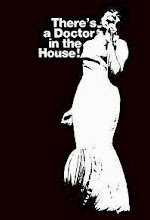
Esther Phillips lets her hair down once more on this blog! And she did it back in January 1970 when she recorded her live album Burnin' Live at Freddie Jett's Pied Piper, L.A. (Atlantic LP # SD 1565). The album was released in August '70 after some overdubs (flute, trumpet and tenor sax) had been added in New York. The album was both listed on the Best Selling Jazz and Soul LPs charts; it stayed for some 6 months on the Soul LPs charts (beginning Nov. 14, 1970) and peaked at # 07 in January 1971.
From Billboard, Sept. 5, 1970, p. 72
The LP suscitated many reviews and comments in the contemporary press, and her frequent live performances in late 1969 and early 1970 were covered regularly in the California newspapers. (The back cover of the Burnin' album shows facsimiles of three such reviews plus short liner notes by singer Carmen McRae.) Even Ebony Magazine (in the December '70 issue, p. 28) run a review.
Ad from Ebony, Dec. 1970 issue
Interestingly, the variety of songs on the album made the critics differ as to which songs they preferred ... the Billboard writer singled out »Cry Me A River Blues«, while Carmen McRae in her liner notes chose to mention as favorites »Don't Let Me Lose This Dream« and »Please Send Me Someone To Love«. Nice thing is that you can hear the latter song (a Percy Mayfield composition) over on BB's Magic Jukebox blogspot. The Ebony writer preferred to call attention to Esther's version of »I'm Gettin' 'Long Alright«, and this is just fine with me. So get ready for a 6-minute version of that tune! Actually, the song starts only at about 02:10 into the recording, after Esther has done some introductory talking ... I do most of my blues songs for the ladies because we always have the blues, you see ...
Esther Phillips: »I'm Gettin' 'Long Alright« from the Atlantic LP # SD 1565 (1970):
AND ... I couldn't resist the temptation to post another recording of this song along with Esther's live version of it. It's a raw-cut, almost archaic version recorded by the Raelettes (with Ray Charles on the piano) which has never stopped haunting me. Compared to Esther's rather jazzy version (which is marvelous in its own right) you get here the modern version of somewhat like a hollering worksong of old, stripped bare to the basic harmonies and the insisting rhythm. Man, it tears me apart every time I hear it!
The Raelettes (feat. Ray Charles): »I Get Along All Right« from the Tangerine LP # TRCS 1511:
Note: On Tangerine LP # 1511 (Souled Out) the song title is given as »I Get Along All Right«. On the single release (TRC # 984, April 1968) of the same recording the title runs »I'm Gett'n Long Alright«.
1964 was an annus horribilis for Ray Charles. When his album »Have A Smile With Me« (ABC-Paramount LP # 495) was released in late June, he had lost a paternity suit barely five months ago and become, at least by way of judicial decision, father of Sheila Jean Robinson. Charles himself had »admitted to sexual intimacies with pretty, 21-year-old Ohioan Sandra Jean Betts on at least five occasions«, but said he did not believe that he is the father of the baby girl. He didn't take it with much of a smile. However, worse was still to come: his concert tour in autumn during which he was arrested on drug charges led not only to riots in several locations, but was over- shadowed by racial incidents. Some three weeks before his tour, a Jet Magazine staff writer speculated (Sept. 3 issue, p. 63) whether Ray Charles was about to quit singing. Quote: »That's what the man, Charles, himself, said in Paris. He said he would give up singing "very soon and play with my orchestra ...".« Well, this didn't happen as we know, but given the events of 1964 (and especially after touring in Europe and the Boston drug arrest in November) Ray Charles quit touring the following year. In his autobiography he said: »I decided not to tour in 1965. This
was the first time in twenty years that I wouldn't be performing in public. I had lots on my mind, and I couldn't see myself running around. I needed to stop and think.« (Ray Charles with David Ritz: Brother Ray. Ray Charles' Own Story, New York 3rd ed. 2004, p. 254).
ABC-Paramount LP # 495 (1964)
The LP »Have A Smile With Me« fits into that gloomy year 1964, the untimely title included. Billboard (Aug. 1.) hyped it, against all good reason, with the thinly-veiled panegyric: »Charles, the master of the soulful blues, shelves it all in this outing for a raft of fun songs. He sings 'em all with his usual genius. ... A real ball for all.« The curious expression »his usual genius« excepted (can genius ever be usual?), I beg to disagree. I think it's an awful album and quite a contrast to the brillant live recording »In Concert« which was taped some months later in L.A. The personnel on the record is outstanding, though, David »Fathead Newman« on alto sax, The Raelettes backing. Alas, this was to little avail, and Charles's choice of songs was meant to result in a »lighthearted« album »with the idea of letting Charles just kick back and have fun« (Richie Unterberger in the AMG to Soul). The sleeve notes stressed that point: »Here's the other side of the coin! ... this time around your phonograph, he'll bring you a smile, and even a laugh. Here is the light-hearted Ray Charles, again exploring material that, until now, has never been heard by his listeners.« Yet the overall impression doesn't live up to what Charles was aiming at. The best that may be said about this album is, in the words of Mike Evans, that it was »a collection of humorous novelty songs« (The Birth Of Soul, p. 179). And this, again, was also trumpeted out on the back cover: »This novelty package explores still another facet of the art of Ray Charles.«
As it goes with novelty packages, they tend to be a mixed blessing. As mixed as the songs on the album: jazzy C&W, old vaudeville songs or even »pop standards« (that's how Billboard described »Feudin' & Fightin'«). On the other hand, all ten songs on the LP (six with the Raelettes) sound strangely alike, professionally done oldtime jazz-pop, but actually little of that was in any way up to the »modern trends« in music. Charles, who was proud of being a trend-setter and indeed had set different trends in the past, offers nothing much trendy on this LP. And just think what times these were! The first year of the Great British Invasion during which, ironically, black music played by white UK bands outsold black music played by black US artists. In this context, Ray Charles acquired, for some diligent observers at least, the status of a »father figure«, but with a twist to it: He had prepared the way of the »Mersey Sound« in many ways yet his UK emulators outstripped his fame by 1964. In a noteworthy gloss by P.F. Kluge, published in LIFE (Oct. 2, 1964, p. 28: »U.S. Roots of the Beatle Beat«), we read: »If the Mersey sound is an art form, this (i.e. black U.S. music) is the music that gave birth to it, although not one of its inventors, not even the very popular composer-performer Ray Charles, has ever been as sought after, televised, filmed, interviewed and just plain loved as their English imitators.«
* * *
The 50's-sounding song »Smack Dab In The Middle«, shuffling along in a R&B-style of years past, was the only moderately successful tune of that album. It entered the Billboard Hot 100 Pop the first week of October and one month later was lingering at #52. Another week later, in mid-November, the song dropped out of the charts. This all becomes more emblematic of Charles's status and style in '64 if you consider for a moment the songs which meanwhile climbed the charts: When »Smack Dab In The Middle« entered the Hot 100, »Dancing On The Street« (Martha & The Vandellas) had reached # 04, »The House Of The Rising Sun« (Animals) stood at # 08. The Shangri- Las' »Leader Of The Pack« and The Velvelettes with »Needle In A Haystack« were coming up behind; at the beginning of November, Motown's sequin-dressed valkyries made it to the top with »Baby Love«; when Charles's song left the charts, the Rolling Stones' cover of Irma Thomas's »Time Is On My Side« was approaching the Top Ten. Compared to all that, Charles's album seems come out of another epoch.
Need some demonstration of this? Well, there is ample choice on the LP. As I have a special liking for the Raelettes, you can hear in the following two songs that feature them as backing vocal group. I picked »Two Ton Tessie (from Tennessee)« and »Who Cares For Me« since in these tunes the backing vocals are given much room. The first song was recorded on May 7, '64, at the N.Y. Bell Sound Studios (days before Ray Charles would depart for Europe), the latter back in February 1962 in L.A. For the record I can add that almost all other songs of the LP were recorded in May '64 in New York, with the exception of »Move It On Over« (likewise from '62). Here you go:
Ray Charles (feat. The Raelets/Raelettes):
»Two Ton Tessie« / »Who Cares (For Me)« from the ABC-Paramount LP # 495 (1964, mono):
She didn't make it into the All Music Guide to Soul nor into The Blackwell Guide to Soul Recordings. You don't find her listed in the Goldmine Standard Catalog of R&B Records. Mystery a-plenty! Well, not to worry. This is her as she liked herself to be shown on her first album, on the back cover (details):
Her name is what her music makes me: Merry, the family's Clayton.
* * *
Hell of a singer she is alright. From near New Orleans, grown up in a Baptist minister's family. In December 1962, she made her first solo recording (billed as »Marry Clayton«). In 1966 (or maybe in late '65, I couldn't establish that exactly) she joined Ray Charles's female backing group, the Raelettes. Later she said about her experience with Ray Charles:
»To be a 17-year-old, to be going on a national tour, flying in a plane with Ray Charles, ... you couldn't have asked for anything better than that. Your gowns and your clothes had to be perfect, your make-up had to be cool, you had to be cutified. You had to be gorgeous, smell good, it was a privilege to be a Raelette - you had to be a little diva, honey!« (quoted in Mike Evans: Ray Charles: The Birth of Soul, New York - London 2005, p. 225)
Doesn't sound as if she had a bad time. However, when Ray Charles sacked one member of the Raelettes (Gwen Berry), Merry hit the road, too. Together with Odie Coates and two ex-Raelettes, Gwendolyn Berry and Lillian Fort, she formed »The Sisters Love« in 1968, contracted to a Los Angeles-based label. But what she was doing most of the times in the late '60s was recording as a studio backing vocalist with names which (deservedly or not) resounded more with the general public, among them the Rolling Stones (see also here). In around 1970 she appeared on various recordings together with Clydie King (another ex-Raelette) and Venetta Fields (then from the Mirettes and an ex-Ikette). Then, her single »Gimme Shelter« (the Rolling Stones song) was released in May 1970, with an album of the same title following in August 1970 (Ode '70 LP # 77001).
Ode '70 LP # 77001
Her first album was well-received. In a Billboard review from Oct. 17, 1970, we read: »Miss Clayton's dynamic soul-rock styles is the main ingredient in her first solo LP for Ode 70. The album includes her hit reading of the Stones' "Gimme Shelter" and her current single, James Taylor's "Country Road." Other outstanding cuts are the Doors' "Tell All the People," Forget It I Got It," and an unpredict- able "Bridge Over Troubled Water."« The album's title song, »Gimme Shelter«, had been out since around May 1970 (on Ode '70 # 66003), and a second single (»Country Road« / »Forget It I Got It«, Ode # 66007) was released in September. Slowly but surely she made her name and art known during the latter months of 1970, and the February 1971-issue of Ebony was graced with the following notice on page 24:
»Perhaps you've never heard of this 22-year-old singer but she's been supplying soul backgrounds for pop artists since she was 14. Former lead singer with Ray Charles' Raelets, she's backed up folks like B. B. King, The Supremes, Bob Dylan, Bobby Darin and "white soul" singer Joe Cocker on his two albums. Now she's on her own with a husky, intensely emotional sound reminiscent of Mavis Staples and Cissy Houston.«
The comparison with Mavis Staples is fitting indeed (Mavis had released her first solo LP just one year before in summer '69). And I fully agree with the above-quoted Billboard reviewer's opinion that »Forget It I Got It« is among her LP's »outstanding« tunes.
So let's come down to the nitty gritty: »Forget It I Got It« was penned by Gary Wright and Jimmy Miller of the UK-outfit »The Spooky Tooth«. Gary Wright, the organist, was the only U.S.-member of the band, and Jimmy Miller produced them. Their original version of »Forget It I Got It« appeared on their first LP »It's All About«, released in 1968 (on Bell in the U.S.-version). Needless to stress that I think that Merry made a better job with this memorable song than the UK-boys could ever hope to achieve. Merry recorded the song in Hollywood in early 1970, together with the other tunes of her LP. Here it is, ripped from the original LP. Unfortunately it's not an absolutely mint copy and there is some surface noise left ... but what the heck! Surely Merry's voice and the forceful song won't make you notice the smallest scratch ...
Merry Clayton: »Forget It I Got It« from the Ode '70 LP # 77001 (1970):
* * *
But it doesn't stop here, and enter the ... Raelettes, or rather »The Raeletts« as Ray Charles billed them in 1972, presumably for copyright reasons. Some months ago I posted a song from their 1972 Tangerine LP # TRC-1515 (Ray Charles presents The Raeletts: yesterday ... today ... tomorrow). And yes, this LP also contains a version of »Forget It I Got It«, although it appears under a different title: Here we find the song as »Come Get It I Got It«. The change might have been made again for copy- right reasons, I can't tell for sure. And it doesn't matter.
Tangerine LP # 1515 (1972)
To tell you the truth: I am in love with this LP of the Raelettes since I heard it for the first time. I think it's superbly produced and superbly executed ... there is no filler here, only strong songs that kick me right off my feet every time I listen to them. And one of these is, you name it, »Come Get It I Got It«. Basically, it's pretty different from Merry Clayton's version and its strength comes from the group effort: It's a very impressive piece of close-harmony singing in the pop-gospel mould if there ever was one. This is what vocal group-singing was all about in the early '70s, no doubt about it. Well, judge for yourself, here it is:
The Raeletts: »Come Get It I Got It« from the Tangerine LP # 1515 (1972):
This song is the opener on the second (and, tragically, last) album of the »Raelettes / Raeletts« from 1972: Tangerine LP # TRC-1515 (Ray Charles presents The Raeletts: yesterday ... today ... tomorrow). The album was recorded at the Tangerine/APM Studios in Los Angeles.
Tangerine LP # TRC-1515
The Raelettes were, as is known to everybody but the most unaffected by the charms of r&b music, the female backing choir of Ray Charles. Over the many years of their existence (from 1955 into the 1980s) they counted many different singers among their members. The group started their career as »The Cookies«. Towards the end of November 1955 and after the success of his most recent Atlantic single »Greenbacks / Blackjack«, Ray Charles set foot into New York's Atlantic Studio for a new session. When he suggested a female backing for some songs, Jesse Stones brought the local Cookies into the studio (see Mike Evans, Ray Charles: The Birth of Soul, New York 2005, p. 78). At that time the Cookies were a trio; they had formed in Brooklyn and could even boast an Atlantic single with their name on it.
In autumn 1958 Ray Charles, who was never reluctant when it came to marketing, personalized »his« Cookies and had them called »The Raelettes« henceforward (also spelled »The Raylettes« at first). At this point, not all of the original Cookies members were left in the group. Moreover, being a »Raylette« meant, beyond the singing, getting into Ray's range on a more intimate basis, and soon the joke was born: »To be a Raylette you have to let Ray« (quoted in Evans, cit., p. 101 note).
On the back cover of the 1972 Tangerine-LP the early history of the Cookies / Raelettes is alluded to as follows:
»Yesterday there was a young musician working on the road with his band who heard a group of young ladies whose soulful sounds impressed him. The young musician was Ray Charles, and this trio of female singers became the original Raeletts. Since then, The Raeletts have become an institution in the world of music ...«
Tangerine LP # TRC-1515 (back cover)
The »trio of female singers« to become the Raeletts were, as said above, the Cookies when Ray met them for the first time in November 1955. However, for all we know, Ray neither did »discover« the group, as the text suggests, nor did he hear the group while »working on the road« but they were brought to him into the studio. And none of this former group can be heard on the 1972 album! On the contrary, the five singers to feature on the LP are not even presented by name, although they are pictured on the front and back cover. Instead they are collectively called »The Raeletts of Today«. The group at this point consisted of Mable John, Susaye Green, Vernita Moss, Estella Yarborough and Dorothy Berry. Mable John was the most prominent among them, having had a solo career with Tamla-Motown (»Actions Speak Louder Than Words«) and Stax (»Your Good Thing Is About To End«, r&b # 06). I will return to the complex history of the Raelettes in another post.
Suffice it for the moment to say that the Raelettes appear on the cover of the 1972 LP as »The Raeletts«. On other records of the epoch and in contemporary ads we also find »The Raelettes« or »The Raelets«, not to mention the earlier spelling »The Raylettes«. The different spellings have confounded many and are a nuisance for everyone researching their history. What is more, on the actual disc-label the group is billed as »Raelettes«, whereas on the front and back cover of the Tangerine LP they appear as »Raeletts«. What's in an »e«? Well, I presume some rights issue. We find a hint on the back cover of the LP where we read: »The name The Raeletts is an exclusive property of Ray Charles Enterprises, Inc.« So, probably, »The Raelettes« wasn't. But this is just guesswork. I'm not enough of a legal expert to judge the importance of leaving out an »e« when it comes to »exclusive« property.
Enough of that! Here is the song, penned by Tangerine housewriter Dee Ervin. It kicks off with a playful dialogue between Ray (on piano) and Mable (singing lead). It's a cool and groovy tune, no doubt about it. Superb harmony singing all the way. Few could ever do it like the Raelettes could. The song tells of a woman, actually has this woman speaking out, who with much tongue-in-cheek irony confronts her man: You don't care for me any longer and stay with other women ... so you must be doin' alright? ... You don't remember me, ain't even called me in quite a few days! ... You must be, you must be ... doin' okay?
The Raelettes feat. Ray Charles: »You Must Be Doing Alright« from the Tangerine LP 1515 (1972)
I am interested in the music, not in the relative rarity of discs. I also listen with great pleasure to Aretha Franklin, because she has the voice of the century. Music is no Faith and therefore has no heretics.
* * *
No music downloads on this site. All mp3s (with very few exceptions where noted) are ripped from original vinyl discs. If something on this blog is objectionable to anyone or should, for valid reasons, be re- moved from the net please let me know; it will be removed. And to reiterate: This is a non-profit blog.