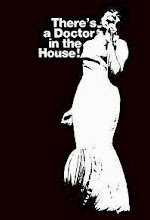
... plain, clean fun for a working day. Today with the hottest album from the sum- mer of '62, Dee Dee Sharp's It's Mashed Potato Time (Cameo LP # C 1018, mono issues only).
Dee Dee Sharp in May 1963
The Philly girl Dee Dee Sharp (real name Dione LaRue but »everybody called her "D" and she sang in D sharp«), aged 17, was called in the studio to add her vocals to Chubby Checker's »Slow Twistin'«. Chubby wasn't convinced at first and wouldn't have a female voice on his record. He was convinced after he had heard her, anyhow, and the song ended finally up as a true duet, with Dee Dee's vocals as prominent, or even more so, as those of her male counterpart. But among those convinced was also Kal Mann, founder of Cameo Records, who had brought Dee Dee into the studio in the first place (and had written »Slow Twistin'« under his pseudonym Jon Sheldon). Next Day, Dee Dee recorded her immortal hit »Mashed Potato Time«. Together with that song (#1 r&b in spring '62) went the usual album, released in May 1962.
Not the usual hit-plus-filler album, though. You have three chartbreakers on that LP - »Slow Twistin'«, »Mashed Potato Time« and »Gravy! (For My Mashed Potatoes)« - and besides that a number of other nice songs, and varied in style, too. Two ballads, »Two Loves« and »Remember You're Mine«; a number of cover versions (»Splish Splash«, »Be My Girl«, »I Sold My Heart To The Junkman«) and ... quite astonishingly, the jazzy remake of an old r&b smash, »Hurry On Down«, Nellie Lutcher's song from 1948 (released on Capitol # Cl 13013 in Dec. '48). The cover of my LP is the one shown here, with the Cameo-label in the upper right corner. However, there are many copies of that LP around that show the Camel-label in the lower left corner, whereas in the upper right corner we find a round sticker, in blue, saying »This album con- tains the hit song GRAVY«. Now, »Gravy« was one of those few tunes who got much radio play without being available on a single, that is, it got exposure from the LP version. Until the beginning of June »it received so much reaction that Cameo put it out as a single« (quoted from Billboard, June 2, 1962, p. 24). This leads me to think that the cover without the Gravy-sticker was the first, original edition, because an- nouncing the song on the cover only makes sense after it had unexpectedly stirred up some noise. So the cover shown above seems to be very first one.
So on to the songs, first the jazziest number on the LP, second the song that started Dee Dee's career. If anything, Dee Dee's version of »Hurry On Down« shows that her LP was not only a »teen item« as most critics of the day had it. And »Slow Twistin'« is simply a wonderfully groovin' duet, is all. However, the LP-version of that song is different from the previous 45-version (see Postscript). Shimmy!
Dee Dee Sharp (*with Chubby Checker): »Hurry On Down« / *»Slow Twistin'« from Cameo LP # C 1018 (1962):
POSTSCRIPT, some days later ...
Per chance, I discovered that among my CDs I actually have the re-issue of Dee Dee Sharp's LP from 2010, released on Ace / ABKCO (CDCHD 1295). It contains fine liner notes by Ed Osborne, providing information I couldn't find anywhere else. Thus, to complete this post, let me add the following here from Osborne's booklet: »Hurry On Down« was recorded between April 7 and 18, 1962, in Philadelphia's Cameo Parkway & Reco-Art Sound. »Slow Twistin'« was recorded during the same time, and this is precious information: The LP-version of that song is, therefore, not identical to the 45 version recorded originally on January 23 (I didn't check that). The instrumental track is different and the vocals were recorded anew; only the backing group, The Dreamlovers, remained the same.
In December 1962, The Chiffons recorded »He's So Fine«. The single was released when other hits-to-be appeared on vinyl as well, e.g. »Hey Paula« (Paul & Paula) or »Our Day Will Come« (Ruby & The Romantics). On February 9, 1963, Billboard reviewed the song, as usual without making too many words:
»This all-girl group has a good sound and they show off their bright style with a flourish on this rhythmic waxing. It has a beat and it moves.«
Laurie # 3152 (Dec. 1962)
The song, written by Ronald »Ronnie« Mack (who passed away soon after), was released in December '62 on Laurie # 3152. The New York-based Laurie Records was in existence since 1958, but The Chiffons were their only successful black act. Before, they had had Dion & The Belmonts, then Gerry & The Pacemakers and The Royal Guardsmen (all of them British).
In fact, the Chiffons were the classical cinderella story the like of which we find often in the music business of the early 1960s: Mack heard the girls singing at their high school in the Bronx and as a result decided to become their manager, for little more than a few bucks. He contacted The Tokens from Brooklyn, who then produced some songs with the Chiffons in the Capitol Recording Studios, among them »He's So Fine«. (Others maintain that Mack first dealed with the Tokens over some songs and brought the Chiffons in later.) In any case, nobody got interested in what Mack had recorded. Especially »He's So Fine« was not considered by to possess any hit potential, and the boss of Capitol called the song »too trite and too simple«. The Tokens then knocked at the door of some nine or ten other record companies, but it was Laurie that went for it.
This made the day for the Chiffons, and for Laurie as well. The song became one of the most popular hits in 1963. Its intro viz. its chorus »Doo-Lang Doo-Lang Doo-Lang« has entered the hall of fame of catchy song lines and will be memorable for the rest of times. Legend has it that is was the recording engineer who came up with these nonsense syllables when the song was still in the making in the studio. On March 30, 1963, the song reached # 01 on the pop charts. Jay Warner neatly summed up the peculiar success story of the Chiffons and their unwanted hit song: »Throughout rock and roll history, vocal groups (especially the non-writing variety) have spent entire careers in search of hit-bound melodies and captivating lyrics. In a reverse of that equation, the Chiffons garnered their success because a hit song was in search of a group.« (American Singing Groups. A History from 1940 to Today, Milwaukee 2006, p. 343).
Billboard's Hot Hundred, March 30, 1963
Songfacts: »He's So Fine« entered the Billboard Hot 100 on Feb. 23, 1963 (# 87) / Cashbox Top 100 Singles (# 87) and remained # 01 for four weeks between March 30 and April 20 (in both Billboard and Cashbox). It was listed for the last time on June 1, 1963 (BB # 43, CB # 40). The song entered the r&b charts on March 2 and was at the top from April 6 to April 27.
Interestingly, »He's So Fine« also nicely illustrates the limited powers of prediction in the record industry. Thus in a commentary in Billboard (April 20, 1963) the song was singled out, among some others, in order to show that even the most astute A&R men weren't able to correctly foresee which songs will eventually make it to the top of the charts:
»Every week trade publications, a.&r. men, promotion men and others try to select the big money winners of tomorrow. We all know it's in the grooves - but who knows what grooves? The so-called experts feel that they can pick them, and then along comes something like 'Tom Dooley' a few years back ... or more recently an unknown group called the 'Chiffons' and 'He's So Fine,' and we all walk around scratching our heads.«
The song made the Chiffons, unknown to all until then, into the most popular girl group of 1963. (The rumour that the New York Chiffons were the same as some other »Chiffons« recording in California in around 1960 is unfounded, see is unfounded.) The New York Chiffons, that is The Chiffons, consisted of Judy Craig, aged 17 at the time and singing lead, Patricia Bennett (16), Barbara Lee (19) and Sylvia Peterson (17). Sylvia was »recruted« only a short while before recording »He's So Fine«.
The surprising success of their first single (and of several to follow in 1963) prompted Laurie to put out an album by the Chiffons as quickly as possible, and as was usual then this album was called after their biggest hit. So Laurie LP # 2018 came into frenzied existence. And although it is an album built around the success of one song, it actually does not contain only »fillers« for the rest but a number of nice and equally likeable songs.
Laurie LP # 2018
It goes without saying that the LP also contains the Chiffons' signature song, »He's So Fine«. And here it is:
The Chiffons: »He's So Fine« from the Laurie LP 2018 (1963):
Yes, it may be a simple song. But it kicks you off your feet all the same. That's the mystery behind it, and in some way the mystery behind some other seemingly trite girl-group songs of the epoch as well. That's why they have endured and every year appear on new samplers. And I'm not sure whether even the lyrics can be dismissed easily as »girl talk«. The unlikely authority of Iggy Pop, unlikely in this context that is, was quoted in Spin (November 2003, p. 60) as follows:
»During my formative years ('64-'66), I was into the American day-dream 'emotionalistic' approach to youth music, as exemplified by the girl groups. 'He's So Fine' is basically ghetto music - this guy she's talking about is not a Ph.D. He's not even nine-to-five - he's just five. (The Ronettes) 'Be My Baby' was another one. I remember being down in the basement in the 11th grade, having more of a sexual encounter than I'd ever had in my life, and I kept jumping up to put that single on again!«
What is more, the song did not escape the attention of professional music historians the like of Jacqueline Warwick who wrote:
»Indeed, "He's So Fine" depicts a gang of girlfriends whispering about a boy who has caught their eye, practically licking their lips as they look him up and down, and the "doo lang doo lang" refrain conveys a lustful appreciation far beyond the vocabulary of the prim middle-class teens ... With lead singer Judy Clay ... declaring "I don't know how I'm gonna do it, but I'm gonna make him mine" and itemizing the boy's charms to her appreciative backing vocalists, the song made it clear that girls were perfectly capable of taking an aggressive lead in romance.« (Girl Groups, Girl Culture. Popular Music and Identity in the 1960s, New York-London 2007, pp. 37, 199).
Given the song's success, also Dee Dee Sharp (of »Mashed Potatoes«-fame) recorded a version of it. This was done on March 19, 1963, in Philadelphia and released on her album Do The Bird (Cameo LP # 1050, 1963). However, her version is slower and decidedly turns the song into a soft-pop tune. Together with Dee Dee's much higher voice pitch and the mixed male-female backing vocals her version therefore seems flat and mainstreamed if compared with the Chiffons' edgier original. Well, listen for yourselves:
Dee Dee Sharp: »He's So Fine« (1963):
Clearly, there is much more groove in the original, and Judy Craig's deeper voice on the Chiffons' recording fits the song better.
In 1971, the song made its way again in the charts ... but this time it were the C&W charts! This came about because Jody Miller (of »Look At Mine«-fame) recorded the former girl-group song and turned it into a C&W song, released on Epic-Single # 10734. The classic Doo Lang Doo Lang Doo Lang at the beginning is dropped, and the part is now covered by a guitar intro. I like that version. It's not a close adaption, but really tries to give the song a new twist ... and succeeds. Jody performs it with the lyrical »sweetness« of C&W singers, and she certainly has a special talent for that. Her version peaked at # 05 of the C&W charts and made it to # 53 on the pop charts, nothing less:
Cody Miller: »He's So Fine« from the LP Epic # 30669 (1971):
The fact that Jody Miller included the song of a black girl group in her repertoire shows convincingly how fluid the demarcation lines between musical styles and listeners' groups had become (if ever there were any fixed demarcation lines, that is). We have many more examples for this, and also black singers moved into the C&W realm, notably Ray since Charles' »Modern Sounds« and then ever more frequently in the second half of the 1960s. Thus in 1968 we find Joe Tex recording »Green Green Grass Of Home« and fittingly including that song on his ambigously titled LP »Soul Country«.
For the record companies and retailer networks this blend of former more or less separate musical »provinces« proved somewhat of a challenge. (And I'm non going here into the interesting debate of whether the music industry artificially separated these provinces in the first place or whether they merely gave names to really distinct fields.) For example, those who stacked the jukeboxes had to have some clue as to what music would probably be requested in a certain place. Surely they couldn't fill the jukes with r&b titles in a hillbilly bar or with C&W titles in a supper lounge. But as musical styles increasingly flowed into each other, guessing the taste of the respective customers became more difficult. Thus a certain Henry Holzenthal, a jukebox programmer, was quoted by Billboard (Sept. 4, 1971, p. 37) with the following story:
»Holzenthal said the crossover among categories probably indicates jukebox patrons are "listening to music more than ever and are open to more music experiences. We've all but abandoned categorizing our jukeboxes." ... [Jody Miller's] "He's So Fine" was originally considered country by Holzenthal. "But one of our better lounges called up and asked for it. I would never have pro- grammed it there because I knew he (the lounge owner) wants no country."«
* * *
Oh well. Got to add another thing, for good measure. Most of you will have heard of it anyway. »He's So Fine« in the 1970s was object of a plagiarism suit, which then was lost by George Harrison, concerning his song »My Sweet Lord«. The details are known, and I don't find them sufficiently intriguing to repeat them here. Nevertheless, the judge ruled that Harrison had »plagiarized unconsciously«, which is about the most bizarre way of justifying plagiarism I ever heard of. Harrison paid more than half a million USD to those holding the rights of the Chiffons' original. Fact is that large parts of Harrison's »My Sweet Lord« sound exactly (and I mean exactly) like the Chiffons' tune. Only very blockheaded Beatles- or Harrison fans will seriously negate that »My Sweet Lord« is little else but another version of »He's So Fine« with changed lyrics. But this after-story must not detain us any longer, listen here and make your own judgment.
I am interested in the music, not in the relative rarity of discs. I also listen with great pleasure to Aretha Franklin, because she has the voice of the century. Music is no Faith and therefore has no heretics.
* * *
No music downloads on this site. All mp3s (with very few exceptions where noted) are ripped from original vinyl discs. If something on this blog is objectionable to anyone or should, for valid reasons, be re- moved from the net please let me know; it will be removed. And to reiterate: This is a non-profit blog.