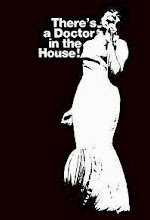
... while we were on it, some days ago, let's have today some more of the East St. Louis Gospelettes!
First, by way of catharsis, there is a vocal tour de force by Frances Moore with the well- known song »Keep Toiling On«. That song, or rather Frances's performance, knocks me flat. And the song's got one of the grooviest church organs I've ever heard.
Second, by way of regeneration, you may relieve your tensity by swinging along to »If I Had My Way« ... you have to wait for the latter half of the song until it really takes offbut the whole package is worth listening.
Happy Sunday all!
The East St. Louis Gospelettes (feat. Frances Moore): »Keep Toiling On« / »If I Had My Way« from the Nashboro LP # 7220 (1980):
I am still about to write a series of documented posts about the »pop gospel« discus- sion. Well, I wanted to accompany the introductory post with a funky piece by the East St Louis Gospelettes, featuring the great and incomparable voice of Frances Moore (looking for a comparison, Mavis Staples might come to mind). Thing is, I am far from finished, especially when I started to research East St. Louis as kind of a side interest.
You have probably heard about the 1917 East St Louis race riot, culminating in a massacre in July. At least 49 persons were killed, the great majority of them black, and this sadly makes East St Louis hold, according to an essay in LIFE (August 27, 1965, p. 4), »the modern carnage record«. You probably know that Miles Davis is the town's most famous son, and that Josephine Baker and Chuck Berry grew up in East St. Louis (if Josephine Baker was, in 1906, born in East St. Louis or over the river in Missouri seems to be an unsettled question). You are possibly aware that actress LaWanda Page started her career in East St. Louis and that renowned dancer and choreographer Katherine Dunham chose to establish her Centers for Arts and Humanities there. You might know that Ike and Tina Turner met for the first in the Manhattan Club in East St. Louis back in the '50s.
But have you ever heard about the novel Ofay by Earl Shorris, published in 1966?
»... a young white man's search for a personal freedom which he hopes to attain in the different world of black people. Josh, a young reporter leaves Chicago, his job, and his safe suburban background to delve into the Negro life of East St. Louis. In the ghetto, with its dim bars, back rooms, junk, jazz and hustlers, he is warily and superficially accepted for he soon learns that it isn't easy to play black, nor is the situation eased when he falls in love with a Negro girl« – so ran the review of the book in EBONY, June 1966. And did you know that Harry Edwards, Founder of the Olympic Project for Human Rights (OPHR) and professor of sociology at the Uni- versity of California, Berkeley, was born and raised in East St. Louis? He had, in 1968, urged black athletes to boycott the games, and the athletes Tommie Smith and John Carlos were, when they raised their famous black fist salute, inspired by Edwards's stance on the issue and wore the badges of the OPHR. In 1980, Edwards published his autobiography entitled The Struggle That Must Be, a good part of which is set in East St. Louis. And are you aware that East St. Louis has, since 1976, its own Poet Laureate in the person of Eugene B. Redmond? Did you finally come across Jennifer F. Hamer's in-depth-study Abandoned in the Heartland: Work, Family, and Living in East St. Louis, published just two years ago in 2011 by the Univ. of California Press? If this was nothing new to you, you will find a lot more at the impressively elaborate website of the Southern Illinois University Illinoistown: A Cultural History of East St. Louis in the Twentieth Century.
Of course, to get closer to today's protago- nists, there were the East St. Louis Gospel- ettes (organized back in 1965 for the first time). They recorded for various labels in the 1970s and have become largely famous for their lead singer Frances Moore and their often funky songs on the borderline between modern gospel and protest & social commentary songs (much like the Loving Sisters who were active in the same period). Sometime in the first months of 1977, the Los Angeles-based label Birthright released their single BR-45-601, the A side of which is Stevie Wonder's »Have A Talk With God«. (There is no direct info avalaible as to when the single was released but it cannot have been prior to October '76 – Stevie Wonder's own version of the song was out only towards the end of September –, yet it probably predates the release of the Gospelettes' LP Love Is The Key out in May 1977 since it contains the song, too.) However, the Gospelettes' versions is way funkier than Stevie Wonder's more polished version, and Frances Moore's voice seems to fit the song better than Stevie's rather high-ranging voice. Really, the tune is mainly a solo performance by Frances Moore, the chorus having almost no part in it – on the contrary, what we hear in the second part of the song seems to be an all-male chorus? (the East St. Louis Gospelettes actually featured two male members anyway ...). Whatever, it goes well along with the groovy tune ...
The East St. Louis Gospelettes feat. Frances Moore: »Have A Talk With God« on Birthright # 601A (1977):
Hmm, soul into gospel, gospel into soul alright. But there are some curious examples of turning pop- or folk-country into gospel as well. (And I'm speaking here of black gospel, obviously.) You probably have heard of the East St. Louis Gospelettes and her energetic lead singer Frances Moore (she's gifted with a voice that recalls the timbre and the power of Mavis Staples's). In about 1977 (I am not sure about the exact date), the group released a single on Birthright (# BR-45-601), »Have A Talk With God« w/ »Glory Road«. The first is of course Stevie Wonder's tune, and the second is ... wait a moment.
The East St. Louis Gospelettes did some tough, funky gospel music, and many a soulful tune. There'll be more of them on this blog, God willing. But sometimes, the Gospelettes switched genre, as on the B-side of Birthright # 601. (Birthright, based in Los Angeles, was one of the oldest black-owned gospel music labels; their '70s business is well-covered in Billboard, see e.g. the article in the Oct. 16, 1976, issue page 47). If you listen to the B-side below, it takes only a few seconds to immedia- tely recognize the tune. Funny thing is that on the label of the 45, lead singer Frances Moore is credited with both the lyrics and the music! Well, it took some courage to do so, at least for the musical part; the lyrics are, of course, hers (mostly) and not those of the original. Listen here:
The East St. Louis Gospelettes: »Glory Road« on Birthright # 601B (1977, I believe):
I am interested in the music, not in the relative rarity of discs. I also listen with great pleasure to Aretha Franklin, because she has the voice of the century. Music is no Faith and therefore has no heretics.
* * *
No music downloads on this site. All mp3s (with very few exceptions where noted) are ripped from original vinyl discs. If something on this blog is objectionable to anyone or should, for valid reasons, be re- moved from the net please let me know; it will be removed. And to reiterate: This is a non-profit blog.